"Entry Privilege"
New System: 1,500 Individuals Posing a Threat Stopped at the EU Border
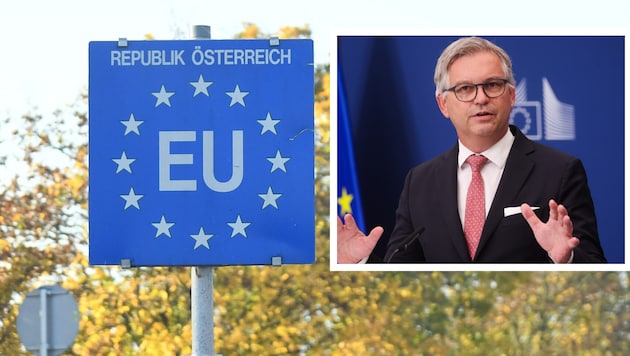

Terrorism, human trafficking, false identities: The new EU border system has already prevented nearly 50,000 people from entering the EU, including criminals classified as serious security risks. An initial assessment.
 Kronen Zeitung als bevorzugte Google-Quelle hinzufügen
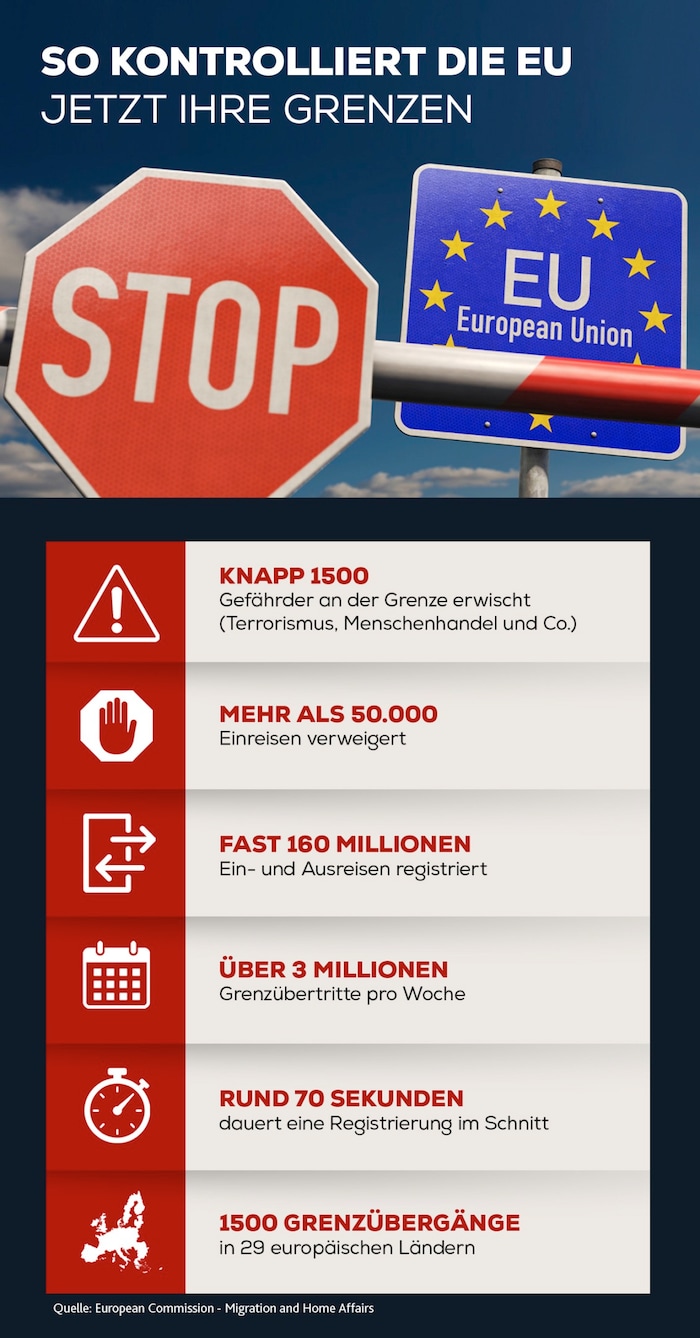
 A different name, a new passport—and suddenly it was nearly impossible to trace who was actually entering the EU. This is precisely the gap that the new European Entry/Exit System (EES) was designed to close. And it has been successful, as an initial assessment shows: Just under 300 days after its phased rollout, nearly 160 million entries and exits by non-EU citizens had already been recorded. Of these, 50,000 people were denied entry by the new biometric system. Authorities classified 1,500 individuals as posing a serious security risk—for example, in connection with terrorism or human trafficking.
“Entry into the EU is a privilege that must be protected,” EU Commissioner for Home Affairs Magnus Brunner told the “Krone.” After several delays, the EES has been fully operational since April 2026 at approximately 1,500 border crossings in 29 European countries: “It is the most advanced border protection system in the world.”
Here’s what the new EU border system can do
- Digitally records the entry and exit of non-EU citizens
- Captures fingerprints and facial images
- Identifies individuals even if they have different names or new passports
- Detects forged and misused documents
- Cross-checks data with European wanted person databases
- Displays existing arrest warrants and entry bans
- Automatically calculates the permitted length of stay
- Essentially replaces the previous passport stamps
How does the new system work?
Instead of a stamp in the passport, the entry and exit of non-EU citizens are now recorded digitally. During the first check, the authorities also collect fingerprints and a facial image. If someone later arrives under a different name or with a new passport, the person can still be identified. At the same time, the system automatically checks whether there is an arrest warrant or entry ban and whether the permitted stay of 90 days within a six-month period has been exceeded.
Despite the additional checks, long lines are not expected. Registration takes about 70 seconds on average. At Frankfurt Airport, the process—including biometric data collection—has already been completed in as little as 30 seconds in some cases. For EU citizens, nothing changes under the new system.
Cases from across Europe demonstrate how well this works. In Romania, a Moldovan national was identified despite providing a false identity—he was the subject of a European arrest warrant issued by Austria. In Croatia, two travelers were caught who were registered under different last names and had exceeded their permitted length of stay. Belgian authorities recorded 108 matches within three months; in 61 percent of the cases, the same biometric data was linked to different names.
A case from Romania illustrates what this means in practice. There, border officials checked a Moldovan national and began to doubt his identity. The biometric comparison revealed that the man was traveling under another person’s identity.
Attempts to Sneak In Detected Immediately
In Poland, a Moldovan national failed in his attempt to enter the Schengen Area under a false name despite a Dutch entry ban. In Germany, a person who was posing as an Eritrean using British refugee documents was identified as an Ethiopian citizen. A Kosovar citizen, meanwhile, had been registered in Germany and Hungary within just two days using different passports and claiming different nationalities. Entry was denied, and a three-year ban was imposed.
The fact that this technology can also help victims was demonstrated in Amsterdam. A woman who had been a victim of human trafficking reported to the police without any documents. Her identity could not be established using conventional methods. It was only a biometric search in the EES that yielded a match.
This article has been automatically translated,
read the original article here.










Willkommen in unserer Community! Eingehende Beiträge werden geprüft und anschließend veröffentlicht. Bitte achten Sie auf Einhaltung unserer Netiquette und AGB. Für ausführliche Diskussionen steht Ihnen ebenso das krone.at-Forum zur Verfügung. Hier können Sie das Community-Team via unserer Melde- und Abhilfestelle kontaktieren.
User-Beiträge geben nicht notwendigerweise die Meinung des Betreibers/der Redaktion bzw. von Krone Multimedia (KMM) wieder. In diesem Sinne distanziert sich die Redaktion/der Betreiber von den Inhalten in diesem Diskussionsforum. KMM behält sich insbesondere vor, gegen geltendes Recht verstoßende, den guten Sitten oder der Netiquette widersprechende bzw. dem Ansehen von KMM zuwiderlaufende Beiträge zu löschen, diesbezüglichen Schadenersatz gegenüber dem betreffenden User geltend zu machen, die Nutzer-Daten zu Zwecken der Rechtsverfolgung zu verwenden und strafrechtlich relevante Beiträge zur Anzeige zu bringen (siehe auch AGB). Hier können Sie das Community-Team via unserer Melde- und Abhilfestelle kontaktieren.