Budget Presented
Budget: Finance Minister lays his cards on the table
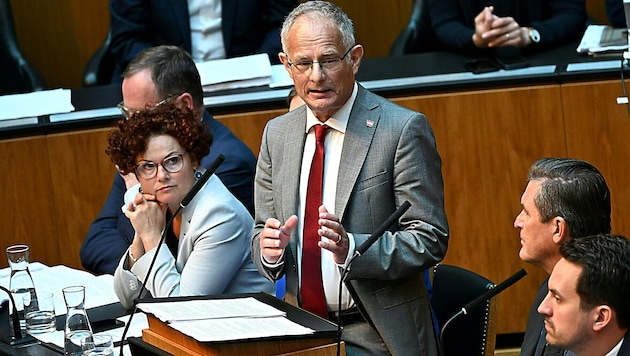




“These are serious times.” That’s how Finance Minister Markus Marterbauer (SPÖ) opened his presentation of the two-year budget, which the three coalition partners had fought over until the very last minute. Now the cards are on the table. The path to fiscal consolidation will continue to be pursued. In addition to massive spending cuts, Marterbauer also announced structural reforms and extensive proactive measures. The SPÖ minister also explained why it would be more successful this time than under other governments—and why “a bit of luck” would also be necessary.
 Kronen Zeitung als bevorzugte Google-Quelle hinzufügen
 Just as the federal government’s work had begun to bear “first fruits” and things were “halfway over the hump,” the war in Iran has once again brought inflation and an economic slump. “The energy crisis is hitting us at the worst possible time,” Marterbauer emphasized, noting that without the conflict in the Middle East, the inflation rate would have been only 2.3 percent in March 2026, 2.4 percent in April, and still under three percent in May. “But we won’t let ourselves be discouraged!” Marterbauer set the course.
“We cannot promise calm seas. That is not within our power. But we promise that we will steer the ship reliably; that we will do whatever is necessary to bring the ship into a safe harbor,” the minister explained. The path to fiscal consolidation will continue—with structural reforms and, at the same time, extensive proactive measures. These concern the reduction of non-wage labor costs, the education sector, and long-term care.
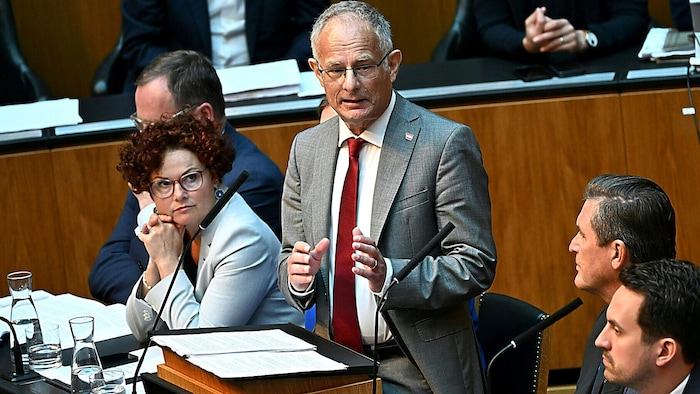
A deficit of 3.5 percent of GDP is targeted for next year. By 2028, the goal is to return to the three percent limit permitted by the Union. Overall, around 2.5 billion euros are to be saved on the expenditure side. An additional 2.5 to 2.6 billion euros are to be allocated for “proactive measures.”
Here are some of the areas where the government plans to cut spending:
Targeted and fewer subsidies
More digitalization, reliance on existing processing centers, and time-limited subsidies—this is how government subsidies are implemented efficiently. No subsidies without evaluation and without an efficient control system.
Reducing administrative costs
The two-year budget focuses on reducing representation costs across all departments. Digitalization and the use of artificial intelligence are intended to make processes more efficient. However, citizens should not feel the impact of these savings; rather, the quality of services is expected to improve as a result. The goal is to save five million euros here. According to the government’s plan, six percent of administrative staff will be reduced by the end of 2029, primarily by not filling vacancies resulting from retirements or other departures. Party funding—like other government expenditures—will not be adjusted for inflation in 2027 and 2028.
Combating Tax and Social Security Fraud
An initial tax fraud prevention package has been in effect since early 2026. Input tax deductions for luxury real estate have already been restricted, crypto income from abroad is being better tracked, and NOVA fraud is being made significantly more difficult. According to the Ministry of Finance, this will generate an additional 270 million euros in tax revenue this year. Access to accounts of shell companies and exit taxation will be tightened. The number of tax auditor positions will be significantly increased as part of the offensive to combat cash register and tax fraud. Several anti-fraud packages are expected to generate additional tax revenue of well over half a billion euros by 2029.
Savings on pension expenditures
“Pensions will not be cut. I place great importance on that,” Marterbauer emphasized. However, the effective retirement age must rise, and pension increases must, on average, remain below the inflation rate for a period of time. After 2026, this will also apply to 2027 and 2028. Several incentives for employing older workers will be eliminated. Starting in 2028, companies will have to pay contributions to the Family Burden Equalization Fund (FLAF) for employees over the age of 60, which will save 500 million euros in the budget. In addition, employers will also have to pay unemployment insurance (AlV) contributions for older workers. Savings will also be made on integration subsidies for employers who hire the long-term unemployed or older job seekers (€100 million annually starting in 2027).
Employees
Low-income employees will in future have to pay the full unemployment insurance contribution rate, just like higher-income earners. Higher-income earners, on the other hand, will be affected by the increase in the maximum contribution base up to which social security contributions must be paid. The tax exemption for the non-cash benefit of company electric cars is being eliminated. For employees, the home office allowance is being eliminated; for the self-employed, the workplace allowance is being eliminated.
Families
Income-independent family benefits such as family allowance, multiple-child supplement, childcare allowance, and school-start allowance, as well as the child tax credit, will not be adjusted for inflation again. In addition, there are changes to the family bonus. In the future, only families with young children will be able to take full advantage of it. For children over the age of four, this will only apply if both parents are employed.
Farmers
For farmers, the reimbursement of social security contributions will be discontinued (15 million euros per year), and the personal contribution to the pension insurance will be increased (13.7 million and 13 million euros, respectively). In return, as part of the proactive measures, farmers can look forward to the temporary reintroduction of the agricultural diesel reimbursement in 2027 and 2028, amounting to 50 million euros each year.
“Equipment Rescue Bonus”
Among the numerous other cutback measures are the previously unannounced elimination of the so-called “Device Saver Bonus” and a one-year postponement of the device initiative to distribute laptops to schools. This means that students will receive the free or low-cost laptop in the school year after next only in sixth grade instead of fifth grade.
Criticism of Previous Governments: “Thanks for Nothing”
The lessons from the Middle East conflict, but also from the war in Ukraine, are above all one thing: time and again, the Austrian economy has run into serious trouble in recent decades due to oil and natural gas shocks. “More than half of gross energy consumption still comes from fossil fuels (...) Anyone who loves their homeland supports the expansion of renewables,” Marterbauer appealed for an energy transition. In contrast, it is precisely in this area that the largest cuts are being made once again. The minister noted that he would have liked to do more to combat climate-damaging subsidies, but that an energy crisis is the wrong time to, for example, eliminate the diesel privilege.
The finance minister also took time to praise the work of the three-party coalition to date and to thank the previous governments “for nothing.” Among the guests in the gallery were Federal President Alexander Van der Bellen, Court of Auditors President Margit Kraker, and former Federal President Heinz Fischer.
Marterbauer listed the following as proactive measures: strengthening the business climate and exports; the labor market and skills development; bolstering research activities; investing in care services and poverty reduction; and targeted support for families and children. The specific figures: In addition to the reduction in non-wage labor costs and agricultural diesel subsidies, the two-year budget allocates, as announced, special funds for early childhood education (130 and 210 million euros), the labor market (170 and 100 million euros), the care sector (100 million euros each), and the fight against child poverty (60 and 65 million euros, respectively).
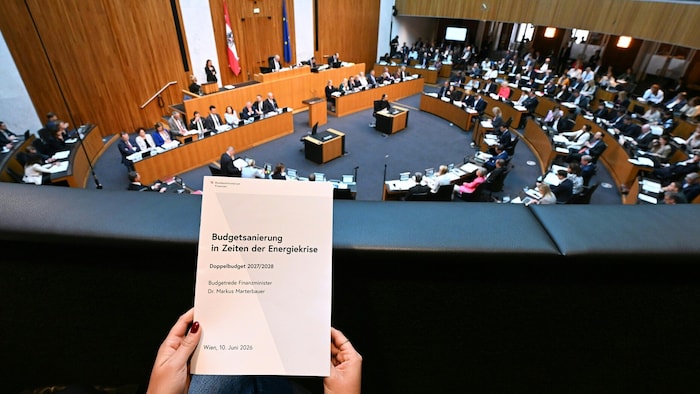
Defense Ministry Among the Winners
Unlike many other sectors, the defense department can look forward to a significant increase in the 2027/28 biennial budget. However, the downside is that the increases lag behind the original plans. This year, the defense budget stands at 4.76 billion euros. In 2027, it will rise to 5.15 billion (an increase of 387.8 million), and in the following year, another 35.6 million will be added, bringing the total to 5.18 billion in 2028. This means it falls short of the set targets.
The funds are primarily allocated to new equipment and systems, as well as for stockpiling military consumables. For 2028, plans call for further increasing investments despite declining funds, as lower expenditures are expected in areas such as Army facilities. The ICT & Cyber sector is increasing due to higher personnel costs, as is the Infrastructure sector.
Women’s Affairs Ministry with Record Budget
The Women’s Affairs Department has a record budget to celebrate. This will grow from 34 million euros in 2026 to 55 million euros in 2028. “This record budget will enable the expansion of counseling centers for women and girls, shelters for victims of violence, and transitional housing,” announced the Social Democratic minister.
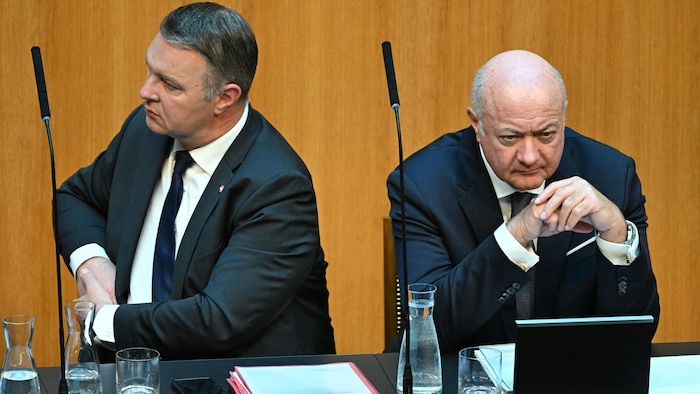
Budget for internal security shrinks slightly
The budget for the police and internal security will shrink by one percent next year. Nevertheless, the finance minister aims to create the “conditions for full staff replacement,” with “a focus on metropolitan areas.” “A significant portion of the current staff” will retire in the coming years. In recent years, the Interior Ministry has repeatedly had to tighten its belt due to pressure to cut costs.
“Compromise is not a weakness”
Marterbauer responded to all the critics who have spoken out in recent days by saying that “compromise is not a weakness.” Decisions are being made “based on facts.” “If the burdens are distributed reasonably evenly, if the restructuring plan is perceived as fair, then the public is willing to make sacrifices and contribute. And those who try to convince everyone that they, in particular, don’t need to make sacrifices—those who rely on envy, resentment, and social division—will lose this debate.” In addition to a dash of confidence, we also need “a bit of luck,” Marterbauer said at the end of his 90-minute speech. In this case, that would mean a more stable international situation and economic climate.
This article has been automatically translated,
read the original article here.











Willkommen in unserer Community! Eingehende Beiträge werden geprüft und anschließend veröffentlicht. Bitte achten Sie auf Einhaltung unserer Netiquette und AGB. Für ausführliche Diskussionen steht Ihnen ebenso das krone.at-Forum zur Verfügung. Hier können Sie das Community-Team via unserer Melde- und Abhilfestelle kontaktieren.
Hinweis in eigener Sache: Das krone.at-Forum präsentiert sich ab sofort in neuem Design! Wir freuen uns über konstruktives Feedback. Damit die Diskussionen in den Kommentarbereichen beim jeweiligen Thema bleiben, können Sie uns Rückmeldungen hier hinterlassen.
User-Beiträge geben nicht notwendigerweise die Meinung des Betreibers/der Redaktion bzw. von Krone Multimedia (KMM) wieder. In diesem Sinne distanziert sich die Redaktion/der Betreiber von den Inhalten in diesem Diskussionsforum. KMM behält sich insbesondere vor, gegen geltendes Recht verstoßende, den guten Sitten oder der Netiquette widersprechende bzw. dem Ansehen von KMM zuwiderlaufende Beiträge zu löschen, diesbezüglichen Schadenersatz gegenüber dem betreffenden User geltend zu machen, die Nutzer-Daten zu Zwecken der Rechtsverfolgung zu verwenden und strafrechtlich relevante Beiträge zur Anzeige zu bringen (siehe auch AGB). Hier können Sie das Community-Team via unserer Melde- und Abhilfestelle kontaktieren.