Banks are footing the bill
Budget figures: Here’s where the government is saving billions
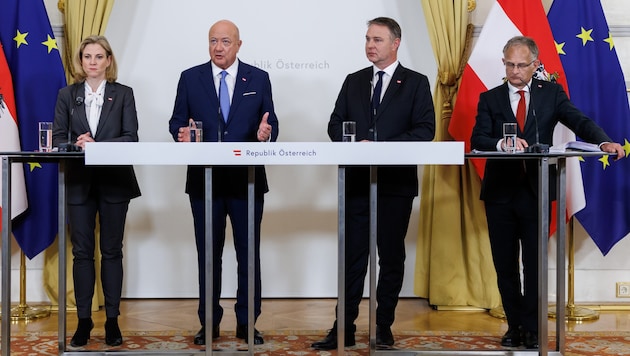



Who gets more, where are savings being made? On Monday, the federal government agreed on a rough financial plan for the next two years and presented it that very evening. The budget’s winners are families and farmers, while savings are planned for pensions. The government is also sticking to its deficit reduction plan to exit the EU procedure by 2028 as scheduled.
 Kronen Zeitung als bevorzugte Google-Quelle hinzufügen
 In 2025, the budget showed a deficit of 21.5 billion. For 2026, expenditures are projected at 125.9 billion and revenues at 107.6 billion—here, too, the deficit would exceed 18 billion euros. By 2028, the government wants—or rather, must—save an additional 2.5 billion euros. Added to this is 2.6 billion euros for “offensive measures.” The party leaders of the ÖVP, SPÖ, and NEOS negotiated until the evening to determine where this money would come from.
- Die Lohnnebenkosten werden gesenkt – ab 2028 um einen Prozentpunkt auf 2,7 Prozent. Kosten: gut zwei Milliarden Euro. Der Finanzminister pochte darauf, dass die Gegenfinanzierung unter Dach und Fach sei – allerdings dürfte diese zum Teil bei den Unternehmen hängen bleiben.
- Zu den Gewinnern zählen die Pflege und die Elementarpädagogik, aber auch der Arbeitsmarkt. Hierfür werden 600 Millionen budgetiert.
- Die Seniorenvertreter hatten sich mit ihrer Warnung, bei den Pensionisten einzusparen, nicht durchsetzen können. So soll es moderate Anpassungen bei der Valorisierung der Pensionen geben.
- Gute Nachrichten auch für die heimischen Landwirte: Der Agrardiesel wird wieder eingeführt.
Erhöhung der Körperschaftsteuer (KöSt) von derzeit 23 auf 24 Prozent für Unternehmer mit Gewinn von mehr als einer Million Euro, die Bankenabgabe wird verlängert.
In Summe sind 2,5 Milliarden Euro für die reinen Einsparungsmaßnahmen vorgesehen, um das Budget wie geplant 2028 wieder auf 3 Prozent des BIP zu drücken. Weitere 2,6 Milliarden Euro an „Offensivmaßnahmen“ sollen investiert werden.
Whileinitial details had already leaked beforehand, the “pie slices”—that is, the basic allocation of funds to the ministries—were still pending. The only leaked certainty: The reduction in non-wage labor costs will be implemented starting in 2028.
It is now official: The federal government has agreed on the key points for the 2027/28 biennial budget, successfully balancing consolidation with targeted investments. According to internal information, the budget follows the motto “Economic Recovery, Justice, and Reforms.”
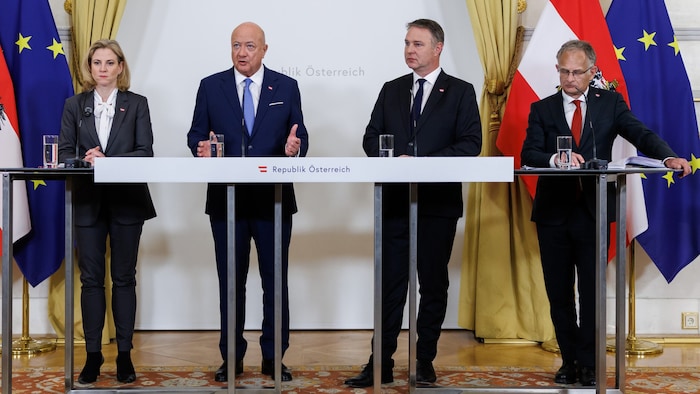
“We’re in a better position today than we were two years ago”
Chancellor Christian Stocker (ÖVP) gave a generally positive assessment on Monday evening, stating that we are “in a better position today than we were a year ago”: “We took office as the federal government with the promise to do what is right for Austria and to work for our country.” At the time, we faced the challenges of “easing the burden on the economy and balancing the budget,” Stocker noted, referring to the inflation of that period as well as the EU deficit procedure with which Austria was confronted.
Initial successes in this regard had also been achieved, “however, international conflicts, particularly the war in Iran, have presented us with new challenges,” said the Chancellor, who spoke in this context of “Trumpflation.” The new budget is now about “distributing burdens in a balanced way and making the country more fit for the future again.”

It is not a crisis budget, but a budget in a crisis!
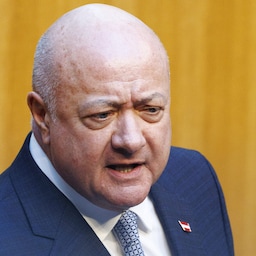
Bundeskanzler Christian Stocker (ÖVP)
Bild: APA/TOBIAS STEINMAURER
How hard will it hit the ÖBB?
As with the current budget, the ministries are given targets for how much they must reduce their spending. They can then decide for themselves where to make the cuts. While rearmament is on the agenda for the Defense Ministry, the pressure to save is still high there as well. According to “Krone” reports, the Labor Ministry and the social sector are set to be hit particularly hard by the cuts. Funding is also to be cut at the ÖBB.
At the same time, however, the government is planning to allocate additional funds of approximately 2.6 billion euros for so-called “proactive measures.” These are intended to be directed specifically toward “key future sectors”—namely the economy, healthcare, and early childhood education. During the budget negotiations, pensioner representatives in particular had demanded that seniors not be disadvantaged—which is why a round of talks took place on Monday afternoon. Now it has become known that there will be cuts here as well.
Babler: “Down from the mountain of debt”
Vice-Chancellor Andreas Babler (SPÖ) said that promoting childcare in the country had been “a matter close to his heart.” Given the global situation, “Austria must be prepared and stable: out of debt, into stability. We have to get off this mountain of debt, because every euro that doesn’t go toward interest payments benefits Austrians.”
If the dual budget is met, we will “exit the deficit procedure,” said Babler, and Foreign Minister Beate Meinl-Reisinger (NEOS) also cited this as one of the goals: “Restructure, relieve the burden, but also invest. We have already shown that we have laid a solid foundation to put Austria on a sound footing.” It is “a major package” with a consolidation volume of over five million euros, which will allow us to fulfill key promises, such as managing non-wage labor costs.
These crisis situations, with their instability, have actually become the rule rather than the exception.
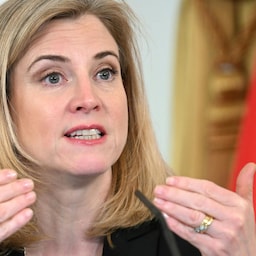
Außenministerin Beate Meinl-Reisinger (NEOS)
Bild: APA/HELMUT FOHRINGER
Reduction in non-wage labor costs “fully financed”
Finance Minister Markus Marterbauer (SPÖ) also spoke of how important it is to meet the budget targets by 2028 in order to exit the EU procedure. He cited the reduction of non-wage labor costs as the most significant factor: “But here it was important to me that this be fully offset. That has been achieved.”
It is also crucial that everyone contributes “according to their ability”: “If you feel that the burden is distributed equally, you are also more willing to do your part. Money has no face in the budget.”
Agricultural diesel, pension cuts
Further details of the dual budget include the reintroduction of agricultural diesel—and the previously discussed pension cuts. Meinl-Reisinger spoke here of the need for a sense of proportion and a “fair distribution” of the burden between working people and pensioners.
Further key points are to be worked out in the coming weeks and presented during the budget speech in June.
This article has been automatically translated,
read the original article here.











Liebe Leserin, lieber Leser,
die Kommentarfunktion steht Ihnen ab 6 Uhr wieder wie gewohnt zur Verfügung.
Mit freundlichen Grüßen
das krone.at-Team
User-Beiträge geben nicht notwendigerweise die Meinung des Betreibers/der Redaktion bzw. von Krone Multimedia (KMM) wieder. In diesem Sinne distanziert sich die Redaktion/der Betreiber von den Inhalten in diesem Diskussionsforum. KMM behält sich insbesondere vor, gegen geltendes Recht verstoßende, den guten Sitten oder der Netiquette widersprechende bzw. dem Ansehen von KMM zuwiderlaufende Beiträge zu löschen, diesbezüglichen Schadenersatz gegenüber dem betreffenden User geltend zu machen, die Nutzer-Daten zu Zwecken der Rechtsverfolgung zu verwenden und strafrechtlich relevante Beiträge zur Anzeige zu bringen (siehe auch AGB). Hier können Sie das Community-Team via unserer Melde- und Abhilfestelle kontaktieren.