Provincial Councilwoman Removed from Office
Lower Austria Seals the Closure of Eleven Emergency Medical Stations
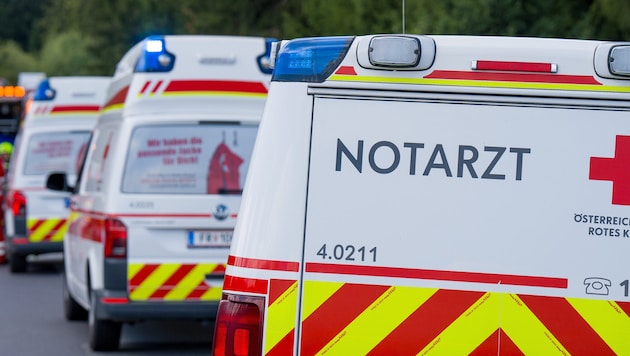

Eleven fewer emergency medical stations, but new emergency response structures—the controversial reform of Lower Austria’s healthcare system is now a done deal. On Tuesday, the state government approved the necessary contracts. This clears the way for a reduction from the current 32 to 21 emergency medical stations in the future. But the decision not only brings relief; it also highlights the deep political rifts within the state government.
 Kronen Zeitung als bevorzugte Google-Quelle hinzufügen
Provincial Governor Johanna Mikl-Leitner (ÖVP) took an unusual step to achieve this. Because the contract still needed for the reform had not been submitted by SPÖ Provincial Health Minister Eva Prischl, she promptly tasked Provincial Councilors Anton Kasser (ÖVP) and Martin Antauer (FPÖ) with presenting it. Both agreements were subsequently approved by the state government.
State Governor Speaks of an “Urgent Call for Help”
“The province’s word must be kept. And I tell you, it will be kept,” Mikl-Leitner declared. She said she had acted in the interests of the Red Cross and the Samaritan Association. An “urgent call for help” had previously come from the two rescue organizations. The necessary agreements had been sitting on Prischl’s desk since September. On Tuesday, FPÖ Provincial Councilor Martin Antauer criticized SPÖ leader Sven Hergovich’s obstruction: “Hergovich has prioritized party politics over the health of the province’s residents,” he said.

The SPÖ had spoken out against the closures and attributed the delay in the contracts to a decision made at the party convention. “Probably for tactical reasons,” emphasized ÖVP State Finance Minister Anton Kasser. Prischl herself was unable to attend Tuesday’s session due to illness. According to Mikl-Leitner, however, she appeared relieved after hearing the news of the implementation.
Provincial Councilor Takes Note of Decisions
Prischl herself stated that she takes note of today’s decisions. She said she had “led and driven” the implementation process for a year and a half and would continue doing so based on the decisions as soon as her health permitted—in close coordination with state officials and the newly established Quality Advisory Board. The measures mentioned in the ÖNK statement will be “initiated immediately” and also forwarded to the other provincial council offices responsible for them, according to Prischl.
Things Will Get Serious Starting Next April
Specifically, eleven locations are set to be closed as of April 1, 2027. The affected locations are Aspang, Groß-Enzersdorf, Groß Gerungs, Hainburg, Klosterneuburg, Pöggstall, Purkersdorf, Raabs, Retz, Waidhofen an der Ybbs, and Ybbs. This leaves 21 emergency medical service stations.
The reform is part of the Health Plan 2040+. Among the reasons cited for the reorganization are a shortage of doctors, the impending wave of retirements among emergency physicians, and changes to training guidelines.
In the future, emergency care will rely more heavily on other emergency response structures. In particular, plans call for the expansion of Type C ambulances (RTW-C), which will be staffed by specially trained emergency medical technicians. In the long term, 87 such locations are planned. In addition, there will be a tele-emergency physician service, an expanded first-responder system, and an expansion of air ambulance services.
Experts acknowledge longer response times
Support for the reform comes from the Austrian Society for Emergency and Disaster Medicine (ÖNK). In its statement, the society concludes that the closure of the eleven locations, combined with the planned accompanying measures, does not suggest a deterioration in emergency care. However, this is contingent on the new RTW-C units being reliably staffed with sufficiently qualified personnel.
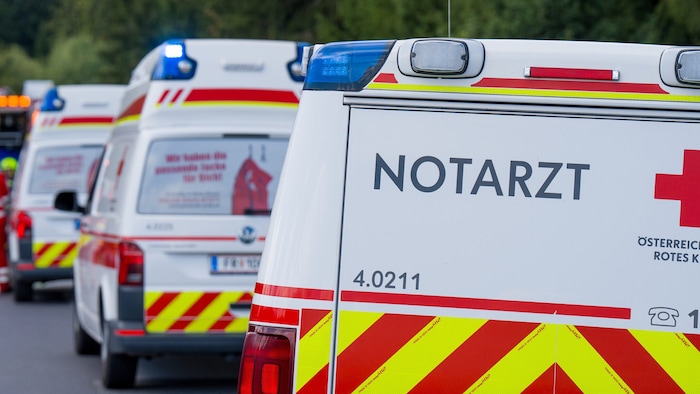
It is acknowledged that response times for emergency physicians will be longer in some regions. An increased workload for individual remaining stations is also expected. The SPÖ, on the other hand, had cited a counter-report by emergency medicine specialist Matthias Fischer. This report warns of a deterioration in care due to longer response times. According to the report, these could increase on average from 12.4 to 14.5 minutes.
Unusual Interference in th
’s PowersThe process leading up to the decision is also politically noteworthy. Mikl-Leitner invoked Section 16 of the provincial government’s rules of procedure. This provision allows the provincial governor to entrust another member of the government with reporting or implementation duties if a member fails to fulfill their obligations.
According to reports, this reshuffling applies only to this session. Prischl thus remains responsible for the further implementation of the reform. While a permanent revocation of authority would be possible, it is a rarity in Lower Austria.
Also present at the session were the presidents of the Red Cross and the Samaritan Association, Hans Ebner and Hannes Sauer. Both organizations had pressed for a swift joint decision. With the contracts now approved, the political impasse has been resolved for the time being. Implementation of the reform is scheduled to begin in April 2027.
Neos Satisfied, SPÖ Announces Statement
“The way is finally clear for implementing the emergency medical services reform, despite resistance from parts of the SPÖ,” said Neos health spokesperson Edith Kollermann. This means the emergency medical services organizations finally have the necessary planning certainty.
Greens Reject Plan
“The chaos and political theater from the ÖVP, FPÖ, and SPÖ continue, while the people are left behind.” This is how Helga Krismer, the Greens’ parliamentary group chair, commented on the closure of eleven emergency medical service stations, which was finalized yesterday (see above). The Greens reject the entire health pact in its current form. Krismer demands answers to pressing questions from affected citizens: “How many emergency physicians and paramedics will actually be available by April 2027? And what is the maximum response time for an emergency physician that the state government guarantees in an emergency?”
This article has been automatically translated,
read the original article here.










Willkommen in unserer Community! Eingehende Beiträge werden geprüft und anschließend veröffentlicht. Bitte achten Sie auf Einhaltung unserer Netiquette und AGB. Für ausführliche Diskussionen steht Ihnen ebenso das krone.at-Forum zur Verfügung. Hier können Sie das Community-Team via unserer Melde- und Abhilfestelle kontaktieren.
Hinweis in eigener Sache: Das krone.at-Forum präsentiert sich ab sofort in neuem Design! Wir freuen uns über konstruktives Feedback. Damit die Diskussionen in den Kommentarbereichen beim jeweiligen Thema bleiben, können Sie uns Rückmeldungen hier hinterlassen.
User-Beiträge geben nicht notwendigerweise die Meinung des Betreibers/der Redaktion bzw. von Krone Multimedia (KMM) wieder. In diesem Sinne distanziert sich die Redaktion/der Betreiber von den Inhalten in diesem Diskussionsforum. KMM behält sich insbesondere vor, gegen geltendes Recht verstoßende, den guten Sitten oder der Netiquette widersprechende bzw. dem Ansehen von KMM zuwiderlaufende Beiträge zu löschen, diesbezüglichen Schadenersatz gegenüber dem betreffenden User geltend zu machen, die Nutzer-Daten zu Zwecken der Rechtsverfolgung zu verwenden und strafrechtlich relevante Beiträge zur Anzeige zu bringen (siehe auch AGB). Hier können Sie das Community-Team via unserer Melde- und Abhilfestelle kontaktieren.