Long-Term Effects of Drought
Why Fir Trees Might Become Scarce in the Future
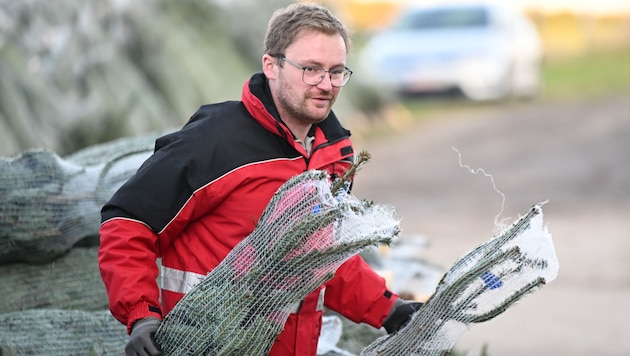

By Christmas 2036, many conversations will revolve around the drought year of 2026. That’s because the effects of this year’s water shortage won’t be felt for about ten years, when there’s likely to be a shortage of room-high fir trees.
 Kronen Zeitung als bevorzugte Google-Quelle hinzufügen
“There are enough trees this year; the drought didn’t do much harm to the large ones, and the recent rainfall has been good for the needles,” says Klaus Gschwendtner, chairman of the approximately 140 Christmas tree farmers in Upper Austria. He is one of the largest growers, harvesting around 20,000 firs, spruces, and other trees each year.
“Many of my colleagues do this as a side business, making use of land that’s unsuitable for crop farming,” explains the farmer, who nevertheless suffered heavy losses this year due to the drought. About 6,000 of his young trees died, and he was able to replant 2,000.
“Supply Will Decline”
Overall, farmers estimate that nearly half of the trees planted this year have fallen victim to the water shortage. Depending on how many could be replanted, the effects will become apparent on the market in the coming years. In five years, the trees will be about one meter tall; in ten years, they’ll be room-high—that’s when they’re usually harvested. “Supply will certainly drop then,” says Gschwendtner.
Domestic Trees as a Sales Magnet
It is uncertain to what extent this will be offset by imports. This year, about 90 percent of the 400,000 trees set up in Upper Austria come from local plantations. “Importing is becoming less and less profitable due to rising transportation costs; margins are shrinking,” explains the Christmas tree grower, who is also aware that: “People in Upper Austria want local trees, so even the major retailers are making sure they have them in their assortment and that they’re prominently displayed.”
Prices Are “Rising Slightly”
As for prices, it looks like Christmas trees will also become slightly more expensive, with the price per meter ranging from 24 to 27 euros. “We won’t raise prices excessively—why should we? But we’re also affected by rising fuel and operating costs and can’t absorb all of it,” explains Gschwendtner, who is cautious when asked whether it might be wiser to buy a live Christmas tree: “The growth rate is low, but of course it’s an option. But in terms of sustainability, there’s no difference.”
This article has been automatically translated,
read the original article here.










Willkommen in unserer Community! Eingehende Beiträge werden geprüft und anschließend veröffentlicht. Bitte achten Sie auf Einhaltung unserer Netiquette und AGB. Für ausführliche Diskussionen steht Ihnen ebenso das krone.at-Forum zur Verfügung. Hier können Sie das Community-Team via unserer Melde- und Abhilfestelle kontaktieren.
Hinweis in eigener Sache: Das krone.at-Forum präsentiert sich ab sofort in neuem Design! Wir freuen uns über konstruktives Feedback. Damit die Diskussionen in den Kommentarbereichen beim jeweiligen Thema bleiben, können Sie uns Rückmeldungen hier hinterlassen.
User-Beiträge geben nicht notwendigerweise die Meinung des Betreibers/der Redaktion bzw. von Krone Multimedia (KMM) wieder. In diesem Sinne distanziert sich die Redaktion/der Betreiber von den Inhalten in diesem Diskussionsforum. KMM behält sich insbesondere vor, gegen geltendes Recht verstoßende, den guten Sitten oder der Netiquette widersprechende bzw. dem Ansehen von KMM zuwiderlaufende Beiträge zu löschen, diesbezüglichen Schadenersatz gegenüber dem betreffenden User geltend zu machen, die Nutzer-Daten zu Zwecken der Rechtsverfolgung zu verwenden und strafrechtlich relevante Beiträge zur Anzeige zu bringen (siehe auch AGB). Hier können Sie das Community-Team via unserer Melde- und Abhilfestelle kontaktieren.