Following the Ardo Closure
Local Vegetables Saved:
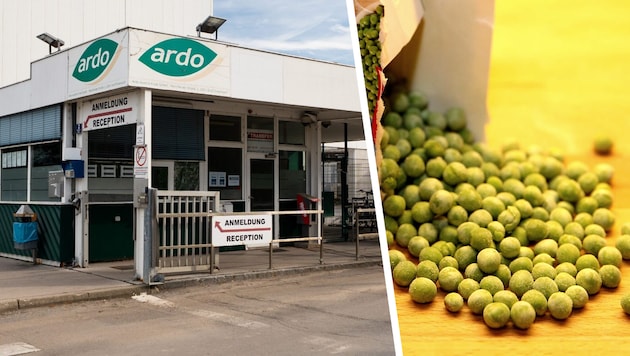



The Belgian company Ardo has abruptly left Austria: Now local vegetable farmers are freezing their own produce. Several local companies are expanding their processing operations, and vegetable farmers are gaining new customers. This should ensure that frozen vegetables from Austria remain on supermarket shelves. A “seamless transition” is guaranteed—even if the plant closes in 2027.
 Kronen Zeitung als bevorzugte Google-Quelle hinzufügen
The shock to Austria’s vegetable industry was immense—and ran deep. For six weeks, the Marchfeld region faced the threat of losing its frozen food supply. Austria’s supply of Austrian-grown vegetables was at stake. As is well known, the Belgian Ardo Group did not want to sell its plant—along with its expensive equipment—partly out of fear of competition—and consequently intended to supply the country from Belgium with Belgian vegetables.
After lengthy negotiations, however, a solution has now been found—and one that does not involve the Belgian vegetable giant: Several domestic companies are expanding their processing operations, and vegetable farmers are gaining new buyers. This should ensure that frozen vegetables from Austria remain on supermarket shelves.
The farmers are taking matters into their own hands
“We have succeeded in securing the supply of ‘red-white-red’ vegetables,” says Lower Austria’s Deputy Governor Stephan Pernkopf, who led the negotiations alongside Lorenz Mayr, the president-elect of the Lower Austrian Chamber of Agriculture. Both sum up the situation in a single phrase: “Corporations are shutting down, but local family farms and farmers’ cooperatives will ensure the supply of local vegetables well into the future.”
There’s a reason why there was such a fierce battle over a single plant. The Ardo case shows just how fragile the food supply chain is. According to Mayr, more than 80 percent of domestic frozen vegetables are produced at the plant in Groß-Enzersdorf.
A replacement “can’t be found quickly,” and it shows “just how vulnerable we are here in Austria.” Almost the entire domestic supply of frozen vegetables—from Iglo to the private labels of the major chains—depends on the Marchfeld region. If the plant closes, spinach and peas will have to come from abroad.
A lot of money is at stake: In 2025, farmers in the Marchfeld region supplied around 40,000 metric tons of raw produce worth 18.5 million euros. Retailers have also thrown their support behind domestic produce. The supermarket giant SPAR does not want to use foreign frozen vegetables from the Belgian company for its private labels, and Billa’s parent company, Rewe, intends to “continue to consistently” rely on frozen vegetables from Austria. Pernkopf and Mayr draw this lesson from the situation: Instead of depending on a single international corporation, the supply chain will be “diversified” in the future.
Fear of Competition
On September 24, Ardo announced that it would close the plant in Groß-Enzersdorf in 2027. This affects 190 employees and 50 temporary workers, as well as approximately 500 farms belonging to the Frozen Vegetable Producers’ Organization (ETG) spanning about 3,300 hectares. For the region, this was “the second major blow” following the closure of the Agrana sugar factory in Leopoldsdorf. The federal and state governments offered assistance, but Ardo rejected the aid and subsidy package—partly out of fear of domestic competition—and did not consider a sale of the facility to be realistic. More than 106,000 people signed a petition in support of Marchfeld frozen vegetables.

Ardo presented Lower Austria with a fait accompli, but thanks to the efforts of the past few weeks, a strong solution was found.
NÖ-Landeshauptfrau Johanna Mikl-Leitner
The Red-White-Red Rescue
The ETG producers’ cooperative is at the heart of the new solution. Through new domestic buyers, including Waldland, up to approximately 2,000 hectares can be cultivated in the future. The plan is to grow soybeans and edamame, leafy and root vegetables, herbs, and potatoes. A dedicated processing line for leafy vegetables is being considered. “We spent days and nights searching for solutions,” says ETG Chairman Robert Kriegl. Schneider’s vegetable farm in Groß-Enzersdorf is also significantly expanding its capacity. According to the negotiators, more vegetables could ultimately be grown in the Marchfeld region than before. Agriculture Minister Norbert Totschnig sees the “gap in the red-white-red value chain as closed.” Supplies of nearly all domestic vegetable varieties can be secured—only for frozen spinach does a solution still need to be found.
That’s enough to catch our breath, but not yet to sit back and relax. Whether the new structures will hold up will become clear with the spring harvest. However, a “seamless transition” is guaranteed. Pernkopf and Mayr say it themselves: Anyone who wants domestic vegetables on the shelves needs not only farmers but “also a strong domestic processing sector.”
This article has been automatically translated,
read the original article here.










Willkommen in unserer Community! Eingehende Beiträge werden geprüft und anschließend veröffentlicht. Bitte achten Sie auf Einhaltung unserer Netiquette und AGB. Für ausführliche Diskussionen steht Ihnen ebenso das krone.at-Forum zur Verfügung. Hier können Sie das Community-Team via unserer Melde- und Abhilfestelle kontaktieren.
Hinweis in eigener Sache: Das krone.at-Forum präsentiert sich ab sofort in neuem Design! Wir freuen uns über konstruktives Feedback. Damit die Diskussionen in den Kommentarbereichen beim jeweiligen Thema bleiben, können Sie uns Rückmeldungen hier hinterlassen.
User-Beiträge geben nicht notwendigerweise die Meinung des Betreibers/der Redaktion bzw. von Krone Multimedia (KMM) wieder. In diesem Sinne distanziert sich die Redaktion/der Betreiber von den Inhalten in diesem Diskussionsforum. KMM behält sich insbesondere vor, gegen geltendes Recht verstoßende, den guten Sitten oder der Netiquette widersprechende bzw. dem Ansehen von KMM zuwiderlaufende Beiträge zu löschen, diesbezüglichen Schadenersatz gegenüber dem betreffenden User geltend zu machen, die Nutzer-Daten zu Zwecken der Rechtsverfolgung zu verwenden und strafrechtlich relevante Beiträge zur Anzeige zu bringen (siehe auch AGB). Hier können Sie das Community-Team via unserer Melde- und Abhilfestelle kontaktieren.