Released into the Adriatic Sea
Italy: 150,000 octopuses to combat a crab invasion
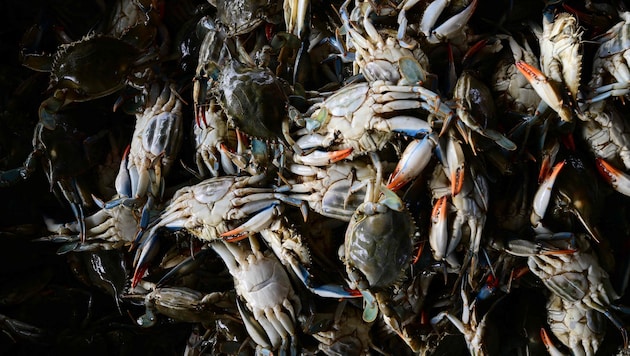
Octopuses just a few days old and a fully grown female were released into the Adriatic Sea on Monday off the coast of the northern Italian seaside resort of Cesenatico. They are intended to help curb the spread of the blue crab. This invasive species has disrupted the ecological balance in the sea and caused significant economic damage to the fishing industry in recent years.
 Kronen Zeitung als bevorzugte Google-Quelle hinzufügen
 A total of 150,000 young octopuses are to be deployed against the blue crab in the Adriatic Sea. The release is part of the “Octo-Blu” project, which is sponsored and funded by the northern Italian region of Emilia-Romagna and carried out in collaboration with the University of Bologna. The project is investigating whether octopuses, as natural predators of the blue crab, can help control the invasive species.
Octopuses “love to eat” crabs
The project has been underway for just under two years. During this time, the researchers have collected data on the relationship between the two species and further developed methods for keeping the octopuses. The release is to be followed by a scientific observation phase. During this phase, the researchers aim to study how the released octopuses develop and whether they can actually help limit the blue crab population.
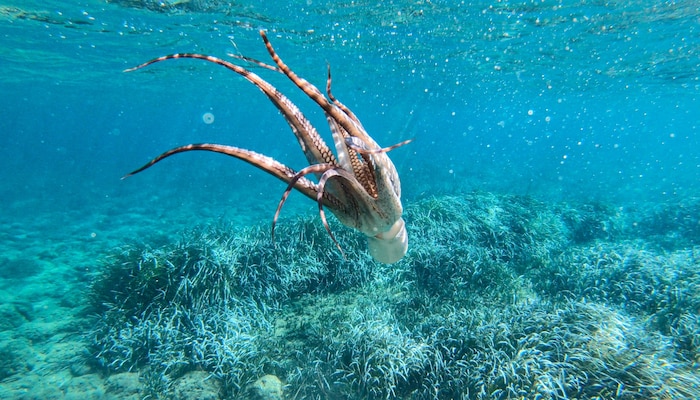
“We have found that the octopus is a very effective predator of crustaceans, particularly the blue crab,” marine biologist Antonio Casalini, who is involved in the project, told the AFP news agency. As early as 2025, the blue crab’s reproduction and diet were initially studied. In the second year of the project, the researchers focused on the octopuses’ hunting behavior.
Octopuses are popular catch
However, the experiment has also drawn criticism. Opponents fear that releasing a large number of these animals could alter the delicate ecosystem of the Adriatic Sea. The researchers dismiss these concerns. They note that the octopus is already native to the waters of Romagna and is fished there in large quantities. A sustained spread is not expected due to its relatively short lifespan of about two years on average.
This article has been automatically translated,
read the original article here.











Willkommen in unserer Community! Eingehende Beiträge werden geprüft und anschließend veröffentlicht. Bitte achten Sie auf Einhaltung unserer Netiquette und AGB. Für ausführliche Diskussionen steht Ihnen ebenso das krone.at-Forum zur Verfügung. Hier können Sie das Community-Team via unserer Melde- und Abhilfestelle kontaktieren.
Hinweis in eigener Sache: Das krone.at-Forum präsentiert sich ab sofort in neuem Design! Wir freuen uns über konstruktives Feedback. Damit die Diskussionen in den Kommentarbereichen beim jeweiligen Thema bleiben, können Sie uns Rückmeldungen hier hinterlassen.
User-Beiträge geben nicht notwendigerweise die Meinung des Betreibers/der Redaktion bzw. von Krone Multimedia (KMM) wieder. In diesem Sinne distanziert sich die Redaktion/der Betreiber von den Inhalten in diesem Diskussionsforum. KMM behält sich insbesondere vor, gegen geltendes Recht verstoßende, den guten Sitten oder der Netiquette widersprechende bzw. dem Ansehen von KMM zuwiderlaufende Beiträge zu löschen, diesbezüglichen Schadenersatz gegenüber dem betreffenden User geltend zu machen, die Nutzer-Daten zu Zwecken der Rechtsverfolgung zu verwenden und strafrechtlich relevante Beiträge zur Anzeige zu bringen (siehe auch AGB). Hier können Sie das Community-Team via unserer Melde- und Abhilfestelle kontaktieren.