Ambassadors summoned
Austria Confirms Attacks by Russian Hackers
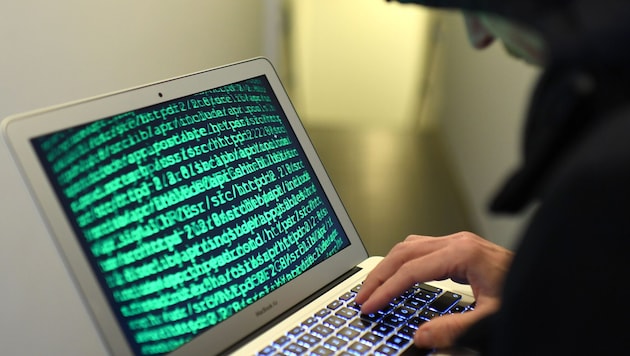

It has now been officially confirmed: The Republic of Austria has become the target of massive cyberattacks originating in Russia, orchestrated by the Russian intelligence service, the FSB. As a result, the Foreign Ministry in Vienna summoned the Russian ambassador on Tuesday afternoon.
 Kronen Zeitung als bevorzugte Google-Quelle hinzufügen
 This information comes from the latest statement by all 27 EU member states regarding Russian cyberattacks. The statement indicates that the Russian hacker group Turla, which is believed to be affiliated with the FSB, was behind the cyberattack on the Austrian Ministry of Foreign Affairs around the turn of the year 2019/2020.
Turla Hacker Group Played a Key Role
According to the EU, Russia’s domestic intelligence service, the FSB, is behind the attacks on public institutions and critical infrastructure throughout Europe, including Austria. The cyberespionage group Turla is said to have played a major role. Turla is one of the FSB’s best-known hacker groups and is most likely attributed to “Center 16.” Turla primarily uses malware it has developed in-house.
Numerous Other EU Countries Affected
The affected member states include Austria, as well as Germany, Finland, France, the Netherlands, Poland, Romania, Slovakia, and Cyprus. Most recently, Russian hackers sabotaged combined heat and power plants in Poland and infiltrated government and defense industry networks in France.
In response, the EU is set to announce the largest package of cyber sanctions in its history later this week. This includes summoning the Russian ambassador in Austria—as well as in Germany, France, and other EU countries. The attacks on critical infrastructure are being strongly condemned.
Austria is investing in the protection of its IT systems
Austria will better protect its IT systems through technical, organizational, and personnel measures. In light of increasing cyber threats, investments in IT security are also included in the 2027/28 biennial budget.
Sharp Criticism from the Foreign Ministry
An initial statement from Foreign Minister Beate Meinl-Reisinger reads: “Cyberattacks threaten our security: When payment systems fail or rail systems and hospitals are attacked, it affects every single one of us. Europe is experiencing more and more such attacks, and one of the main perpetrators is Russia. Austria is also affected. The public has a right to know where the threat is coming from. That is why we are not hiding behind diplomatic platitudes, but are naming those responsible and taking action. We are strengthening our own security and have launched the EU’s largest package of cyber sanctions. We are making it unmistakably clear to the Russian ambassador in Austria: Cyberattacks on Austria are unacceptable.”

Cyberattacks on Austria are unacceptable.
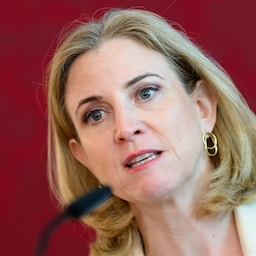
Außenministerin Beate Meinl-Reisinger
Bild: APA/MAX SLOVENCIK
State Secretary Jörg Leichtfried has also spoken out. He says: “In light of heightened geopolitical tensions and new technical capabilities, espionage is taking on increasingly diverse forms. Above all, state-sponsored manipulation, disinformation campaigns, hybrid attacks, and acts of sabotage are on the rise. We have also seen this in past Russian cyberattacks on the Austrian Ministry of Foreign Affairs. These must be condemned in the strongest possible terms. They constitute an attack on our sovereignty, with the long-term goal of manipulating public opinion and thereby destabilizing politics, the economy, and society. Leichtfried thanks the Austrian Office for the Protection of the Constitution and all security agencies involved for their efforts.
This article has been automatically translated,
read the original article here.











Willkommen in unserer Community! Eingehende Beiträge werden geprüft und anschließend veröffentlicht. Bitte achten Sie auf Einhaltung unserer Netiquette und AGB. Für ausführliche Diskussionen steht Ihnen ebenso das krone.at-Forum zur Verfügung. Hier können Sie das Community-Team via unserer Melde- und Abhilfestelle kontaktieren.
Hinweis in eigener Sache: Das krone.at-Forum präsentiert sich ab sofort in neuem Design! Wir freuen uns über konstruktives Feedback. Damit die Diskussionen in den Kommentarbereichen beim jeweiligen Thema bleiben, können Sie uns Rückmeldungen hier hinterlassen.
User-Beiträge geben nicht notwendigerweise die Meinung des Betreibers/der Redaktion bzw. von Krone Multimedia (KMM) wieder. In diesem Sinne distanziert sich die Redaktion/der Betreiber von den Inhalten in diesem Diskussionsforum. KMM behält sich insbesondere vor, gegen geltendes Recht verstoßende, den guten Sitten oder der Netiquette widersprechende bzw. dem Ansehen von KMM zuwiderlaufende Beiträge zu löschen, diesbezüglichen Schadenersatz gegenüber dem betreffenden User geltend zu machen, die Nutzer-Daten zu Zwecken der Rechtsverfolgung zu verwenden und strafrechtlich relevante Beiträge zur Anzeige zu bringen (siehe auch AGB). Hier können Sie das Community-Team via unserer Melde- und Abhilfestelle kontaktieren.