Verbal escalation
“Finger on the trigger”: Peace in Iran is crumbling
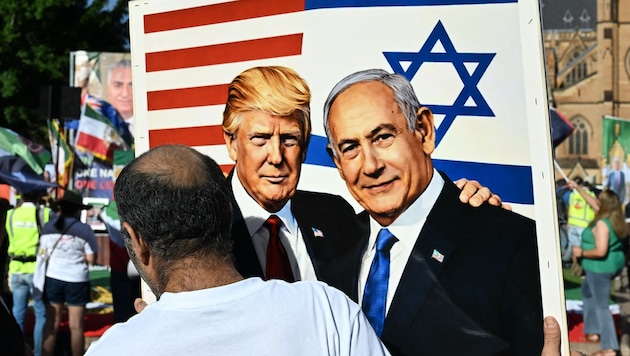

The ceasefire in the Iran war is already in acute danger on its very first day. All warring parties are trading accusations. Instead of letting diplomacy prevail, there is an escalation of rhetoric—and disputes over supposed agreements...
 Kronen Zeitung als bevorzugte Google-Quelle hinzufügen
 Following the intense Israeli attacks on Lebanon, Iran has completely closed the Strait of Hormuz, according to a television report. Parliament Speaker Mohammad Bagher Qalibaf accused the U.S. on Wednesday evening of having already violated three key points of the ten-point plan. A bilateral ceasefire or negotiations would be “pointless” under these circumstances.
Iran Considers Withdrawing from Ceasefire
Earlier, the Fars news agency reported that Tehran was considering withdrawing from the agreed two-week ceasefire with the U.S. due to Israeli attacks on its ally Hezbollah. Iranian Foreign Minister Abbas Araqchi called on the U.S. to persuade Israel to halt its attacks on Lebanon.
“The conditions for the ceasefire between Iran and the U.S. are clear and unambiguous: The U.S. must decide—either a ceasefire or the continuation of the war via Israel. They cannot have both,” Araqchi wrote on Wednesday on the platform X.
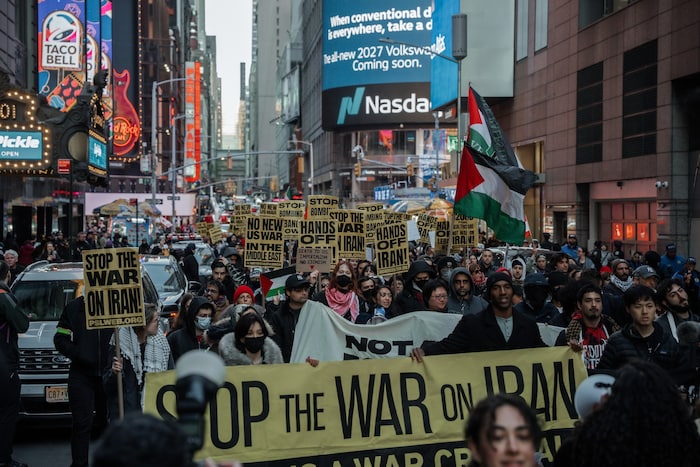
An Iranian military official said that oil tankers are being denied passage through the Strait of Hormuz. This contradicts the agreement with the U.S. According to Fars, only two oil tankers passed through the Strait of Hormuz before shipping traffic was suspended again in protest against Israeli actions in Lebanon.
The Iranian Port Authority is advising ships against attempting to pass through the Strait of Hormuz without prior coordination with the Revolutionary Guards, Iran’s elite military force. In a statement distributed via the state news channel Khabar-Fouri and the state broadcaster IRIB, among others, the authority cited the danger of mines in the vital strait following weeks of war.
On Wednesday afternoon (local time), the White House called for the immediate reopening of the shipping route. President Donald Trump expects the strait to be “reopened immediately, quickly, and safely,” White House spokeswoman Karoline Leavitt said Wednesday in Washington. Any closure is “completely unacceptable.”
Trump wants to bomb Lebanon
According to the Iranian leadership, Israel is violating the ceasefire agreed upon with the U.S. through its ongoing attacks on Hezbollah. Pakistani Prime Minister Shehbaz Sharif wrote on X that the ceasefire explicitly applies to Lebanon as well. Pakistan had brokered the ceasefire between Washington and Tehran.
U.S. President Donald Trump disagreed. On Wednesday, he confirmed Israeli claims that the ceasefire does not apply to Lebanon. The reason is the pro-Iranian Hezbollah militia in Lebanon, Trump told PBS. When asked whether he approved of the ongoing Israeli attacks on Hezbollah, Trump replied, according to PBS reporter Liz Landers, that this was “part of the agreement” and would be addressed later. Germany, other European countries, and Canada had called for the ceasefire to be implemented “in Lebanon as well.”
According to Leavitt, Trump intends to discuss the situation in Lebanon with Israeli Prime Minister Benjamin Netanyahu. The issue will be further discussed with Netanyahu and all parties involved, she said. Initial talks with Iran were supposed to take place on Saturday in Pakistan.

I think the Iranians thought that the ceasefire included Lebanon...
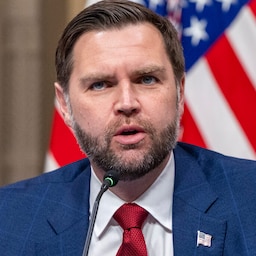
JD Vance
Bild: EPA/SHAWN THEW / POOL
There was apparently “a misunderstanding” regarding the Lebanon issue, Trump’s deputy JD Vance also said on Wednesday at the conclusion of a trip to Budapest. “I think the Iranians thought the ceasefire included Lebanon, and that simply wasn’t the case. We never made that promise,” Vance said.
If the Iranians caused the negotiations to fail over this issue, it would be “ultimately their decision,” he added. At the same time, Vance called on Iran to open the Strait of Hormuz to oil tankers as promised. Should the Iranians “break their part of the deal, they will face serious consequences,” he warned.
Furthermore, confusion persists regarding which peace plan serves as the foundation for the negotiators. Several versions have been circulated. A high-ranking U.S. government official said that Iran’s ten-point plan is not a basis for the talks. The plan contains several points strictly rejected by the U.S., such as permission for uranium enrichment, the lifting of all U.S. sanctions, and Iranian control of the Strait of Hormuz.
Netanyahu Has His “Finger on the Trigger”
Israeli Prime Minister Netanyahu stated that the ceasefire in the Iran war is “not the end of the fight.” Rather, it is a “step on the path to achieving all our goals,” Netanyahu said in a speech on Wednesday. “We are ready to resume fighting at any time,” the prime minister said. He added that they still have their “finger on the trigger.”
Earlier, Netanyahu had emphasized that the ceasefire applies only to the conflict between the U.S. and Iran—but not to Israel’s operations against Hezbollah. Furthermore, Israel accuses Iran of continuing its attacks on the country after the ceasefire took effect.
U.S. President Insists on a “REAL AGREEMENT”
Trump threatened Iran with a new military escalation if, according to his interpretation, it did not fully adhere to the ceasefire agreement. U.S. military ships, aircraft, and soldiers would remain stationed around Iran, with additional equipment if necessary, Trump wrote on his platform Truth Social.
This would remain in effect until the “REAL DEAL that was reached is fully complied with.” Everything necessary for the “destruction” of an already weakened adversary would be kept at the ready, he continued.
Should this not happen, significantly stronger military measures would follow. Then the “shooting” would begin—“bigger, better, and stronger” than ever before, Trump warned. However, it was “highly unlikely” that Tehran would not comply.
In his post, Trump reiterated key U.S. demands: Iran must not possess nuclear weapons, and the Strait of Hormuz must remain “open and secure.” Trump also stated that the U.S. military continues to build up its capabilities and is already looking forward to “its next conquest.”
This article has been automatically translated,
read the original article here.











Liebe Leserin, lieber Leser,
die Kommentarfunktion steht Ihnen ab 6 Uhr wieder wie gewohnt zur Verfügung.
Mit freundlichen Grüßen
das krone.at-Team
Hinweis in eigener Sache: Schon bald erwartet Sie auf krone.at ein rundum erneuerter Forenbereich mit vielen neuen Features! Mehr Informationen finden Sie hier.
User-Beiträge geben nicht notwendigerweise die Meinung des Betreibers/der Redaktion bzw. von Krone Multimedia (KMM) wieder. In diesem Sinne distanziert sich die Redaktion/der Betreiber von den Inhalten in diesem Diskussionsforum. KMM behält sich insbesondere vor, gegen geltendes Recht verstoßende, den guten Sitten oder der Netiquette widersprechende bzw. dem Ansehen von KMM zuwiderlaufende Beiträge zu löschen, diesbezüglichen Schadenersatz gegenüber dem betreffenden User geltend zu machen, die Nutzer-Daten zu Zwecken der Rechtsverfolgung zu verwenden und strafrechtlich relevante Beiträge zur Anzeige zu bringen (siehe auch AGB). Hier können Sie das Community-Team via unserer Melde- und Abhilfestelle kontaktieren.