One Year After the Drama
Automatic Draft
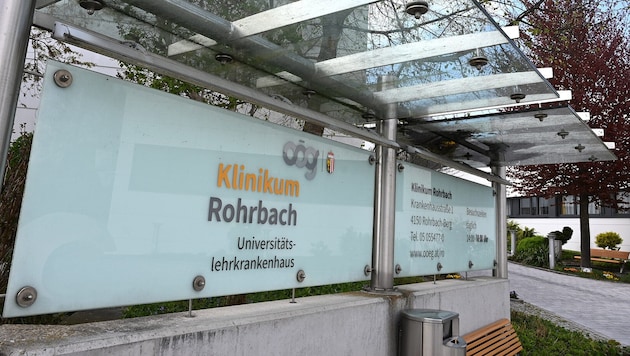

A year ago, the “Krone” reported on the tragic death of a woman from the Mühlviertel region for whom, despite a life-threatening diagnosis, no specialized hospital could be found. The case shook the healthcare system in Upper Austria. Now, those in charge are taking stock of what has changed since then.
 Kronen Zeitung als bevorzugte Google-Quelle hinzufügen
 The fate of a woman from the Mühlviertel region, who could not be transferred to a specialized hospital after her aorta ruptured, marked a turning point for the healthcare system in Upper Austria. The background details uncovered by the “Krone” laid bare, without mercy, what went wrong in a medical emergency despite well-established routines.
Doctors made fruitless phone calls from Vienna through St. Pölten, Linz, and Salzburg all the way to Passau in an attempt to secure a spot in a cardiac surgery unit. A rescue helicopter was not even available that night for a potential transport.

I am deeply convinced that the healthcare system in Upper Austria has indeed been strengthened over the past twelve months.

Gesundheitsreferentin und LH-Vize Christine Haberlander
Bild: FOTOKERSCHI / WERNER KERSCHBAUMMAYR
Following a review by a commission of experts and their specific recommendations for improvement, emergency management for such cases has been reorganized. Kostja Steiner, Medical Director of Rohrbach Hospital and head of the Escalation Management Project, explains: “The procedures are very clearly defined—for all healthcare facilities.”
This lays the foundation. It was implemented very quickly and without any problems. It has truly been supported by all parties involved.

Kostja Steiner, Ärztlicher Direktor Klinikum Rohrbach
Bild: FL
Specifically, this means: If three designated and contacted specialty hospitals cannot admit an emergency patient, the center originally responsible must take over care—even if it actually has no available capacity.
In the case of cardiac surgery emergencies, the Kepler University Hospital in Linz plays a central role. Its director, Meinhard Lukas, says: “Then we do everything humanly possible to treat this fourth or fifth patient in some way.”
“Red Phone” and Helicopters for the Night
In addition, a sort of “red phone” has been in place since July, ensuring direct and priority communication between hospital doctors. This is intended to save valuable minutes by eliminating time-consuming transfers and hold times. And there’s another improvement: Since September 25, a rescue helicopter has been available in Upper Austria even at night.
This article has been automatically translated,
read the original article here.











Willkommen in unserer Community! Eingehende Beiträge werden geprüft und anschließend veröffentlicht. Bitte achten Sie auf Einhaltung unserer Netiquette und AGB. Für ausführliche Diskussionen steht Ihnen ebenso das krone.at-Forum zur Verfügung. Hier können Sie das Community-Team via unserer Melde- und Abhilfestelle kontaktieren.
Hinweis in eigener Sache: Das krone.at-Forum präsentiert sich ab sofort in neuem Design! Wir freuen uns über konstruktives Feedback. Damit die Diskussionen in den Kommentarbereichen beim jeweiligen Thema bleiben, können Sie uns Rückmeldungen hier hinterlassen.
User-Beiträge geben nicht notwendigerweise die Meinung des Betreibers/der Redaktion bzw. von Krone Multimedia (KMM) wieder. In diesem Sinne distanziert sich die Redaktion/der Betreiber von den Inhalten in diesem Diskussionsforum. KMM behält sich insbesondere vor, gegen geltendes Recht verstoßende, den guten Sitten oder der Netiquette widersprechende bzw. dem Ansehen von KMM zuwiderlaufende Beiträge zu löschen, diesbezüglichen Schadenersatz gegenüber dem betreffenden User geltend zu machen, die Nutzer-Daten zu Zwecken der Rechtsverfolgung zu verwenden und strafrechtlich relevante Beiträge zur Anzeige zu bringen (siehe auch AGB). Hier können Sie das Community-Team via unserer Melde- und Abhilfestelle kontaktieren.