A Few Problem Cases
A Mixed First Week of the Headscarf Ban
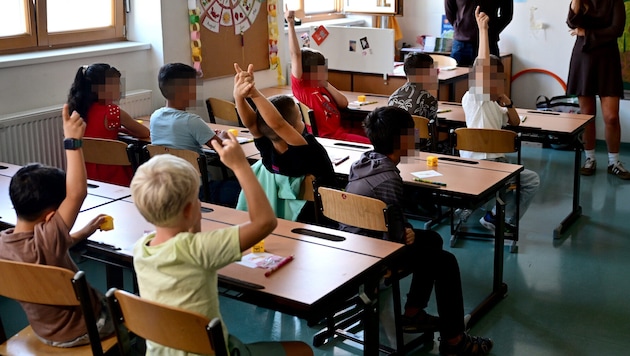


The first week of the headscarf ban in schools in Vienna, Lower Austria, and Burgenland has been surprisingly calm, but not entirely without a hitch. Staff representatives report that there were difficulties, particularly at problem schools in the capital. However, resolving conflicts involving cases of undue hardship is still ahead.
 Kronen Zeitung als bevorzugte Google-Quelle hinzufügen
 In general, the process has gotten off to a “orderly start and with great respect,” says Paul Kimberger (FCG), the top teachers’ representative, in an interview with the “Krone.” The Department of Education confirms this initial feedback. So far, only “a few calls” have been received from school administrators—mostly regarding legal and substantive questions.
Conflicts Primarily in Secondary Schools
In the federal capital, a quick survey of the 550 elementary, middle, and special schools revealed that individual problem cases had been reported “across the board,” according to Thomas Krebs (FCG), vice-chair of the Central Committee of the Vienna State Teachers’ Association. Conflicts certainly exist in elementary schools as well, but they occur more frequently at the secondary level.
As early as Tuesday and Wednesday, many girls were summoned to the principal’s office along with their parents for a meeting because they refused to remove their headscarves even after being asked to do so by a teacher, Krebs said. Based on feedback so far, about half of the cases were resolved, in part because the parents had sent their daughters to school wearing headscarves simply out of ignorance.
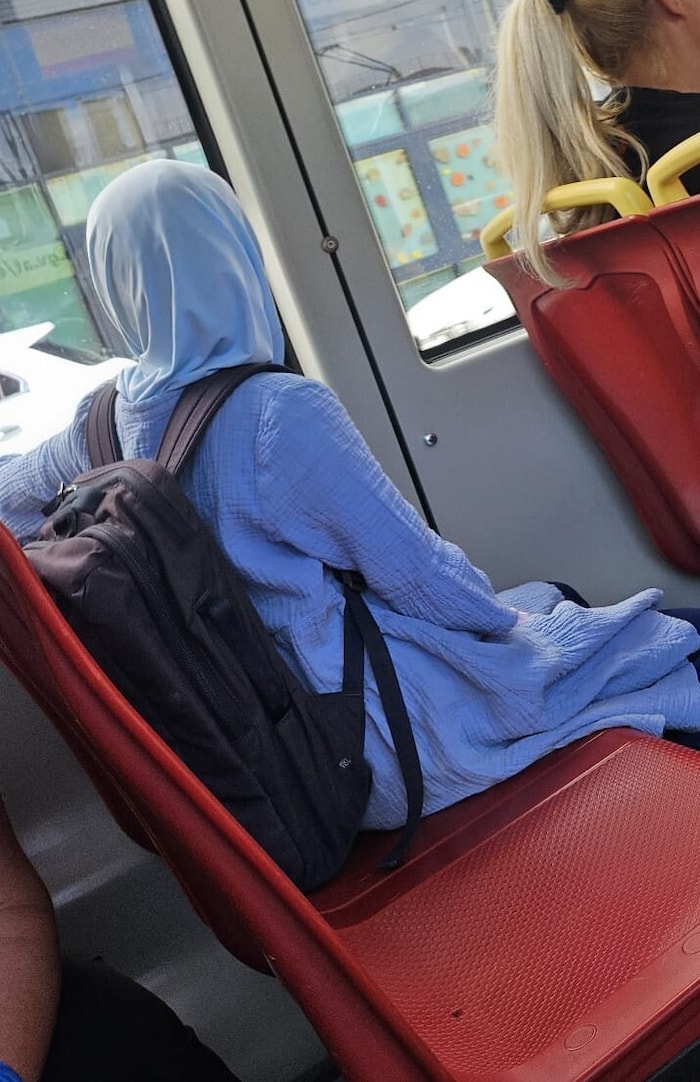
Where no resolution was reached, the Department of Education steps in
Hardship cases are to be resolved at the next level: If teachers and school administrators are unable to make progress through discussions and parents continue to insist on the headscarf, the Department of Education takes over as the third level of escalation. “Starting next week, there will already be individual cases that end up with us,” according to the Vienna Department of Education. The first figures are expected to be available by midweek.
Integration Minister Claudia Bauer sees this as confirmation of the right course: “Based on the feedback so far, the ban on children wearing headscarves has gotten off to a good start.” She adds that it is “still too early” to get a definitive picture. But one thing is clear: The grace period during the first few days of school is over—now we’ll see who accepts the ban and where the conflict escalates.
In the event of further violations, parents face administrative fines of up to 800 euros, even on multiple occasions. Prolonged absence from school also has consequences.
Escaping to homeschooling is nearly impossible
The option of switching to homeschooling is also largely blocked. “It is not possible to withdraw a child from school in the middle of the school year,” clarified Director of Education Elisabeth Fuchs. Anyone wishing to take this route had to withdraw their child no later than one week after the end of the previous school year.
And even after that, strict requirements apply: The instruction must be at least equivalent, and a review meeting and external exams are mandatory every year. Anyone who fails to appear, refuses to take the exam, or fails it must return to public school. Additionally, administrative penalty proceedings will follow.
For children in German language support classes or courses, home schooling is strictly prohibited. So far, there has been no wave of deregistrations due to the headscarf ban. Education Minister Christoph Wiederkehr: “We’re not seeing an upward trend there at the moment.” The number of children being homeschooled has been falling “very sharply again” since the start of the pandemic. This means that even this loophole is closing: Anyone who is only now trying to circumvent the headscarf ban by withdrawing their child from school is too late.
Few problems in rural areas as well
In Lower Austria and Burgenland, there were ten and two reports of violations, respectively. In Burgenland, the conflicts at school were resolved, and there were no withdrawals, according to the office of the responsible state councilor, Daniela Winkler.
“It’s clear to me: Rules that apply in Austria must be followed without exception. Anyone who deliberately flouts them must expect the consequences provided for by law. Integration also means respecting our legal system and our shared rules,” said Lower Austria’s State Councilor for Education, Christiane Teschl-Hofmeister.
This article has been automatically translated,
read the original article here.











Liebe Leserin, lieber Leser,
die Kommentarfunktion steht Ihnen ab 6 Uhr wieder wie gewohnt zur Verfügung.
Mit freundlichen Grüßen
das krone.at-Team
Hinweis in eigener Sache: Das krone.at-Forum präsentiert sich ab sofort in neuem Design! Wir freuen uns über konstruktives Feedback. Damit die Diskussionen in den Kommentarbereichen beim jeweiligen Thema bleiben, können Sie uns Rückmeldungen hier hinterlassen.
User-Beiträge geben nicht notwendigerweise die Meinung des Betreibers/der Redaktion bzw. von Krone Multimedia (KMM) wieder. In diesem Sinne distanziert sich die Redaktion/der Betreiber von den Inhalten in diesem Diskussionsforum. KMM behält sich insbesondere vor, gegen geltendes Recht verstoßende, den guten Sitten oder der Netiquette widersprechende bzw. dem Ansehen von KMM zuwiderlaufende Beiträge zu löschen, diesbezüglichen Schadenersatz gegenüber dem betreffenden User geltend zu machen, die Nutzer-Daten zu Zwecken der Rechtsverfolgung zu verwenden und strafrechtlich relevante Beiträge zur Anzeige zu bringen (siehe auch AGB). Hier können Sie das Community-Team via unserer Melde- und Abhilfestelle kontaktieren.