Health Care Reform & Co.
Stocker: “I Don’t Make Any Guarantees in Principle”
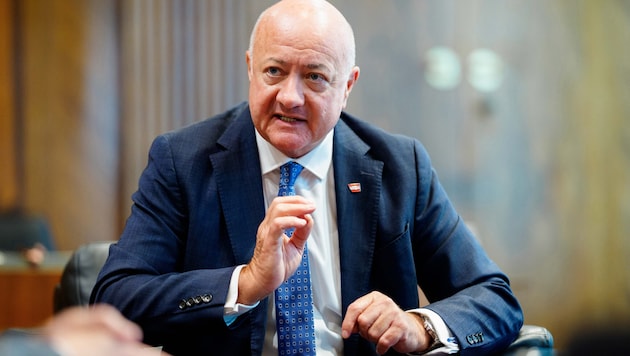


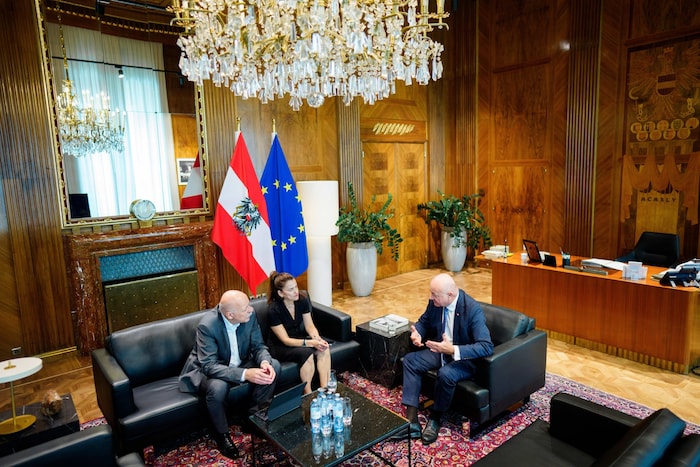
In an interview with “Krone,” Chancellor Christian Stocker (ÖVP) defends the much-criticized results of the reform partnership. “People don’t really care about the structure.” What matters to people, he says, are tangible improvements.
 Kronen Zeitung als bevorzugte Google-Quelle hinzufügen
 “Krone”: Mr. Chancellor, the government speaks of milestones that have been reached, and the State Secretary refers to the largest shift in authority in 100 years. But do you also understand people who say: “The mountains went into labor and gave birth to a little mouse”?
Christian Stocker: We’ve always viewed this entire reform discussion from the perspective of the people. It’s not about where authority is shifting or which structure is being redesigned or changed, but rather what benefits people in this country derive from it. I believe that people don’t really care what structure enables them to get a doctor’s appointment faster, or what structure or distribution of responsibilities ensures that all children in school will ultimately be able to read, write, and do math.
But do you get the impression that, following the presentation, this is actually being understood—that is, that people understand this now has very concrete implications for their everyday lives?
We want to improve medical care, for example by expanding telemedicine and by making the 1450 health hotline the first point of contact for health questions throughout Austria. In doing so, we also aim to relieve the burden on hospital emergency rooms. These are often visited even though patients would be better off elsewhere. This overloads the system. We want to improve services through primary care centers and specialist centers while simultaneously reducing the strain on emergency rooms.
The healthcare analysis commissioned by the government itself recommends a reduction in hospital beds. Why wasn’t this issue addressed in the reform partnership?
Before considering the elimination of hospital beds, patients who are currently occupying a hospital bed unnecessarily must receive better and faster care outside the hospital. Only then can we consider reductions.
So, does that mean reducing hospital capacity is already a goal?
Of course, it’s true that we have more beds compared to other countries, without our system being that much better as a result. Many people are admitted to the hospital even though their health issues could be treated just as well—if not better—elsewhere.
Can this be achieved without structural changes?
To anyone interested in the structures, I’ll saythis: In the future, it will no longer be the case that the various stakeholders can block one another when it comes to issues of planning and managing the healthcare system. Instead, there will be arbitration procedures in the future, leading to faster decisions.
What exactly does this arbitration process entail?
If no agreement is reached within the committees, arbitration proceedings will take place. This means that prolonged deadlocks will be a thing of the past.
Who will make up this arbitration panel?
That has yet to be decided. I never said we’d be finished by June 30. We wanted to set the political course for where this reform should go and what needs to be implemented, and that’s what we’ve done.

The issue of hospital closures is not addressed in the reform paper.
Kanzler Stocker
But Burgenland is already saying “no” to what has been achieved. Can the reforms be implemented without one federal state?
If even just one little mouse had been born, the Governor of Burgenland might have said “yes” tothereform. If Burgenland decides on its own to opt out of all these systems, we’ll see what the consequences are. I don’t think it’s a wise solution to say “no” to everything.
When will the general public start to notice this change?
By the end of the year, we’ll turn the political agreement we’ve now reached into law. Then we’ll assess whether we’re meeting our goals or need to refine them.
There are some inconsistencies regarding hospital closures. Immediately after this announcement, there was a plan—whether communicated or not—that all hospitals with fewer than 180 beds should close by 2040. Can you guarantee that no hospitals will be closed?
I generally do not make guarantees. The issue of hospital closures is not addressed in the reform paper. The point is that treatments should be provided where they make medical sense, are of high quality, and are most easily and quickly accessible to people.
The dispute over non-resident patients between Vienna, Lower Austria, and Burgenland has apparently remained unresolved. Is that correct?
We could resolve this problem by redistributing responsibilities between the federal government and the states in the health sector. We have not yet found a solution here. We will work together to clarify how this can be achieved in concrete terms by the end of the year.
On the second reform topic, education: According to the government’s program, the number of education directorates was supposed to be reduced, but now they’ve suddenly become more important. What’s behind this change of heart?
In our discussions with representatives of the federal states, we’ve seen that the crux of the matter isn’t whether there’s an education directorate or not, but rather that schools employ staff from four different governing bodies —this applies to teachers, recreation instructors, support staff, and teaching assistants. We have resolved this by consolidating and standardizing these roles within the Department of Education.
This article has been automatically translated,
read the original article here.











Willkommen in unserer Community! Eingehende Beiträge werden geprüft und anschließend veröffentlicht. Bitte achten Sie auf Einhaltung unserer Netiquette und AGB. Für ausführliche Diskussionen steht Ihnen ebenso das krone.at-Forum zur Verfügung. Hier können Sie das Community-Team via unserer Melde- und Abhilfestelle kontaktieren.
User-Beiträge geben nicht notwendigerweise die Meinung des Betreibers/der Redaktion bzw. von Krone Multimedia (KMM) wieder. In diesem Sinne distanziert sich die Redaktion/der Betreiber von den Inhalten in diesem Diskussionsforum. KMM behält sich insbesondere vor, gegen geltendes Recht verstoßende, den guten Sitten oder der Netiquette widersprechende bzw. dem Ansehen von KMM zuwiderlaufende Beiträge zu löschen, diesbezüglichen Schadenersatz gegenüber dem betreffenden User geltend zu machen, die Nutzer-Daten zu Zwecken der Rechtsverfolgung zu verwenden und strafrechtlich relevante Beiträge zur Anzeige zu bringen (siehe auch AGB). Hier können Sie das Community-Team via unserer Melde- und Abhilfestelle kontaktieren.