President on the World Cup:
“I’m proud of how the team is representing Austria”
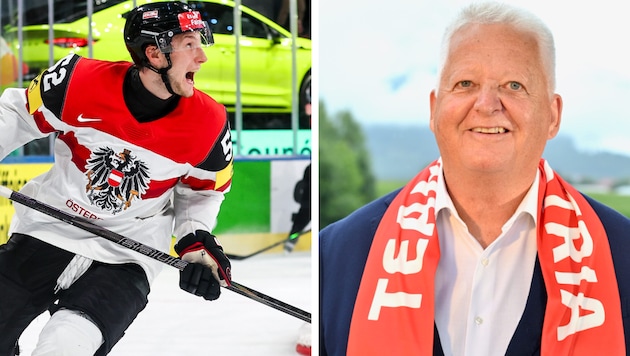

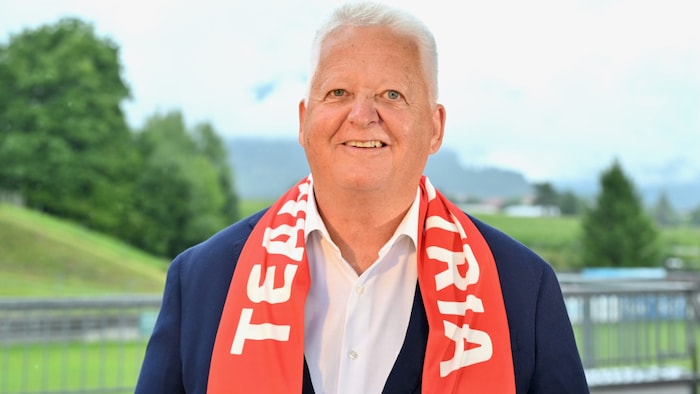
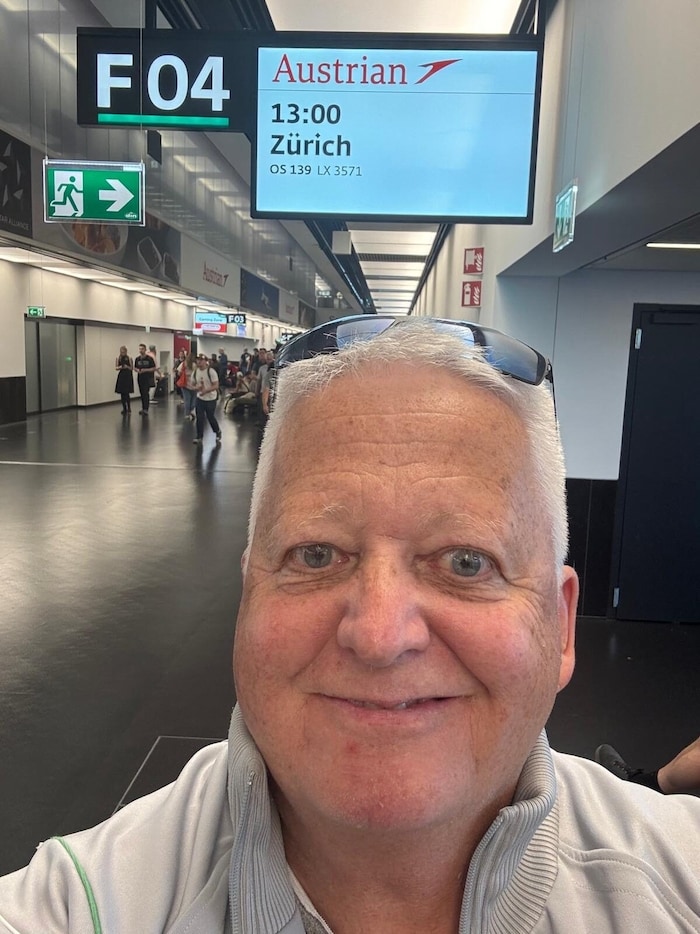
Austria’s national ice hockey team can secure an early spot in the quarterfinals on Saturday (8:20 p.m., live on sportkrone.at) at the World Championship in Switzerland against archrival Germany. Shortly before departure, krone.at asked ÖEHV President Klaus Hartmann for an in-depth interview. The Carinthian discusses the secret behind the red-white-red team’s success, the importance of ice hockey in Austria, his marketing strategies, his expectations of politicians, and how he compares himself to head coach Roger Bader.
 Kronen Zeitung als bevorzugte Google-Quelle hinzufügen
 krone.at: Mr. President, with your departure for Switzerland just around the corner: How excited are you for the rest of the A-team’s games?
Klaus Hartmann: I’m reallybuzzing —I can finally support the team in person. Just like in the past two years, the players have sparked a massive wave of euphoria with their sensational performances—a feeling that’s palpable across the entire country. We want to carry that momentum into the remaining group stage matches.
This Saturday brings the prestigious showdown against Germany. How important would it be—if only for the media buzz—to beat our “big brother”?
Matches against Germany are always something special, no matter the sport. Our game will be broadcast live on ORF 1 during prime time and is sure to draw top ratings. A victory would, of course, be a dream come true for even greater sustainability and visibility for domestic ice hockey. But: Germany is still ranked No. 8 in the world. So we’re the underdogs, but we have a realistic chance of picking up points.
Three wins in the first three games—that’s never happened before in a World Championship in Austrian hockey history. What impressed you the most about that?
The team spirit. How every player stands up for one another, throws themselves into the game, fights, and gives it their all. The stats even show us in first place for blocked shots. The team is a tight-knit group, and you can feel this positive team dynamic in every interview the players give. As president, I can only be proud of how the team represents our small country in the big world of ice hockey.
The fan support on site is also unmistakable…
The support is tremendous. Here, I’d like to give special praise to our official fan club, UFTA (United Fans Team Austria), which is there with so much fun and heart. In my opinion, we have the best fans in Europe. The costs and hardships that some members go through deserve the utmost respect. Especially since Zurich isn’t exactly cheap. Nevertheless, hundreds of fans are there at every game to support our team. Impressive.
In any case, the quarterfinals are within reach. What else is possible at this World Cup?
We’re taking it one step at a time. Right now, the focus is on the remaining three group stage matches. If we do indeed reach the knockout stage—as we did last year—then a lot is possible. I’ll just remind you of the Danes, who made it to the semifinals in 2025. And we’ve shown in the past that we can spring surprises time and again, even against bigger nations.

The team is a tight-knit group, and you can feel this positive team dynamic in every interview the players give.
Klaus Hartmann, Präsident des Österreichischen Eishockeyverbandes
In the run-up to the tournament, several key players had to withdraw. Not many experts expected Austria to perform this well before the World Cup began…
We don’t have four established center players available, and as a small nation, we first have to compensate for that. But we’ve seen in the past at major tournaments that our young players can fill the gap. Of course, that requires a head coach who trusts the young players—and fortunately, we have one. World Championship debutants Tim Harnisch, Leon Kolarik, Leon Wallner, Ian Scherzer, and Maxi Rebernig have proven themselves.
Is there one player you’d like to single out?
No, that wouldn’t be fair given the team’s overall performance. What I really like is the fact that the established players have welcomed the young ones into the team in an extremely positive way. That’s certainly one of the secrets behind why things are going so well at this World Championship.
Speaking of the head coach: How much of the success is due to Roger Bader? What kind of person is he? What sets him apart?
Roger is one of Austria’s longest-serving team managers. He has been with the federation since 2014, serving as team manager since 2016 and also as sports director. He is very organized, a meticulous worker and analyst. He plans everything months in advance. Thanks to his professionalism, the players feel very comfortable under him and are always happy to join the team. We at the federation value his expertise. Personally, I have a very trusting and respectful relationship with him.
How much Swiss precision is there in President Klaus Hartmann? Or are you a completely different type of person?
I think Roger and I are both analytical and strategic thinkers who simply value professionalism. We both keep our word. In that regard, I certainly have Swiss traits. My big difference from the Swiss mentality: I’m much more emotional and impulsive during games. In the match against Latvia, for example, I could barely sit still in the last five minutes. That’s what I admire so much about Roger—how calm and level-headed he can be on the bench.
In the fourth game against Switzerland, there was a stinging defeat. Team manager Roger Bader said that it was no disgrace, as the gap to the absolute world elite is simply too wide. What would need to change for Austria to be able to compete at this level in the long term?
Sure, the 0- 9 score was clear-cut. But it certainly also has to do with the fact that we pushed ourselves beyond our limits in the first three games. The match against Switzerland was our fourth game in five days—no other nation had such a schedule. That took its toll, and Bader rested three key players—Atte Tolvanen, Dominik Zwerger, and Vinzenz Rohrer—for tactical reasons. All in all, we simply didn’t have the physical stamina to keep up with a team like Switzerland, which is determined to become world champions on home ice. But that game is long since out of the team’s minds. Fundamentally, it must be noted that the conditions for ice hockey in Switzerland and Austria cannot be compared. We do not have the same budgetary and infrastructural resources as the Swiss. But we are, of course, striving to close the gap with the top nations step by step. In my view, however, political leaders must first and foremost raise the recognition and appreciation of sports in general within our society. Because it is unacceptable for sports to remain forever merely an afterthought in political portfolios. Politicians must recognize the preventive impact that sports has on children and young people and that greater emphasis on sports in the future would save significant additional costs in the healthcare sector (issues like obesity, etc.). And of course, for Austrian ice hockey to close the gap with the top nations, budget allocations must be increased and infrastructure significantly improved.
Political leaders must raise the level of recognition and appreciation for sports in our country.
Klaus Hartmann
Given this success, many fans are naturally wondering whether Austria might once again have the opportunity to host a World Championship (last time in 2005). How realistic would that be?
Of course, from the association’s perspective, it would be wonderful to host a World Championship. Especially considering that Switzerland expects to make millions from this World Championship. But we don’t currently have those capabilities. The existing infrastructure simply doesn’t allow for it, because such an event would require two arenas suitable for the World Championship, each with at least 10,000 seats. That would require significant funding from the federal government, the state, and local municipalities to be invested in the necessary construction projects beforehand. But in economically strained times like these—when cuts are being made everywhere—we shouldn’t delude ourselves that this scenario is realistic. However, we at least have a good chance of being awarded the U18 Women’s World Championship in January 2027.
The existing infrastructure simply doesn’t allow for it, because you would need two World Championship-ready arenas, each with at least 10,000 seats.
Klaus Hartmann über eine mögliche Eishockey-WM in Österreich
You have been ÖEHV President since June 2020: Under your leadership, the national team made its first-ever World Championship quarterfinal appearance in over 30 years. Prior to that, from an Austrian perspective, the World Championships were mostly marked by a tough fight to avoid relegation. What changes did you make from the association’s side that made such a leap possible?
When I took office, my main goals were to put the association on a solid financial footing, to further professionalize the sport of ice hockey in Austria, and to make it more visible to the general public. In other words, to give the games an event-like atmosphere with side events. With the “National Military Night” in Vienna, for example, we’ve already achieved quite a bit of success. The arenas are filling up more and more for exhibition games; in Zell am See we were even sold out, and in Vienna and Klagenfurt attendance was strong. We’ve also become more professional in merchandising, as well as in press and social media. Previously, our association had an advertising value of eight million euros; now we’re heading toward 13 million euros. So the federation is in a solid financial position, even though funding has been cut back further and further. But we’ve taken many positive steps. The dissolution of the foundation has also had a positive impact. On the sporting side, I’d also like to note that we’ve become more professional when it comes to training camps as well. Team manager Roger Bader has repeatedly emphasized how important a five-week World Cup preparation period is, during which we regularly face top nations—as was the case at the Deutschland Cup or during World Cup preparations with eight test matches. And success proves him right. We try to create the best possible conditions, but we are limited here by infrastructure and financial resources. Our goal is to invest even more in the national team, and we are working intensively on that.
What are you personally proud of?
In terms of sports, the most important thing is that our men’s team will be competing in the top division for the fifth consecutive year next year. That’s not something to be taken for granted. What fills me with the most pride is that we were honored as Team of the Year at last year’s Lotterien-Sporthilfe Gala. A first for the association. But many other positive things have happened as well. With the women’s team, we have advanced to the top division of the top ten nations for the first time in history. The second ice rink, which will be built in Villach by fall 2026, has a total project cost of approximately 30 million euros and includes the National Training Center, for which federal funding of approximately 5 million euros has been provided; the remaining costs will be covered by the state of Carinthia and the city of Villach.
You yourself were re-elected as president for another four years in the summer of 2024. Will you run for re-election again in 2028?
That question is still premature and difficult to answer from today’s perspective. If you take the role seriously, the time commitment is very high, and I’ve had to scale back quite a bit in my role as an entrepreneur. Let me put it this way: If I feel that we can still make a difference, then I am happy to take on responsibility beyond 2028 together with my colleagues on the executive committee. But it is not a question that is pressing at the moment.
For decades, many experts have identified a certain disconnect between the association and the league. In your opinion, what is the current relationship like, and what would you still like to improve?
It would be important for us all to finally realize that we can only shape and develop the product of ice hockey for the future by working together. I get the impression that certain representatives of the league view the national team and the league as separate brands rather than as a single, integrated product. But: We as an association need a strong league so that the national team can perform at its best, and conversely, (especially our young) players need a platform to draw attention to themselves. I feel that there is still too much “silo thinking” here and there, and I would like to see more people looking beyond their own horizons. “One Hockey Family” shouldn’t just be a mere catchphrase. The bigger picture should be the focus.
I get the impression that certain league representatives view the national team and the league as separate brands rather than as a single product.
Klaus Hartmann
The cornerstone of the partnership between the league and the association is the cooperation agreement, which has been in place since June 2022. This agreement governs roster sizes and player imports. How satisfied are you with how things have developed?
The goal at the time was to use the import regulations to secure more spots for Austrian players in the respective clubs. That has proven to be a complete success; many have been able to develop more quickly as a result and have made it all the way to the national team. That is also the reason why we are currently performing so strongly, because the depth of our roster has become significantly broader. Of course, from the clubs’ perspective, there are also business considerations that lead them to focus on cheaper foreign players. But our goal remains to ensure that as many spots as possible in the league are available to domestic players and that they have a future here.
Your biggest wish for Austrian ice hockey over the next two years?
That we are represented in the top division with all our national teams and that the public sector invests even more in infrastructure. With full arenas in the league and a dynamic national team, we have laid the athletic foundation. In recreational sports, we want to get even more children and young people excited about ice hockey.
This article has been automatically translated,
read the original article here.











Willkommen in unserer Community! Eingehende Beiträge werden geprüft und anschließend veröffentlicht. Bitte achten Sie auf Einhaltung unserer Netiquette und AGB. Für ausführliche Diskussionen steht Ihnen ebenso das krone.at-Forum zur Verfügung. Hier können Sie das Community-Team via unserer Melde- und Abhilfestelle kontaktieren.
User-Beiträge geben nicht notwendigerweise die Meinung des Betreibers/der Redaktion bzw. von Krone Multimedia (KMM) wieder. In diesem Sinne distanziert sich die Redaktion/der Betreiber von den Inhalten in diesem Diskussionsforum. KMM behält sich insbesondere vor, gegen geltendes Recht verstoßende, den guten Sitten oder der Netiquette widersprechende bzw. dem Ansehen von KMM zuwiderlaufende Beiträge zu löschen, diesbezüglichen Schadenersatz gegenüber dem betreffenden User geltend zu machen, die Nutzer-Daten zu Zwecken der Rechtsverfolgung zu verwenden und strafrechtlich relevante Beiträge zur Anzeige zu bringen (siehe auch AGB). Hier können Sie das Community-Team via unserer Melde- und Abhilfestelle kontaktieren.