Following an appearance on ORF
Even Schellhorn’s own party is “irritated”
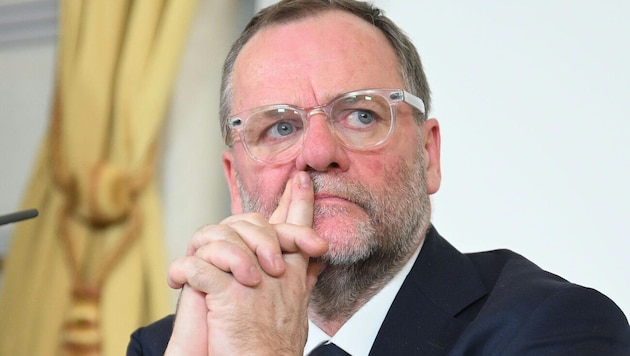


NEOS State Secretary Josef Schellhorn’s appearance on ORF’s “Pressestunde” on Sunday sparked quite a bit of discussion even within his own party. State leaders and opposition parties also sharply criticized Schellhorn. The NEOS secretary-general had to step in immediately to smooth things over...
 Kronen Zeitung als bevorzugte Google-Quelle hinzufügen
 Schellhorn apparently caught some party colleagues off guard with his statements on two controversial topics (conscription, non-wage labor costs). It seems his views were not coordinated with the party leadership.
Conscription: Schellhorn in favor of extension based on the “8+2 model”
On the subject of conscription, Schellhorn spoke out in favor of the “Austria Plus” model—that is, eight months of basic military service plus two months of mandatory reserve training—during the “Press Hour” (questions were posed by “Krone” domestic politics editor Petja Mladenova and ORF host Klaus Webhofer). He is a proponent of adhering to a clear recommendation from a commission, Schellhorn said.
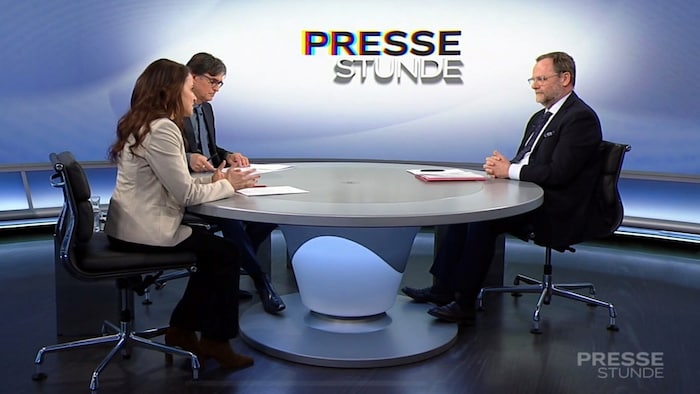
Joy at the ÖVP, but not among NEOS leadership
Schellhorn emphasized that it is only natural for a liberal party like NEOS to have differing opinions. While this was welcomed by the ÖVP, NEOS stressed that it does not represent the party line. “A cross-party show of solidarity for extending mandatory military service is essential for greater security,” explained ÖVP Secretary-General Nico Marchetti. He called it “good news” that, following SPÖ politicians Peter Kaiser and Max Lercher, the NEOS State Secretary had now also spoken out in favor of the model.
NEOS Secretary-General Douglas Hoyos, however, immediately stepped in to emphasize: “Any commitment to a specific model is a personal opinion that does not reflect the current state of negotiations.”

Any commitment to a specific model is a personal opinion that does not reflect the current state of negotiations.
NEOS-Generalsekretär Douglas Hoyos zu den Aussagen seines Parteikollegen Sepp Schellhorn zur Wehrpflicht.
Schellhorn does not believe in a reduction in non-wage labor costs next year
But the Pink State Secretary also caused a stir within his own party with his statement on non-wage labor costs. According to his own statement, Schellhorn considers a reduction in non-wage labor costs for 2027 unlikely, but says it must come “at the end of the journey”—that is, the legislative term.
Pink Chamber of Commerce faction UNOS “irritated”
This caused irritation among the Pink Chamber of Commerce faction UNOS. “We had to learn from the media today that some government members do not currently see a reduction in non-wage labor costs. As the voice of entrepreneurs, we strongly disagree with this,” explained UNOS Federal Spokesperson and Pink National Council member Michael Bernhard. For UNOS, it is inconceivable that a double budget could secure a parliamentary majority without a noticeable reduction in non-wage labor costs. The FPÖ also viewed this as a “betrayal of every entrepreneur and every employee in this country.”
We learned from the media today that some government officials currently do not see a reduction in non-wage labor costs as a priority. We disagree with this.
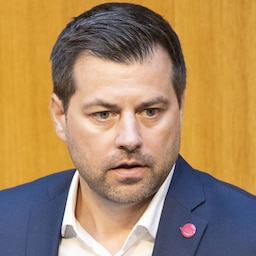
UNOS-Bundessprecher Michael Bernhard
Bild: APA/TOBIAS STEINMAURER
Once again, Hoyos had to step in to clarify the situation. “Reducing non-wage labor costs remains an absolute priority for the party in the upcoming negotiations on the two-year budget. The federal government has already decided in the Council of Ministers to reduce non-wage labor costs by the middle of the government’s term, and it is sticking to this roadmap.”
Reducing non-wage labor costs remains an absolute priority for the party in the upcoming negotiations on the two-year budget.
Abermals Douglas Hoyos zu den Aussagen Schellhorns zum Thema Lohnnebenkostensenkung für 2027.
Schellhorn took a swipe at state leaders, who promptly fired back
Schellhorn also caused a stir on “Pressestunde” with his remarks regarding the Federal Council and the Conference of State Governors. According to Schellhorn, the Federal Council—known as the second chamber of Parliament—is designed so that state leaders should sit there. If it is unreasonable to expect them to deal with this, he argued, there is no longer any need for the Conference of State Governors.
The response from Vienna followed promptly: “Austria is a federal republic. Democratic institutions are pillars of democracy and cornerstones of the Second Republic. These institutions must be treated with sensitivity. The same applies to the Conference of Provincial Governors,” says the powerful SPÖ mayor Michael Ludwig.
A change in the composition of the Federal Council is not necessary.
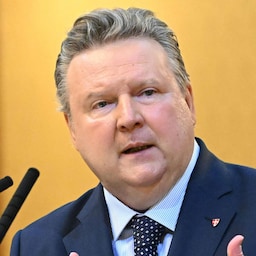
Wiens Bürgermeister Michael Ludwig (SPÖ) zur Debatte um die Abschaffung des BUndesrats.
Bild: APA/HELMUT FOHRINGER
Mattle: “Our federalism includes nine strong federal states”
Tyrol’s Governor Anton Mattle also holds a “different view.” He is chairman of the conference and says to Schellhorn: “Our federalism includes nine strong federal states, the Federal Council as a firmly established chamber of states, and the Conference of Provincial Governors, where there is good cross-state and cross-party cooperation.”
According to Mattle, Switzerland demonstrates how successful federalism can be. “Switzerland is smaller in area than Austria and also has a population of nine million, but it has 26 cantons. No one doubts Switzerland’s success when you look at its economic growth, low inflation, and competitiveness.”
Day after day, the federal states demonstrate how problems are solved and opportunities are seized.
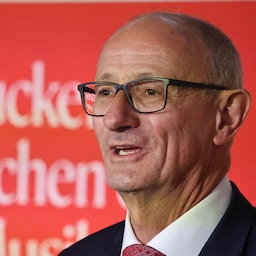
Tirols Landeshauptmann Anton Mattle (ÖVP)
Bild: Christof Birbaumer
Criticism of Schellhorn also from the FPÖ and the Greens
Schellhorn drew criticismfrom the FPÖandthe Greensfor his statements regarding the need for cost-cutting in healthcare (administration and hospitals). “While people in rural areas are fighting for every doctor, the State Secretary is fantasizing about closing hospitals,” criticized FPÖ Secretary-General Michael Schnedlitz, accusing the entire government of a lack of planning.
The Greens accused Schellhorn of talking a lot about “courage” and “reforms” and addressing key issues, but failing to offer anything concrete. “Austria needs concrete solutions, not just slogan-based politics,” said Deputy Club Chairwoman Sigrid Maurer.
This article has been automatically translated,
read the original article here.











Liebe Leserin, lieber Leser,
die Kommentarfunktion steht Ihnen ab 6 Uhr wieder wie gewohnt zur Verfügung.
Mit freundlichen Grüßen
das krone.at-Team
User-Beiträge geben nicht notwendigerweise die Meinung des Betreibers/der Redaktion bzw. von Krone Multimedia (KMM) wieder. In diesem Sinne distanziert sich die Redaktion/der Betreiber von den Inhalten in diesem Diskussionsforum. KMM behält sich insbesondere vor, gegen geltendes Recht verstoßende, den guten Sitten oder der Netiquette widersprechende bzw. dem Ansehen von KMM zuwiderlaufende Beiträge zu löschen, diesbezüglichen Schadenersatz gegenüber dem betreffenden User geltend zu machen, die Nutzer-Daten zu Zwecken der Rechtsverfolgung zu verwenden und strafrechtlich relevante Beiträge zur Anzeige zu bringen (siehe auch AGB). Hier können Sie das Community-Team via unserer Melde- und Abhilfestelle kontaktieren.