
Anthropologist explains
Not only at Christmas: Why we give each other presents
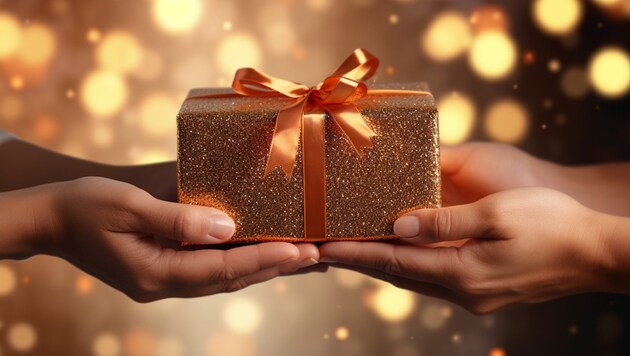

The increased volume of parcels these days is yet more proof that presents are booming at Christmas. The festival of love has also, if not exclusively, become a festival of giving. But why do we give away precious and valuable things year after year when we could keep them for ourselves?
 Kronen Zeitung als bevorzugte Google-Quelle hinzufügen
 According to the Austrian Retail Association, Austrians want to spend an average of 389 euros on gifts this year. The figure is slightly higher (399 euros) in Upper Austria and Salzburg and slightly lower (379 euros) in Tyrol and Vorarlberg. The traditionally most popular gift is and remains the gift voucher, followed by toys, books, cosmetics, sweets and clothing.
From the cave days to the present day
Gifts are not only given at Christmas, of course, but also on other (religious) holidays, birthdays, name days and a variety of other occasions - and not just since yesterday: according to paleoanthropologist Ariane Burke from the University of Montreal, our ancestors were already exchanging symbolic objects made from decorated bones, shells, teeth, ivory, stones, tree bark or feathers 35,000 years ago.
But why did our first ancestors simply give away something precious or valuable instead of keeping and using it for themselves?


















Da dieser Artikel älter als 18 Monate ist, ist zum jetzigen Zeitpunkt kein Kommentieren mehr möglich.
Wir laden Sie ein, bei einer aktuelleren themenrelevanten Story mitzudiskutieren: Themenübersicht.
Bei Fragen können Sie sich gern an das Community-Team per Mail an forum@krone.at wenden.