Upper Austria Takes Stock
746 Fewer People on Welfare
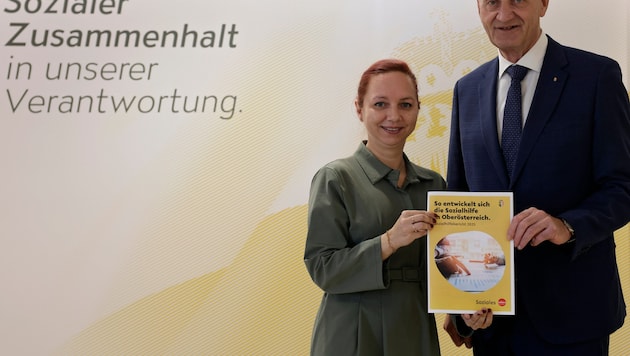

Upper Austria is tightening the screws on social assistance recipients: Those who do not cooperate can expect significant cuts—up to and including the complete withdrawal of benefits. At the same time, the number of recipients has dropped significantly.
 Kronen Zeitung als bevorzugte Google-Quelle hinzufügen
Fewer people on welfare, but stricter rules: Upper Austria takes an initial look at the stricter measures that have been in effect since February. Between February and October of this year, a total of 7,848 people received social assistance. In the same period last year, the figure was 8,594. This represents a decline of 8.7 percent, or 746 people. On a monthly average, approximately 5,100 people currently rely on social assistance.
Refusal to Work Carries Severe Consequences
State Social Affairs Minister Christian Dörfel (ÖVP) sees this as confirmation of his approach: “Social assistance is help to help oneself, not a way of life.” Those who need support should receive it. However, recipients who are able to work must actively work to improve their situation. Those who refuse must expect severe consequences: Even at the first violation of the obligation to cooperate, social assistance is reduced by 30 percent without prior warning. For a second violation, the reduction is 50 percent; in cases of persistent refusal, assistance may be completely withdrawn.
Individual Plan for the Path Back to Work
Since May, the state has also been implementing a new case management system. Social assistance recipients who are able to work are assigned to the program no later than the third month of receiving benefits, or earlier if necessary. A binding action plan is developed together with case managers. This plan may include German language courses, vocational training, or health support. The program typically lasts six months, with a maximum of nine months.
Between August and October, 406 initial consultations were conducted. 197 individuals were enrolled in the more intensive case management program due to multiple challenges. However, the report does not specify how many people actually found a job as a result.
Fewer Benefit Cuts, Little Change in Refusal to Work
The number of benefit cuts has also fallen: from 798 in the previous year to 667 in the corresponding period this year. It is striking, however, that sanctions for refusal to work remained virtually unchanged at 439 cases—compared to 441 in 2025. By contrast, violations of integration obligations have declined significantly, from 184 to 84 cases.
This article has been automatically translated,
read the original article here.










Willkommen in unserer Community! Eingehende Beiträge werden geprüft und anschließend veröffentlicht. Bitte achten Sie auf Einhaltung unserer Netiquette und AGB. Für ausführliche Diskussionen steht Ihnen ebenso das krone.at-Forum zur Verfügung. Hier können Sie das Community-Team via unserer Melde- und Abhilfestelle kontaktieren.
Hinweis in eigener Sache: Das krone.at-Forum präsentiert sich ab sofort in neuem Design! Wir freuen uns über konstruktives Feedback. Damit die Diskussionen in den Kommentarbereichen beim jeweiligen Thema bleiben, können Sie uns Rückmeldungen hier hinterlassen.
User-Beiträge geben nicht notwendigerweise die Meinung des Betreibers/der Redaktion bzw. von Krone Multimedia (KMM) wieder. In diesem Sinne distanziert sich die Redaktion/der Betreiber von den Inhalten in diesem Diskussionsforum. KMM behält sich insbesondere vor, gegen geltendes Recht verstoßende, den guten Sitten oder der Netiquette widersprechende bzw. dem Ansehen von KMM zuwiderlaufende Beiträge zu löschen, diesbezüglichen Schadenersatz gegenüber dem betreffenden User geltend zu machen, die Nutzer-Daten zu Zwecken der Rechtsverfolgung zu verwenden und strafrechtlich relevante Beiträge zur Anzeige zu bringen (siehe auch AGB). Hier können Sie das Community-Team via unserer Melde- und Abhilfestelle kontaktieren.