Is the Right-Wing Wave Cracking?
Here’s Why Voters Have Turned Away from Donald Trump
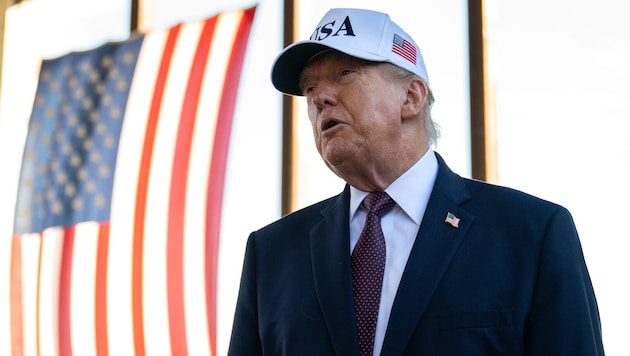


The Republicans suffered a significant defeat in the U.S. midterms. Young voters, in particular, are turning away from Donald Trump’s party. Even his closest confidants are dissatisfied with the 80-year-old president. What’s behind this shift in sentiment? And what are the global implications of this outcome? An analysis.
 Kronen Zeitung als bevorzugte Google-Quelle hinzufügen
The last time this happened was 20 years ago. In 2006, President George W. Bush lost the majority in both houses to the Democrats (see chart below).
Why has this now happened again with Donald Trump? An analysis by the “Krone.”
- A wake-up call: 50 percent viewed the election as an opportunity to teach Trump a lesson, according to post-election polls by U.S. broadcasters. 70 percent wanted Congress to have greater control over the president.
- The Gas Station Trap: Trumphad promised a lower cost of living. In reality, gas prices have skyrocketed by 47 percent since the outbreak of the Iran war. Groceries have also become significantly more expensive. Trump paid the price for this.
- Young voters turned away: Nearly three-quarters of 18- to 29-year-olds voted for Democratic candidates, while only 25 percent voted for Republicans. Many had still supported Trump in the last election campaign. For example, Latino voters—who had delivered key gains to the U.S. president in 2024—voted Democratic this time around at a rate of 62 percent.

- “The war is to blame”: “Everyone knows why we lost—the reason is the war. And any honest discussion about how to move forward from here must start there,” said U.S. Vice President JD Vance on Wednesday, thereby (indirectly) blaming Trump for the Republicans’ election disaster. Vance is considered a critic of Trump’s intervention. Even Donald Trump Jr. backed the vice president’s sharp analysis—and thus his criticism of his father. On X, the U.S. president’s eldest son shared Vance’s detailed post and wrote: “Every single word of it”—followed by three red 100 emojis.
- Upset in Republican strongholds: The Democrats flipped seven states in the Senate race, including three Republican strongholds. For the first time since 1988, the Democrats won the Senate seat in Texas; for the first time since 1998 in South Carolina; and for the first time since 1932 in the deeply conservative state of Kansas. In Texas, Trump-backed Republican candidate Ken Paxton lost to Democrat James Talarico. A bitter blow: Tech billionaire Elon Musk had backed Paxton’s campaign with more than $150 million.
The “Krone” live updates from the U.S. midterms to read.
Trump praised the Democrats and wants to veto legislation
“There was just a bad vibe in the air,” Trump said, explaining the crushing defeat of his Republicans in the midterms. Of course, he himself and the war with Iran that he instigated—with all its consequences—had nothing to do with it.

I have a lot of friends among the Democrats, believe it or not—and they’ll want to work with me.
US-Präsident Donald Trump
Bild: Krone-Collage/AP/Charlie Riedel
He said he would accept the election results. In reality, however, he will likely do everything in his power to undermine any legislation the Democrats try to pass if it doesn’t fit his agenda. “I’m going to be Mr. Veto, ” Trump announced as early as last weekend.
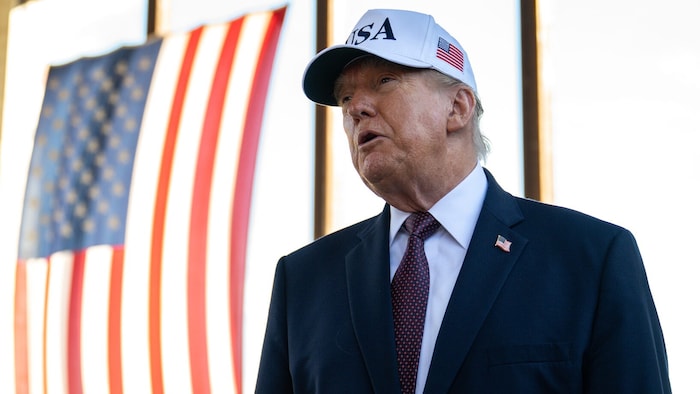
Are the U.S. midterms part of a trend away from right-wing populism?
In many Western democracies, right-wing populists have been on the rise for years. But the trend appears to have been broken, judging by some recent election results: In addition to the rebuke for Trump and his Republicans, presidential candidate Flávio Bolsonaro recently lost in Brazil—and even before that, autocratic politicians such as Viktor Orbán in Hungary and Aleksandar Vučić in Serbia were defeated in Europe.
“Trump’s defeat undermines the narrative that international right-wing populism is on an unstoppable rise,” says German political scientist Oliver Lembcke.
Trump’s defeat undermines the narrative that international right-wing populism is on an unstoppable rise.
Der deutsche Politologe Oliver Lembcke
“End of the far-right wave”
Many left-wing politicians in Europe even see a reversal of the trend. Spanish Prime Minister Pedro Sánchez spoke on Wednesday of the end of the “far-right wave” in other countries as well. Americans voted against policies that impoverish people; they voted against hate, machismo, climate change deniers, and elite privileges, he wrote on X. The reason for his strong reaction: The Social Democrat is facing elections himself and is painting his conservative opponents as Trump-like.
“Alliance of Middle Powers” as a Response to Trump
Internationally, there is a counter-movement to Trump’s unpredictable, nationalist approach. German Chancellor Friedrich Merz has just been in Japan, South Korea, and Singapore promoting a new global alliance for free trade. A “Alliance of Middle Powers,” spearheaded by Canadian Prime Minister Mark Carney, is slowly taking shape worldwide, intended to stand up not only to China but also to Trump.
The outcome of the U.S. election is also seen as a problem for Germany’s AfD, which has so far relied heavily on support from Trump, his MAGA (“Make America Great Again”) movement, and Elon Musk. “The U.S. election shows that populist parties can fail to deliver on their own promises as soon as they assume governing responsibilities,” said political scientist Lembcke. “That is undoubtedly an uncomfortable message for the AfD as well.”
AfD Leaders Are Already Distancing Themselves from Trump
AfD leaders Tino Chrupalla and Alice Weidel promptly distanced themselves from Trump by holding him personally responsible for the defeat. “Trump had promised his voters he would not pursue an interventionist foreign policy,” Weidel told the news portal t-online. “This broken promise has now come back to haunt the Republicans.” Bernd Baumann, the parliamentary secretary of the AfD’s Bundestag caucus, criticized the U.S. import tariffs in an interview with the “Handelsblatt.” The AfD will now pin its hopes on Trump’s successor.
The leader of France’s Rassemblement National, Jordan Bardella, spoke of “very serious consequences” of U.S. intervention in Iran, without, however, directly naming Trump. The leader of Italy’s Lega, Matteo Salvini, attributed the result to the wars and the rising cost of living. As of Wednesday evening, there had been no official reaction from the FPÖ.
Many right-wing and right-wing populist politicians had sought ideological alignment with Trump. Political scientist Lembcke, however, does not believe that the U.S. elections will necessarily deal a blow to parties like the AfD in the polls. “However, the American election results do not indicate an immediate decline in support for the AfD in Germany. The political contexts are simply too different for that.”
Elections in France as the Next Barometer
In Hungary, the U.S., Brazil, and Serbia, there were specific national issues that influenced the elections. Which trend will continue will become clear as early as next year. That’s when presidential and parliamentary elections are scheduled in France, where the Rassemblement National (RN) is far ahead in the polls. In Poland, pro-European Prime Minister Donald Tusk faces an uncertain re-election bid.
This article has been automatically translated,
read the original article here.











Willkommen in unserer Community! Eingehende Beiträge werden geprüft und anschließend veröffentlicht. Bitte achten Sie auf Einhaltung unserer Netiquette und AGB. Für ausführliche Diskussionen steht Ihnen ebenso das krone.at-Forum zur Verfügung. Hier können Sie das Community-Team via unserer Melde- und Abhilfestelle kontaktieren.
Hinweis in eigener Sache: Das krone.at-Forum präsentiert sich ab sofort in neuem Design! Wir freuen uns über konstruktives Feedback. Damit die Diskussionen in den Kommentarbereichen beim jeweiligen Thema bleiben, können Sie uns Rückmeldungen hier hinterlassen.
User-Beiträge geben nicht notwendigerweise die Meinung des Betreibers/der Redaktion bzw. von Krone Multimedia (KMM) wieder. In diesem Sinne distanziert sich die Redaktion/der Betreiber von den Inhalten in diesem Diskussionsforum. KMM behält sich insbesondere vor, gegen geltendes Recht verstoßende, den guten Sitten oder der Netiquette widersprechende bzw. dem Ansehen von KMM zuwiderlaufende Beiträge zu löschen, diesbezüglichen Schadenersatz gegenüber dem betreffenden User geltend zu machen, die Nutzer-Daten zu Zwecken der Rechtsverfolgung zu verwenden und strafrechtlich relevante Beiträge zur Anzeige zu bringen (siehe auch AGB). Hier können Sie das Community-Team via unserer Melde- und Abhilfestelle kontaktieren.