Stronger Border Security
EU Tightens Controversial Deportation Rules


On Wednesday, EU interior ministers approved the new deportation regulations. The Return Regulation establishes a common framework for more efficient return procedures. At the same time, further tightening of measures—such as so-called “robust” border rejections—is being discussed in response to the mass influx into Ceuta.
 Kronen Zeitung als bevorzugte Google-Quelle hinzufügen
 “On the one hand, the regulation simplifies deportation processes and, at the same time, creates the legal basis for establishing return centers outside the EU,” says Interior Minister Gerhard Karner. “Europe must be master in its own house.”
Together with Germany, Denmark, the Netherlands, and Greece, Austria is working within the so-called “Implementers Group” on the establishment of return centers—a specific partner country is to be identified by the end of the year.

The Deportation Act, presented a year ago by Migration Commissioner Magnus Brunner (ÖVP), enables faster and more efficient returns of people from third countries who are residing illegally in the EU. Karner wants to launch the return centers quickly in collaboration with the so-called “Implementation Group.”
The central topic of the interior ministers’ meeting was the events in Ceuta: The goal is to be better able to respond to large, unexpected migration flows—such as those from Morocco to the Spanish exclave at the end of July—even in crisis situations. To this end, cooperation with third countries is to be strengthened and a dedicated EU crisis response mechanism established. European Commission President Ursula von der Leyen had announced this in her State of the Union address.
“The mass influx into Ceuta has nothing to do with asylum”
We need to consider “whether new regulations are needed here,” Karner said with regard to Ceuta. As early as 2022, the minister called for a European-level pushback directive to enable EU member states to quickly turn back individuals who are clearly not entitled to protection directly at the border without conducting a thorough review of their asylum applications. This proposal is now the subject of intense debate.

“If on a single day—and that was clearly the case here—around 70,000 people, mostly young men, arrive, then that obviously has nothing to do with asylum, in the classic sense.”
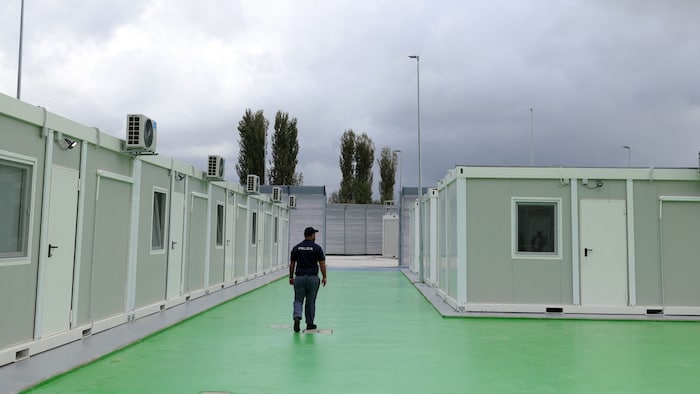
In addition to the group of implementers, Italy’s right-wing government is also pushing ahead with the establishment of deportation centers. In Parliament, Interior Minister Matteo Piantedosi announced that a total of 10,000 people are to be returned to their countries of origin by the end of 2026.
To this end, six new centers are to be built: two in Trentino-South Tyrol, and one each in Calabria, Campania, Emilia-Romagna, and Tuscany. So far, approximately 6,500 people have been deported. The new deportation centers are to be added to the ten existing facilities in Italy and the two in Albania. In addition, another 106 spots are to be created in existing facilities in the short term, the interior minister announced.
This article has been automatically translated,
read the original article here.











Willkommen in unserer Community! Eingehende Beiträge werden geprüft und anschließend veröffentlicht. Bitte achten Sie auf Einhaltung unserer Netiquette und AGB. Für ausführliche Diskussionen steht Ihnen ebenso das krone.at-Forum zur Verfügung. Hier können Sie das Community-Team via unserer Melde- und Abhilfestelle kontaktieren.
User-Beiträge geben nicht notwendigerweise die Meinung des Betreibers/der Redaktion bzw. von Krone Multimedia (KMM) wieder. In diesem Sinne distanziert sich die Redaktion/der Betreiber von den Inhalten in diesem Diskussionsforum. KMM behält sich insbesondere vor, gegen geltendes Recht verstoßende, den guten Sitten oder der Netiquette widersprechende bzw. dem Ansehen von KMM zuwiderlaufende Beiträge zu löschen, diesbezüglichen Schadenersatz gegenüber dem betreffenden User geltend zu machen, die Nutzer-Daten zu Zwecken der Rechtsverfolgung zu verwenden und strafrechtlich relevante Beiträge zur Anzeige zu bringen (siehe auch AGB). Hier können Sie das Community-Team via unserer Melde- und Abhilfestelle kontaktieren.