Farmers Under Pressure
Pickle Alert: Local Products Are Being Displaced
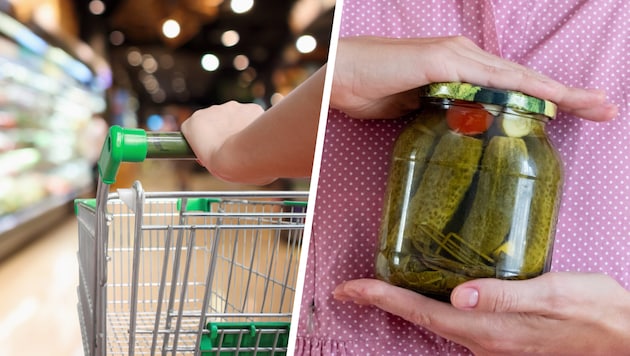

Whether as part of a Brettljause, at a sausage stand, or as a garnish for Fiakergulasch—the sweet-and-sour pickled gherkin is simply a must. But anyone who thinks that this culinary “cultural treasure” on their plate was automatically grown in Austria is sorely mistaken: In a recent test, only one in eight jars came from local producers.
 Kronen Zeitung als bevorzugte Google-Quelle hinzufügen
 Tough times for Austria’s pickle farmers: Cheap imports and a lack of origin labeling make it difficult to keep domestic products visible on supermarket shelves. A recent store check shows that only one in eight jars of pickles clearly indicates that the cucumbers come from Austria.
The organization “Wirtschaften am Land” examined 98 pickled cucumber products in supermarkets and discount stores across three federal states. For 56 jars, the origin of the cucumbers remained unclear. This is possible because there is no mandatory origin labeling requirement for pickled cucumbers. For consumers, choosing a domestic product thus becomes like looking for a needle in a haystack.
Pickled Cucumbers from India
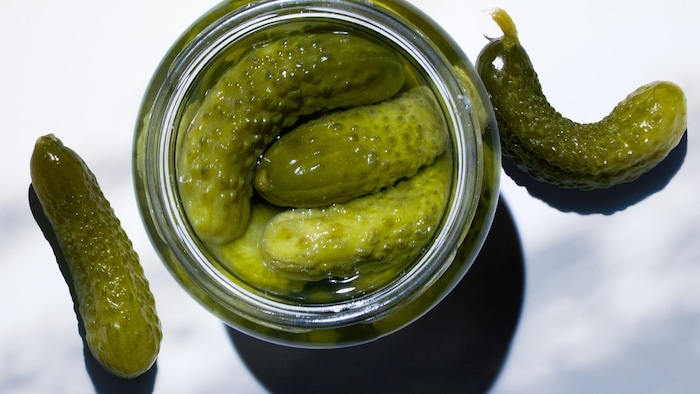
The situation is particularly striking with regard to retail chains’ private-label brands: Of 40 products examined, only five clearly identified Austria as the country of origin. Thirty-one private-label pickles hit the shelves without any indication of origin at all. Where manufacturers provided information upon request, a clear picture also emerged: The jars more often contain cucumbers from abroad than from Austria. Countries mentioned included Turkey, Poland, and Germany. For nine products, India was listed as the country of origin.
Higher Standards
This represents fierce competition for local farms. Growing pickling cucumbers is labor-intensive, time-consuming, and requires a great deal of manual labor. At the same time, Austria has higher production standards, for example regarding working conditions. This comes at a cost—and this is precisely where domestic cucumbers fall behind cheaper imported goods.
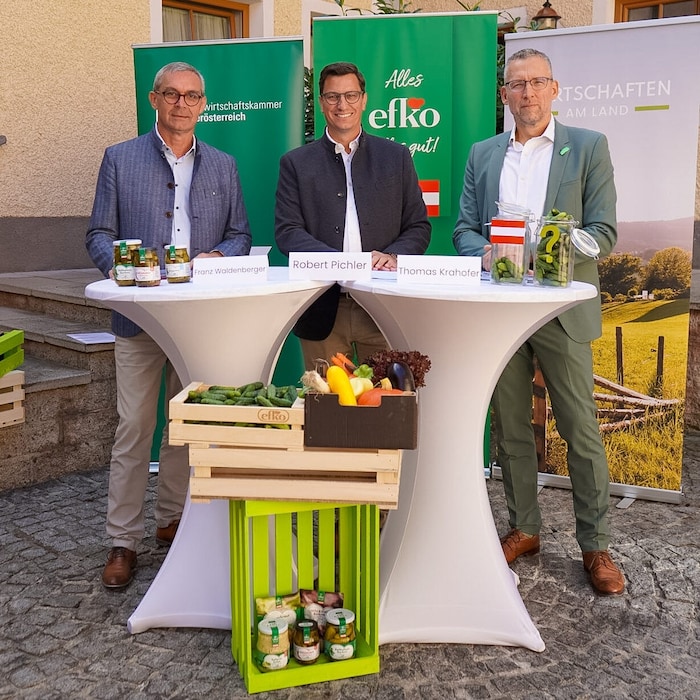
At today’s press conference, Efko Managing Director Thomas Krahofer called for a united front among agriculture, politics, and the retail sector: “Those who expect high standards must ensure fair competitive conditions. Only in this way can we guarantee security of supply and keep value creation within the country.”

We import gherkins from the other side of the world, while Austrian gherkin producers are struggling to survive.

Maria Fanninger, Gründerin „Land schafft Leben“
Bild: Land schafft Leben
Maria Fanninger, founder of “Land schafft Leben,” has studied Austrian food production in depth and warns: “The fact that we find more Indian products than clearly labeled domestic ones on store shelves under private-label brands should be a wake-up call for us. We’re importing gherkins from the other side of the world while Austrian gherkin farms are struggling to survive.”
Yet gherkin production is an important economic sector, especially in Upper Austria. Around 90 percent of Austria’s pickling cucumbers are grown there, but the number of farms is shrinking. “There used to be 400 producers in this state; today there are only 12 farms left,” warns President Franz Waldenberger of the Upper Austrian Chamber of Agriculture.
Self-Sufficiency at Risk
According to Waldenberger, Austria’s self-sufficiency in pickling cucumbers has already dropped from 80 to 50 percent. Anyone who wants to halt this negative trend must make a conscious effort to choose Austrian products when shopping. Only when the origin is clearly stated on the label can everyone decide for themselves whether they want to support local farmers and thereby help secure production in their own country.
This article has been automatically translated,
read the original article here.











Willkommen in unserer Community! Eingehende Beiträge werden geprüft und anschließend veröffentlicht. Bitte achten Sie auf Einhaltung unserer Netiquette und AGB. Für ausführliche Diskussionen steht Ihnen ebenso das krone.at-Forum zur Verfügung. Hier können Sie das Community-Team via unserer Melde- und Abhilfestelle kontaktieren.
User-Beiträge geben nicht notwendigerweise die Meinung des Betreibers/der Redaktion bzw. von Krone Multimedia (KMM) wieder. In diesem Sinne distanziert sich die Redaktion/der Betreiber von den Inhalten in diesem Diskussionsforum. KMM behält sich insbesondere vor, gegen geltendes Recht verstoßende, den guten Sitten oder der Netiquette widersprechende bzw. dem Ansehen von KMM zuwiderlaufende Beiträge zu löschen, diesbezüglichen Schadenersatz gegenüber dem betreffenden User geltend zu machen, die Nutzer-Daten zu Zwecken der Rechtsverfolgung zu verwenden und strafrechtlich relevante Beiträge zur Anzeige zu bringen (siehe auch AGB). Hier können Sie das Community-Team via unserer Melde- und Abhilfestelle kontaktieren.