Court Rulings in Genoa
Bridge Collapse: 12 Years in Prison for Former Manager
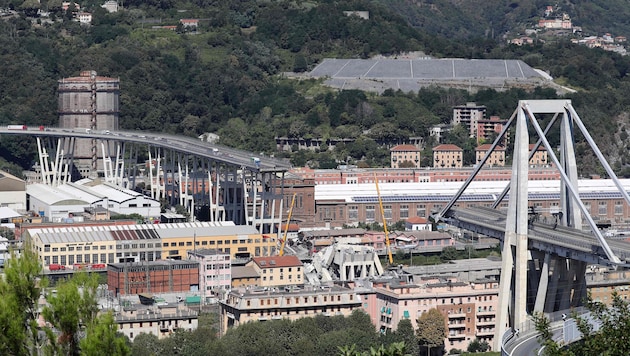

Nearly eight years after the deadly collapse of a highway bridge in Genoa, northern Italy, the first verdict has been handed down. The former manager of the operating company, Giovanni Castellucci, was sentenced to 12 years in prison; his deputies were also sentenced to prison terms. The verdicts are not yet final.
 Kronen Zeitung als bevorzugte Google-Quelle hinzufügen
 The collapse of the Morandi Bridge in 2018 claimed 43 lives. The trial of the 57 defendants dragged on for four years. The first verdicts were announced on Thursday afternoon.
Former Manager Allegedly Knew of Defects
Former top Italian executive Giovanni Castellucci was sentenced to twelve years in prison, according to the first-instance ruling, which is not yet final. The prosecution had sought a sentence of 18 years and six months for Castellucci. It accused him of having known about the defects as early as 2009.

During the trial, Castellucci was described as an “autocrat” for whom profit was more important than high-quality infrastructure. The 66-year-old had responded to the allegations by saying he felt “responsible, but not guilty,” according to the German Press Agency. His attorney emphasized that Castellucci had been made a “scapegoat.” According to the defense attorney, Castellucci had insisted that work be carried out to reinforce the bridge pier.
Most of the defendants did not appear in court
The former number two and three at the highway operator ASPI were also sentenced to five years and six months and eleven years, respectively. A high-ranking official in the Italian Ministry of Transportation responsible for highway oversight was sentenced to five years in prison. The prosecution had sought a total of more than 400 years in prison for the 57 defendants on charges of negligent homicide, endangering traffic safety, and document forgery.
The majority of the 57 defendants in the Genoa trial—including several managers and officials from the Ministry of Transportation—did not appear in court. A representative of the victims’ families criticized the complete lack of admissions of guilt during the trial.
400 Years in Prison Sought
The prosecution had sought a total of 400 years in prison for the defendants on charges of negligent homicide, endangering traffic safety, and forgery of official documents. The trial lasted four years and included 283 hearings.
According to the prosecution, the collapse could have been prevented if the planned reinforcement of pier nine—the bridge pier that ultimately failed—had not been delayed. The defense, on the other hand, blames a design flaw in the bridge. This flaw, they argue, contributed to corrosion that could not have been detected due to a hidden defect in the suspension cables. The massive suspension cables supporting the bridge reportedly had a concealed defect that could not have been detected with the means available at the time.
The prosecutors, however, pointed out that the bridge’s designer, Riccardo Morandi, had himself recommended regular and targeted inspections of the structure. Had these inspections been carried out properly, the prosecution argued, they would have revealed the bridge’s safety deficiencies.
This article has been automatically translated,
read the original article here.











Willkommen in unserer Community! Eingehende Beiträge werden geprüft und anschließend veröffentlicht. Bitte achten Sie auf Einhaltung unserer Netiquette und AGB. Für ausführliche Diskussionen steht Ihnen ebenso das krone.at-Forum zur Verfügung. Hier können Sie das Community-Team via unserer Melde- und Abhilfestelle kontaktieren.
Hinweis in eigener Sache: Das krone.at-Forum präsentiert sich ab sofort in neuem Design! Wir freuen uns über konstruktives Feedback. Damit die Diskussionen in den Kommentarbereichen beim jeweiligen Thema bleiben, können Sie uns Rückmeldungen hier hinterlassen.
User-Beiträge geben nicht notwendigerweise die Meinung des Betreibers/der Redaktion bzw. von Krone Multimedia (KMM) wieder. In diesem Sinne distanziert sich die Redaktion/der Betreiber von den Inhalten in diesem Diskussionsforum. KMM behält sich insbesondere vor, gegen geltendes Recht verstoßende, den guten Sitten oder der Netiquette widersprechende bzw. dem Ansehen von KMM zuwiderlaufende Beiträge zu löschen, diesbezüglichen Schadenersatz gegenüber dem betreffenden User geltend zu machen, die Nutzer-Daten zu Zwecken der Rechtsverfolgung zu verwenden und strafrechtlich relevante Beiträge zur Anzeige zu bringen (siehe auch AGB). Hier können Sie das Community-Team via unserer Melde- und Abhilfestelle kontaktieren.