Ukrainian soldier recounts
Tortured in Russia: “They Call It a Game”
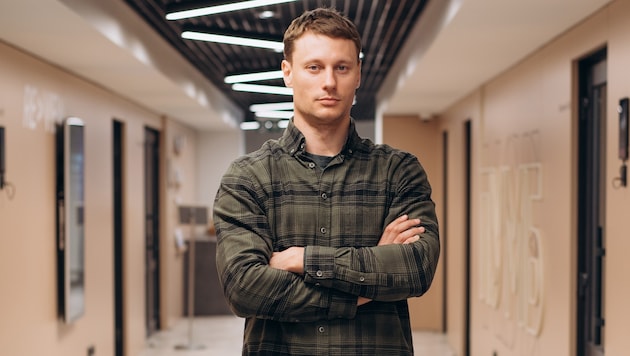

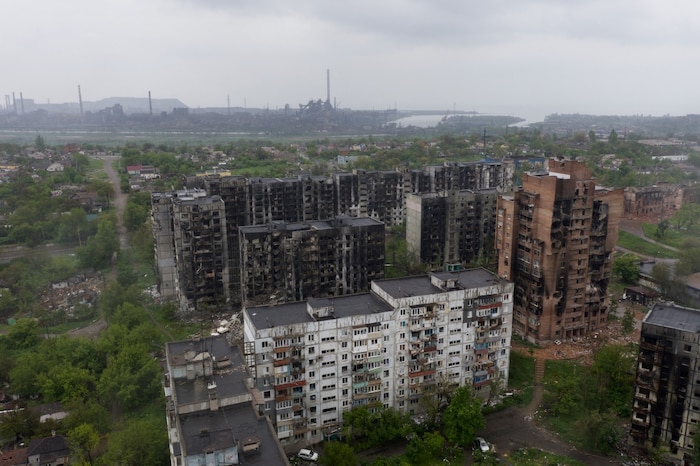
Exactly four years ago, the Ukrainian city of Mariupol was forced to surrender to Russian invaders. For months, the defenders had held out—much to Vladimir Putin’s annoyance. Captured Ukrainian soldiers paid for their resistance with torture. One of them, Yevhenii Malik, told the “Krone” about it.
 Kronen Zeitung als bevorzugte Google-Quelle hinzufügen
 A week before the Russian invasion on February 24, 2022, Yevhenii Malik was on leave and planning a trip to Egypt. That didn’t happen. As an active-duty soldier in the 36th Marine Brigade, he was recalled to his unit, which was stationed in the Donbas region. After a few days of fighting, the brigade retreated to the city of Mariupol. The city was under siege for months until Kyiv ordered the surrender on May 20.
“The worst part was just surviving”
As a prisoner of war, Malik was taken by train to Russia, his hands bound with zip ties and a sack over his head. He was to spend two and a half years there in prison camps. “The worst part was surviving in a Russian prison,” he says. “You feel hunger, cold, fear, despair, pain—all at once. That’s what captivity in Russia feels like.”
Yevhenii Malik was first sent to Detention Center No. 2 in Ryazhsk in the Ryazan Oblast. Austria’s former Foreign Minister Karin Kneissl lives in that area today. Later, he was taken to Penal Colony No. 10 in the village of Udarnyi in the Republic of Mordovia. A prison exclusively for prisoners of war. There, he shared his fate with around 650 other prisoners, divided among four barracks: “In the area where I was, there are eleven villages, and in those eleven villages there are 16 prisons. How is that possible? What are they doing there?” All of Russia is littered with such penal colonies, where remnants of the notorious Soviet-era Gulag live on.
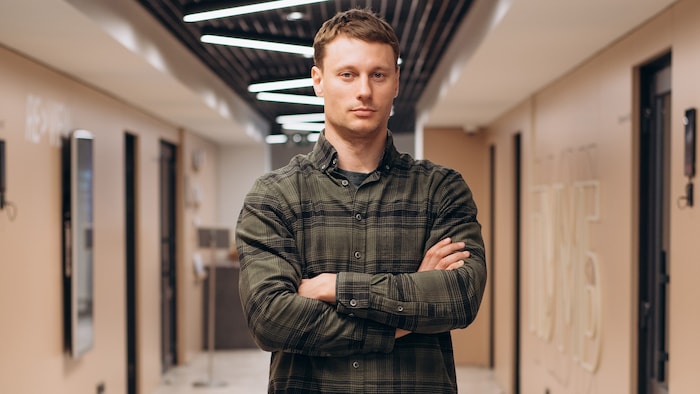
The prison camp in the Mordovia region can be found on Google Maps:
Beatings “just to say hello”
Beatings were a daily occurrence: “In the morning, they beat up the entire barracks just to say hello.” Anyone who broke the rules was beaten again by the guards. The prisoners had to stand still from 6 a.m. until 10 p.m., were not allowed to walk around or sit down. Speaking was also forbidden. Even a glance out the window or a smile was punished. Going to the bathroom or drinking was only allowed on command.
So Malik and his fellow prisoners—ten people in 20 square meters—stood in their video-monitored cell. A guard officer kept an eye on the prisoners via monitors. “If anyone broke the rules, he’d call the guards. Then they’d come with batons, stun guns, and dogs. We were led out into the corridor, and the beatings began.”
Not all guards were equally bad, the Ukrainian veteran explains. He estimates that about one in five guards questioned the systematic beatings. He and his fellow prisoners heard some of them say that they hated beating the prisoners and didn’t know why they were supposed to do it. “Another 20 percent were crazy about it. They wouldn’t have needed a salary at all, just permission to torture,” says Malik.
Guards “started out as normal people”
The remaining 60 percent simply saw it as their job and justified it by saying they were just following orders. “They started out as normal people, but by the end of the first month, they had gotten a taste for it. Then they were worse than the 20 percent of sadists,” the former soldier describes. The guards were rotated out repeatedly to prevent them from cooperating with the Ukrainian prisoners of war or even developing friendships with them.
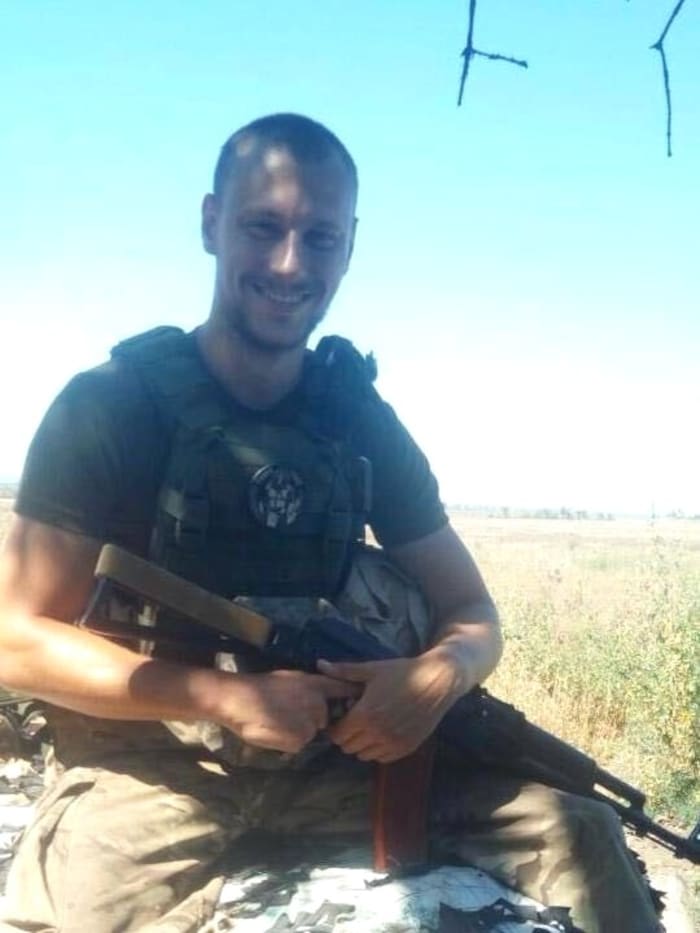
Torture is systematic
To do at least something, Yevhenii Malik would have liked to work. But the Ukrainian prisoners of war were not allowed to do so. Russia had other plans for them. For the torture was systematic, with orders coming directly from Moscow. The aim was to extract confessions from the prisoners of war that would confirm the Kremlin’s propaganda portraying Ukrainian soldiers as war criminals.
“For over a month, they bombed Mariupol with fighter jets and artillery, killing a huge number of civilians. But they wanted to portray us as war criminals,” said the 33-year-old. Due to a lack of real evidence of Ukrainian war crimes, prisoners like Malik were expected to admit to committing atrocities themselves and sign corresponding documents. This was to be achieved through torture.
Waterboarding and electric shocks
“What happens in the interrogation room can’t be compared to the daily beatings in the barracks corridor,” says Malik. “They call it ‘games.’ They put a bag over your head, pour water over your face until you almost drown. They stick needles under your fingernails and give you electric shocks: in your ears, in your testicles, on your fingers.” They tortured one of Malik’s friends for more than six months. He had holes in his back because the electric shocks burned the flesh right out.

After more than 100 blows, you stop screaming.
Der ukrainische Kriegsveteran über die russische Folter
Malik doesn’t tell everything about his time in the Russian camp. He hasn’t even told his parents everything. He describes the beatings with plastic pipes as the worst. “They hit so hard. After more than 100 blows, you stop screaming. The pain is so intense that you can’t feel anything anymore.” Human Rights Watch has documented dozens of statements like Malik’s. The human rights organization speaks of systematic torture of Ukrainian prisoners of war. It is a flagrant violation of the Geneva Convention.
“They want to break you”
Ultimately, Malik signed the document. “You have no other choice because the pain is so incredibly intense. They don’t want to kill you; they want to break you.” After that, the interrogations stopped. Malik was to be transferred to another prison and disappear there for decades. This is because other Ukrainian prisoners of war were exchanged, but not the defenders of Mariupol—such as fighters from the Azov Regiment and the 36th Naval Brigade, to which Malik belonged. “They hated us so much because we had thwarted their plans,” he says. During their captivity, however, he and his fellow prisoners were told that the Ukrainian government had forgotten them.
Unexpected Freedom
Malik owes his freedom to the Ukrainian counteroffensive in Kursk. In August 2024, ground forces advanced into the Russian region. The border was guarded by Russian conscripts; more than 400 of them were captured by Ukrainian troops. This presented Russian leader Vladimir Putin with a problem: He had promised that conscripts—often young men aged 18 or 19—would not participate in the war against Ukraine. “He was afraid of the Russian mothers. So Russia requested an exchange practically immediately,” the Ukrainian veteran recounts. Kyiv exchanged the Russian conscripts for the defenders of Mariupol. About a month after the start of the operation in Kursk, Malik returned home.
Upon his return, the now 33-year-old went straight to the hospital to recover from the injuries and trauma of the torture. He remained in rehab for six months. Malik got off lightly. “They broke a soldier from my brigade’s knee while beating him with plastic pipes. He wasn’t operated on until after his return. He remains partially disabled.”
Veteran Teaches Resilience
Since last year, Yevhenii Malik has been working at the Kyiv School of Economics, where he leads programs in National Security and Defense. He uses his experiences to teach young people resilience and mental strength in the face of the grueling war. In the courses developed by Malik, veterans teach young students the basic skills needed in times of war. The curriculum includes engineering, topography, basic medical knowledge, and even drone operation. Those under 25 are not yet required to join the army, but they should be prepared. “We enable them to see reality through the eyes of soldiers.”
Fighting Propaganda
Malik also travels extensively throughout Europe and the U.S., speaking out about Russia’s systematic torture. “I’ve tried to fight against Russian propaganda, which is unfortunately very widespread in your society,” he says, referring to Austria as well. People keep asking how long Ukraine can hold out. He’s tired of the question. Ukraine has no choice but to keep fighting, says Malik. Because he knows all too well what the alternative is. “Russia says that we Ukrainians are Nazis. They have to provide evidence for that. Since they don’t have any, they have to create Nazis in Russian prisons. That is the reality Ukrainians will face if our army loses.”
This article has been automatically translated,
read the original article here.











Liebe Leserin, lieber Leser,
die Kommentarfunktion steht Ihnen ab 6 Uhr wieder wie gewohnt zur Verfügung.
Mit freundlichen Grüßen
das krone.at-Team
User-Beiträge geben nicht notwendigerweise die Meinung des Betreibers/der Redaktion bzw. von Krone Multimedia (KMM) wieder. In diesem Sinne distanziert sich die Redaktion/der Betreiber von den Inhalten in diesem Diskussionsforum. KMM behält sich insbesondere vor, gegen geltendes Recht verstoßende, den guten Sitten oder der Netiquette widersprechende bzw. dem Ansehen von KMM zuwiderlaufende Beiträge zu löschen, diesbezüglichen Schadenersatz gegenüber dem betreffenden User geltend zu machen, die Nutzer-Daten zu Zwecken der Rechtsverfolgung zu verwenden und strafrechtlich relevante Beiträge zur Anzeige zu bringen (siehe auch AGB). Hier können Sie das Community-Team via unserer Melde- und Abhilfestelle kontaktieren.