Emirates pull out
Is OPEC’s bombshell good or bad? Both!
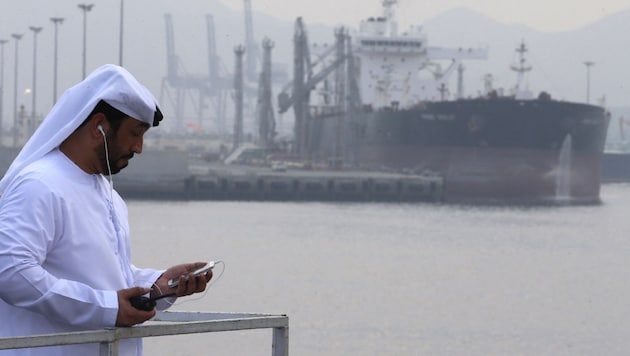
The United Arab Emirates (UAE) is turning its back on the OPEC oil cartel, causing yet another shockwave in the global energy market. The end consumer won’t notice a thing—at least in the short term. After that, however, a completely different picture emerges...
 Kronen Zeitung als bevorzugte Google-Quelle hinzufügen
 As early as May 1, the UAE wants nothing more to do with OPEC. After nearly 60 years, the third-largest producer is thus turning its back on the once-powerful confederation of states. This move is a severe blow to the oil cartel and especially to its leader, Saudi Arabia, and marks the culmination of a years-long dispute between the two nations.
At the heart of the conflict lies OPEC’s rigid production cap. In short: The UAE wants to produce more oil, while the Saudis advocate for the status quo. Officially, Abu Dhabi is seeking greater flexibility. Energy Minister Suhail Al Mazrouei states unequivocally: “The world needs more energy, and the UAE does not want to be restricted by any group.”
UAE wants to make money from oil—as long as it can
The logic behind this is clear, as oil market expert Steffen Bukold from the Hamburg-based industry service EnergyComment explains to “Der Spiegel”: “Abu Dhabi has perhaps accepted more than anyone else in the region that the age of oil has passed its peak.”
Consequently, the government wants to quickly monetize its reserves to use the proceeds to drive the transition to a green, AI-driven economy. The Saudi leadership is pursuing a different plan. “No other country in the world can produce oil more cheaply,” says Bukold. Riyadh expects to remain the last remaining supplier even in a less fossil-fuel-dependent world and is therefore banking on price stability and controlled demand.
What lies ahead for end consumers
The UAE’s exit from OPEC will initially be barely noticeable to end consumers. The market is currently dominated by the war in Iran and the blockade of the Strait of Hormuz, which is blocking a large portion of the region’s oil exports.
What’s at stake
- Politically, too, Abu Dhabi and Riyadh are on very different paths.
- In the current war with Iran, the Emirates felt abandoned by their neighbors when Iranian drones set their oil fields ablaze.
- So why sacrifice the most important source of revenue for a joint quota if you can’t rely on each other in a crisis?
According to analysts, the UAE cannot bring its additional production to the global market immediately anyway, as its bypass pipeline to the port of Fujairah is already operating at full capacity. The withdrawal thus becomes a minor issue for now. However, once the situation normalizes, the UAE could flood the market with hundreds of thousands of additional barrels per day.
The consequences for the oil price are two-sided. In the medium to long term, supply is likely to rise, which could even put significant downward pressure on prices, especially since there was already an oversupply even before the Iran war.
At the same time, significantly higher volatility is expected. Alongside the Saudis, the UAE is considered an important “swing producer” that can offset bottlenecks during crises by rapidly increasing production. This buffer is now shrinking, meaning that future supply shocks are likely to have an even more direct impact on prices.
Moscow laments UAE’s exit
“If OPEC countries pursue their policies in an uncoordinated manner and produce as much oil as their capacities allow and as they please, prices will fall accordingly,” Russian Finance Minister Anton Siluanov lamented following the announcement. As is well known, Moscow relies on high oil prices to replenish its war and budget coffers.
The remaining OPEC states, which have controlled the market for decades through production limits, are now in survival mode. The UAE’s withdrawal fuels doubts about the oil cartel’s future unity. “It is possible that we are witnessing the collapse of the entire organization,” says OPEC expert Jeff Colgan—even if Saudi Arabia, as the “anchor,” will do everything it can to keep the group together.
In addition, two global powers are squeezing the cartel: In the West, the U.S. is weakening the oil alliance’s pricing power with ever-increasing shale oil exports. In the East, China is driving the end of the fossil fuel era with its push into solar panels, wind turbines, and electric cars.
National self-interest rules the world
The OPEC upheaval also highlights a global systemic shift. National self-interest is spreading worldwide like a highly contagious virus and eroding international alliances at a breathtaking pace. The pathogen is spreading from the UN to NATO to the WTO—and is increasingly becoming a chronic disease.
At the end of the day, it always comes down to the greed for short-term gains, coupled with even higher risks and new potential for conflict.
This article has been automatically translated,
read the original article here.











Willkommen in unserer Community! Eingehende Beiträge werden geprüft und anschließend veröffentlicht. Bitte achten Sie auf Einhaltung unserer Netiquette und AGB. Für ausführliche Diskussionen steht Ihnen ebenso das krone.at-Forum zur Verfügung. Hier können Sie das Community-Team via unserer Melde- und Abhilfestelle kontaktieren.
User-Beiträge geben nicht notwendigerweise die Meinung des Betreibers/der Redaktion bzw. von Krone Multimedia (KMM) wieder. In diesem Sinne distanziert sich die Redaktion/der Betreiber von den Inhalten in diesem Diskussionsforum. KMM behält sich insbesondere vor, gegen geltendes Recht verstoßende, den guten Sitten oder der Netiquette widersprechende bzw. dem Ansehen von KMM zuwiderlaufende Beiträge zu löschen, diesbezüglichen Schadenersatz gegenüber dem betreffenden User geltend zu machen, die Nutzer-Daten zu Zwecken der Rechtsverfolgung zu verwenden und strafrechtlich relevante Beiträge zur Anzeige zu bringen (siehe auch AGB). Hier können Sie das Community-Team via unserer Melde- und Abhilfestelle kontaktieren.