Is gas cheaper now?
Since noon: How the fuel price cap is taking effect
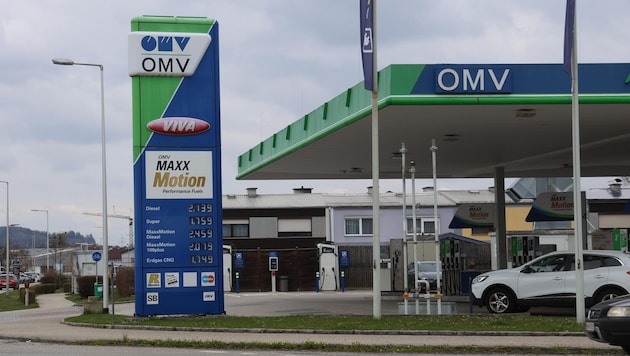

Anxious anticipation at the gas pumps: The fuel price cap went into effect at 12 noon sharp. A look at two gas stations in Upper Austria shows: Prices did indeed drop significantly—at least in some cases...
 Kronen Zeitung als bevorzugte Google-Quelle hinzufügen
 Will it work or won’t it? With this question in mind, Austrian drivers are eagerly watching their local gas pumps on Maundy Thursday. The fuel price cap took effect at 12 noon sharp—and long-suffering commuters should be able to breathe a sigh of relief, right?
The “Krone” took a look around Upper Austria. At the Jet in Braunau, gasoline became only marginally cheaper: the price dropped from 1.849 euros before noon to 1.789 euros after noon—a decrease of six cents per liter. The diesel price at the same gas station fell from 2.199 to 2.139, also by six cents. The drop was more significant at the OMV station, also in Braunau: Instead of 2.259 euros, the price after noon was 2.139—a full twelve cents less.
But shouldn’t the price drop by ten cents everywhere? Are gas stations like Jet willing to accept fines of up to 7,000 euros? Not necessarily: The comparison isn’t based on Wednesday’s price, but on an average price from March 27 to April 1.
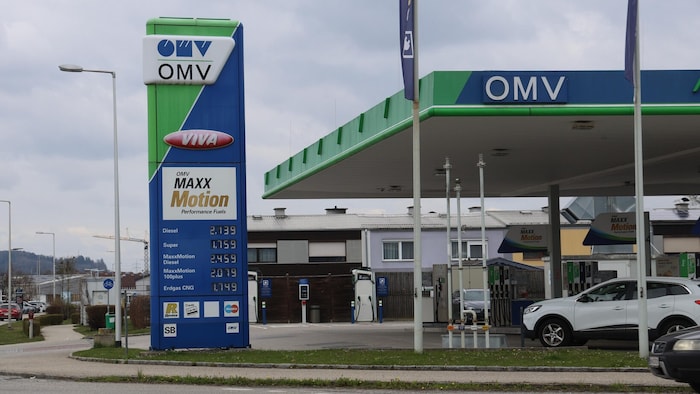
A positive effect, but not enough...
Since early March, drivers have been paying about 70 cents more per liter for diesel and 40 cents more for gasoline; on a monthly average, diesel was 46.3 cents more expensive and premium gasoline 28.2 cents more expensive than in February. Currently, a liter of diesel costs an average of around 2.20 euros—a new daily high in Austria and more than at the start of the war in Ukraine. “If prices continue to rise this rapidly, the fuel price cap now coming into effect could, at best, slow this trend,” the ÖAMTC warned in advance.
The price regulation for diesel and gasoline is primarily being implemented through a tax cut and a margin cap for large gas station chains. Prices are now expected to drop by ten cents per liter, but not everywhere. For example, small gas stations are allowed to sell their already purchased stock at previous prices first, which could take weeks in some cases. According to Wifo expert Michael Böheim, this should generally have a positive effect on price trends. In the long run, however, it would primarily require making sacrifices, such as car-free days, according to several experts in recent weeks.
Best to fill up now!
“Anyone traveling over the Easter weekend should fill up no earlier than Thursday afternoon; from then on, the first price drops due to the fuel price cap are expected. Whether prices will rise at noon on Friday—and by how much—depends on the development of underlying price quotations,” advises Dominik Graf, transportation economics expert at the Mobility Club.
Tips for your Easter trip
- In Hungary and Slovakia, the lower prices resulting from government intervention usually apply only to citizens of those countries. Drivers with Austrian license plates typically pay a significantly higher price. This unlawful discrimination has already been identified by the European Commission.
- In Germany, prices are currently, as usual, significantly higher than in Austria.
- Prices in Italy could currently even be lower than at Austrian gas stations due to a significant tax cut.
- Slovenia and Croatia have government-regulated maximum prices off highways and expressways, which are usually significantly lower than the average prices in Austria.
- In neighboring countries with low fuel prices, longer wait times are to be expected at gas stations near the border.
- In general, it is advisable not to travel with only a minimal fuel reserve, as there are isolated instances of gas stations running out of fuel. In Slovenia, a maximum purchase limit of 50 liters per car is therefore in effect.
Source: ÖAMTC
Meanwhile, the federal government dismissed concerns about a general fuel shortage. Although institutions such as the International Energy Agency (IEA) are advising a reduction in oil consumption due to the war in Iran, State Secretary for Economic Affairs Elisabeth Zehetner (ÖVP) sees no need for government-mandated conservation measures. “We have no supply bottleneck, nor is one looming,” the State Secretary emphasized. There is sufficient fuel available, which is why the government is not currently planning any new energy-saving campaigns, as it did at the start of the war in Ukraine.
This article has been automatically translated,
read the original article here.











Liebe Leserin, lieber Leser,
die Kommentarfunktion steht Ihnen ab 6 Uhr wieder wie gewohnt zur Verfügung.
Mit freundlichen Grüßen
das krone.at-Team
User-Beiträge geben nicht notwendigerweise die Meinung des Betreibers/der Redaktion bzw. von Krone Multimedia (KMM) wieder. In diesem Sinne distanziert sich die Redaktion/der Betreiber von den Inhalten in diesem Diskussionsforum. KMM behält sich insbesondere vor, gegen geltendes Recht verstoßende, den guten Sitten oder der Netiquette widersprechende bzw. dem Ansehen von KMM zuwiderlaufende Beiträge zu löschen, diesbezüglichen Schadenersatz gegenüber dem betreffenden User geltend zu machen, die Nutzer-Daten zu Zwecken der Rechtsverfolgung zu verwenden und strafrechtlich relevante Beiträge zur Anzeige zu bringen (siehe auch AGB). Hier können Sie das Community-Team via unserer Melde- und Abhilfestelle kontaktieren.