“A Good Day for Children”
Social media ban finalized; Latin classes to be cut
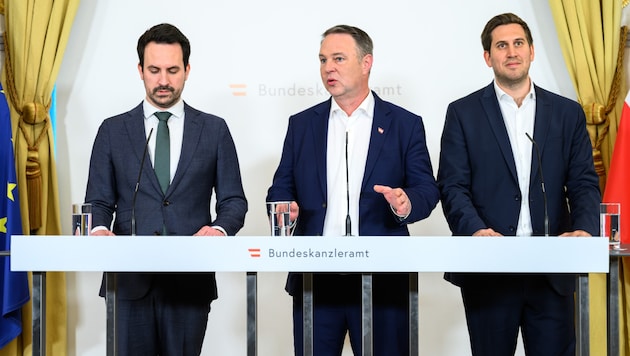

After a tough battle, the federal government agreed on Friday to introduce a social media ban for children under 14. However, one important question remains unanswered. The controversial reform of the curriculum for upper-level AHS schools is now also set in stone—as expected, it will result in cuts to Latin classes.
 Kronen Zeitung als bevorzugte Google-Quelle hinzufügen
 “Today is a good day for our children. We will protect them from the negative effects of social media platforms. We will no longer stand by and watch as these platforms harm our children. The risks have long been ignored; now it is time to act,” emphasized Vice Chancellor Andreas Babler (SPÖ) at a press conference on Friday morning.
Here’s what the social media ban will look like:
The goal is an age restriction at the EU level
He outlined three key measures the government plans to implement and support the social media ban for children under 14. Accordingly, the government intends to introduce clear rules for platform operators and continue pursuing the goal of an age restriction at the EU level—for example, through the Digital Services Act.
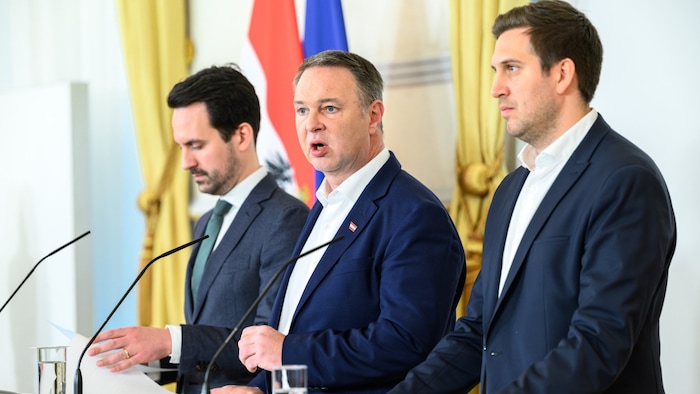
The curriculum reform, which was also presented, aims to strengthen media literacy in schools. And a solution at the national level is to be implemented quickly, “because we realize that it will still take time at the EU level.”
Draft bill expected by end of June – and then?
State Secretary for Digital Affairs Alexander Pröll (ÖVP) announced that a legislative proposal for the technical implementation of the age restriction willbe readyby theendof June. The exact timeline for the social media ban remained unclear: Over the summer, the goal is to arrive at a legally compliant solution, which must then be coordinated with the EU. According to Babler, that will take another three to six months.

We will no longer stand by and watch as these platforms harm our children.
Vizekanzler Andreas Babler (SPÖ)
The form of age verification is also still pending
The government also failed to provide an answer on exactly how age verification will work in the future. The goal is to use modern methods of age verification that simultaneously protect privacy by allowing age to be confirmed without disclosing personal data. According to Babler, a two-step model is being considered, similar to what is currently being developed at the EU level.
Which platforms will the ban affect? No decision has been made yet
It is also not easy to answer the question of which platforms will be affected by the ban. There will be no exhaustive list; instead, following experts’ recommendations, the approach will be based on functionality. The platforms to be affected are those that use addictive algorithms designed to increase user retention for commercial purposes or that could serve as a gateway for pedophiles.
Wiederkehr emphasized the awareness of “how harmful social media is.” “Conscious use of it must be learned.” The place where this must take place, he said, is “the school, alongside the home.” Not least for this reason, there is a “major reform of the curricula.”

Real-name requirement will not beimplemen
The real-name requirement demanded by the ÖVP alongside the introduction of social media age restrictions will not be implemented. “The ban must comply with data protection regulations and be secure. But we will not hand over any personal data to platforms,” said Babler. However, the federal government is committed to stricter enforcement regarding the disclosure of existing user data by social media platforms in cases of a certain severity of offense, as well as to promoting cooperation between platforms and authorities in prosecuting offenders.
State Secretary Pröll also outlined additional measures to promote media literacy: media outlets should be supported in creating youth-friendly formats; a series of workshops on fact-checking should be established for all age groups; and the “Trusted Flagger” system should be expanded so that problematic content can be reported and removed more quickly.
Two New School Subjects
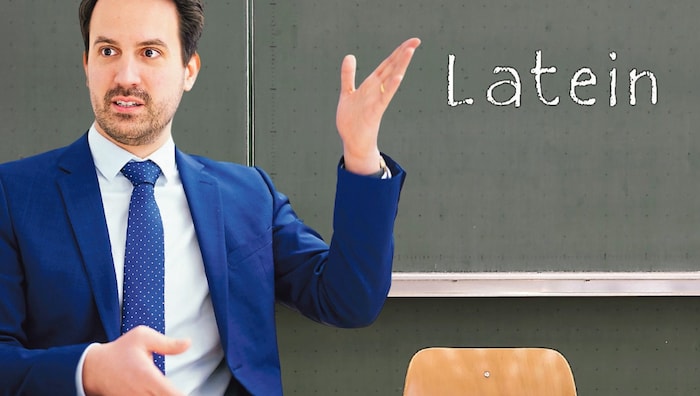
The green light has also been given for the controversial reform of the curricula in upper-level AHS schools. Starting in 2027/28, this reform provides for more instruction for students on media literacy and democracy, as well as on dealing with AI. In return, Latin classes will be reduced, though not as drastically as originally planned by Education Minister Christoph Wiederkehr (NEOS) following protests.
Media education possible as a standalone subject or subject bundle
According to documents, the Ministry of Education has agreed with school partners that schools can decide autonomously whether to teach media literacy as a standalone subject or as part of a subject bundle.
For Latin, two of the previous twelve hours will be cut in the upper school; originally, four hours were to be eliminated. No details have yet been provided regarding changes to the second modern foreign language in the Realgymnasium.
Appeal to Coalition Partners on Curricula
The total number of hours in the AHS upper school must not increase as a result of the introduction of the new subject, the Ministry emphasized in its statement. Following the agreement with teacher, student, and parent representatives, it is now up to the coalition partners to support the agreement “so that the reform of the AHS upper-secondary school curricula can finally be set in motion.”
The key points of the agreement stipulate that computer science instruction—currently two hours over the entire four years of upper secondary school—will be supplemented by the field of AI (primarily understanding how digital systems work, recognizing potentials and risks). The new required course “Media and Democracy” will focus on the benefits of both traditional and social media. Young people will also learn to distinguish truth from falsehood and to recognize attempts to influence them that are anti-democratic or radicalizing.
This article has been automatically translated,
read the original article here.











Willkommen in unserer Community! Eingehende Beiträge werden geprüft und anschließend veröffentlicht. Bitte achten Sie auf Einhaltung unserer Netiquette und AGB. Für ausführliche Diskussionen steht Ihnen ebenso das krone.at-Forum zur Verfügung. Hier können Sie das Community-Team via unserer Melde- und Abhilfestelle kontaktieren.
User-Beiträge geben nicht notwendigerweise die Meinung des Betreibers/der Redaktion bzw. von Krone Multimedia (KMM) wieder. In diesem Sinne distanziert sich die Redaktion/der Betreiber von den Inhalten in diesem Diskussionsforum. KMM behält sich insbesondere vor, gegen geltendes Recht verstoßende, den guten Sitten oder der Netiquette widersprechende bzw. dem Ansehen von KMM zuwiderlaufende Beiträge zu löschen, diesbezüglichen Schadenersatz gegenüber dem betreffenden User geltend zu machen, die Nutzer-Daten zu Zwecken der Rechtsverfolgung zu verwenden und strafrechtlich relevante Beiträge zur Anzeige zu bringen (siehe auch AGB). Hier können Sie das Community-Team via unserer Melde- und Abhilfestelle kontaktieren.