A plan to end the war?
U.S. Presents Tehran with Plan to End the War
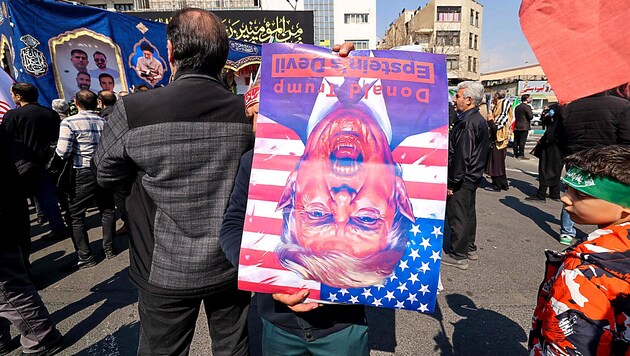

According to media reports, the U.S. government has presented the rulers in Tehran with a 15-point plan to end the war with Iran. Among other things, the plan demands the handover of enriched uranium. Iran’s military leadership politely declined and stated: “Washington is negotiating with itself.”
 Kronen Zeitung als bevorzugte Google-Quelle hinzufügen
 Iran announced that there would be no deal with the U.S. “Your (own) conflicts have reached the point where you are negotiating with yourselves,” said the spokesperson for the Khatam al-Anbiya Central Headquarters. “You will neither be able to invest in the region nor will you see the previous prices for energy and oil again,” he said. They would not come to terms with the U.S. government. “Neither now nor at any other time.”
Immediate ceasefire unrealistic
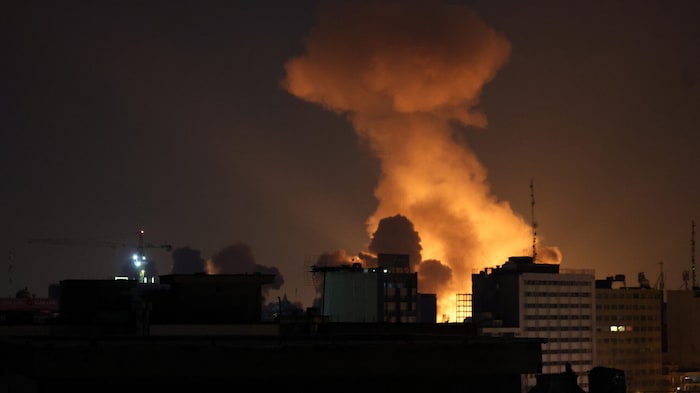
The contradictory statements—optimism from the U.S. and vehement denials from Iran—could not be reconciled at first. But one thing was clear: a quick agreement on a ceasefire seems rather unrealistic. Iran is by no means defeated, but remains capable of attacking Israel as well as the states in the Persian Gulf and blocking the Strait of Hormuz. Tehran is therefore unlikely to want to meet the demands of the 15-point plan.
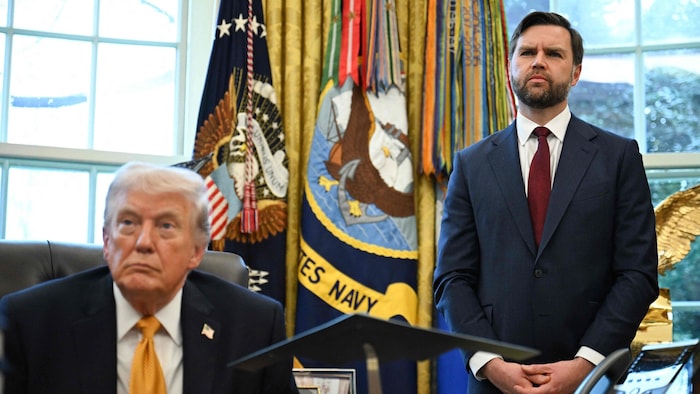
Reports of the alleged U.S. proposal and a potentially planned meeting between U.S. and Iranian representatives, mediated by Pakistan, caused oil prices—which had risen sharply since the start of the war—to drop slightly. Contributing to this were also optimistic remarks by U.S. President Donald Trump, who claimed that Iran allegedly “definitely wants to strike a deal.” Trump said that Secretary of State Marco Rubio and Vice President JD Vance are involved in the negotiations on behalf of the U.S.
Iran apparently sees no reason to agree to the deal. The mullah regime is by no means defeated, but remains capable of attacking Israel as well as the states in the Persian Gulf and blocking the Strait of Hormuz. Tehran is therefore unlikely to want to fulfill Washington’s wish list.
Iran counters with its own maximum demands
The “Wall Street Journal” also reported on a response from the Iranian Revolutionary Guards to the U.S. initiative, which in turn is said to include numerous demands that Washington is unlikely to meet—including, for example, the evacuation of all U.S. military bases around the Persian Gulf and a new system that would allow Iran to collect a toll from ships passing through the Strait of Hormuz.
What the U.S. Demands for Peace
According to reports, the U.S. demands in its 15-point plan include, among other things, the destruction of key facilities in Iran’s nuclear program, a halt to uranium enrichment and the production of ballistic missiles, as well as the reopening of the Strait of Hormuz. In addition, Iran is to surrender its stockpile of already enriched uranium—thereby dispelling fears that Islamists in Tehran could one day get their hands on nuclear weapons. In return, the harsh sanctions against Iran are to be eased, as reported by the “Wall Street Journal.”
“Axios” reported that U.S. Special Envoy Steve Witkoff told Trump that the Iranians had agreed to several key points—including that they are willing to give up their stockpiles of enriched uranium. Officially, however, Tehran states that there can be no question of negotiations with the Americans.
The media reports, citing informed U.S. officials, could not initially be independently verified. Furthermore, it remained unclear how Israel, as a key party to the conflict and a key arms partner of the U.S., would view a potential ceasefire agreement with its arch-enemy.
Pentagon Deploys Airborne Forces to the Middle East
According to the “Washington Post,” the U.S. Department of Defense ordered the deployment of approximately 3,000 soldiers from the 82nd Airborne Division to the MiddleEast. The “New York Times,” however, reported a figure of around 2,000 soldiers. U.S. special forces can parachute into enemy territory and could conceivably serve as the spearhead of a potential ground operation.
Although no decision has yet been made on whether ground troops will actually be deployed in Iran, the Wall Street Journal noted that the deployment of the soldiers opens up additional options for Trump in any case.
This article has been automatically translated,
read the original article here.











Willkommen in unserer Community! Eingehende Beiträge werden geprüft und anschließend veröffentlicht. Bitte achten Sie auf Einhaltung unserer Netiquette und AGB. Für ausführliche Diskussionen steht Ihnen ebenso das krone.at-Forum zur Verfügung. Hier können Sie das Community-Team via unserer Melde- und Abhilfestelle kontaktieren.
User-Beiträge geben nicht notwendigerweise die Meinung des Betreibers/der Redaktion bzw. von Krone Multimedia (KMM) wieder. In diesem Sinne distanziert sich die Redaktion/der Betreiber von den Inhalten in diesem Diskussionsforum. KMM behält sich insbesondere vor, gegen geltendes Recht verstoßende, den guten Sitten oder der Netiquette widersprechende bzw. dem Ansehen von KMM zuwiderlaufende Beiträge zu löschen, diesbezüglichen Schadenersatz gegenüber dem betreffenden User geltend zu machen, die Nutzer-Daten zu Zwecken der Rechtsverfolgung zu verwenden und strafrechtlich relevante Beiträge zur Anzeige zu bringen (siehe auch AGB). Hier können Sie das Community-Team via unserer Melde- und Abhilfestelle kontaktieren.