Fears for the Alliance
Macron: “That’s a recipe for the next war!”
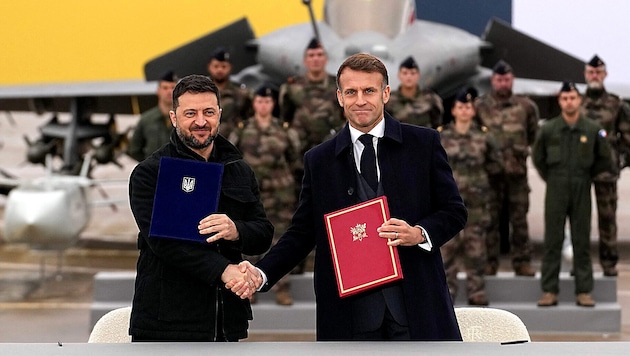

French President Emmanuel Macron has warned against cutting military aid to Ukraine. If the European alliance were to collapse, it would be disastrous. According to the leader, there is only one logical consequence: more wars on European soil.
 Kronen Zeitung als bevorzugte Google-Quelle hinzufügen
Anyone who wants to cut funding for Ukraine “basically wants to force it into an unjust peace, making it—and thus Europe as well—permanently vulnerable,” Macron wrote Saturday on the online platform X.
His conclusion reads like a stark warning: “That is the recipe for the next war. That cannot be France’s position.”
“If Russia imposes its will on a European country by force, all of Europe will be weakened,” Macron warned. “Helping Ukraine defend itself means protecting France and the French people.” A clear allusion to right-wing movements in Europe. Many parties—including the FPÖ—are critical of supporting Ukraine.

It is our duty to thwart this plan.
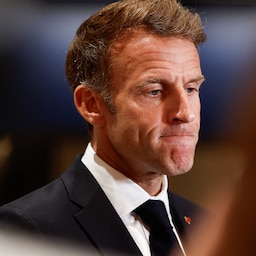
Macron über die Zerstörung der Ukraine
Bild: EPA/BENOIT TESSIER / POOL
One example among many: French right-wing populist Marine Le Pen, who leads the polls for next year’s presidential election, has announced that, if elected, she would halt aid to Ukraine after six months.
Little Hope for Peace Anytime Soon
Referring to the recent talks between Russia, Ukraine, and the U.S., Macron stated that it had become clear that Kremlin leader Vladimir Putin remains unwilling to negotiate. Putin is counting on “forcing Ukraine to its knees by intensifying attacks on civilians and trying to plunge the country into darkness this winter,” Macron explained. “It is our duty to thwart this plan.”
In future talks on a possible peace settlement, the Europeans are to have a seat at the table—unlike in the negotiations in Abu Dhabi between Moscow and Kyiv. At least, that is what Kyiv and Washington want. At Friday’s EU summit in Dublin, it was agreed that the European negotiating team would consist of representatives from the European Union institutions and the E5 countries—namely, Germany, France, the United Kingdom, Italy, and Poland.
While U.S. negotiator Jared Kushner reported that Vladimir Putin had agreed to Europe’s participation and that a timeline would be announced shortly, the Kremlin initially responded evasively.

Kremlin spokesman Dmitry Peskov stated on Saturday that while Moscow would not dictate to the EU who should represent it, it would first have to assess the extent to which “the European position” could contribute to the peace process.
The Kremlin’s “New Security Architecture”
The Kremlin has so far strictly rejected European participation as Ukraine’s biggest supporter. This is not really surprising, as position papers from the Abu Dhabi negotiations show. Vladimir Putin wants to turn back the clock on the continent— as reported.
If the Kremlin has its way, NATO’s eastern flank will be dissolved. The spheres of influence from 1997 are to be reinstated. This would primarily affect Poland, Hungary, Slovakia, the Czech Republic, Slovenia, Romania, Bulgaria, and the Baltic states. Putin could then move against former Soviet states without having to fear mutual defense clauses.
He had already made the same demand before the invasion of Ukraine. The dictator is thus proving once again that he is not willing to make concessions—even though his war has already cost the lives of hundreds of thousands of Russian soldiers, his own economy has been severely damaged, and the standard of living of his citizens is being systematically eroded.
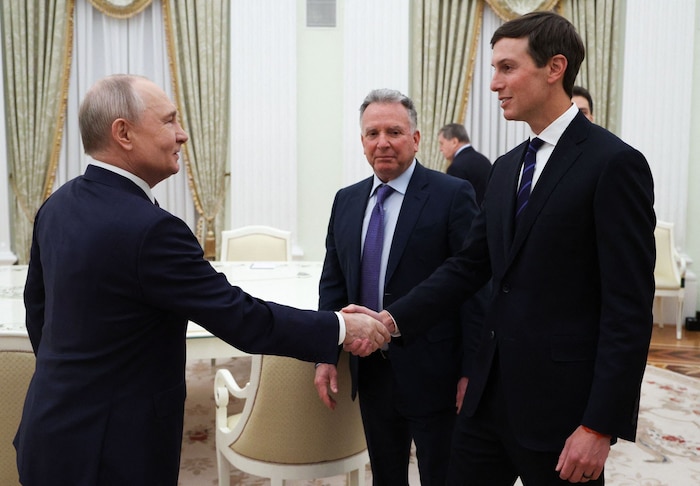
The only comment from Moscow on this is that Europe would be safer without NATO. What Putin describes as a “new security architecture” is, naturally, not well received in Europe. Analysts view the very fact that the need to reorganize European security structures is now being discussed at all as a propaganda victory for Moscow.
“Those very structures that Russia has largely destroyed,” political expert Carlo Massala notes on the X platform. “Russia—with the help of the U.S.—is forcing Europeans into a discussion aimed at making Europe less secure, dividing it, and bringing parts of it under its control.”
This article has been automatically translated,
read the original article here.








Willkommen in unserer Community! Eingehende Beiträge werden geprüft und anschließend veröffentlicht. Bitte achten Sie auf Einhaltung unserer Netiquette und AGB. Für ausführliche Diskussionen steht Ihnen ebenso das krone.at-Forum zur Verfügung. Hier können Sie das Community-Team via unserer Melde- und Abhilfestelle kontaktieren.
Hinweis in eigener Sache: Das krone.at-Forum präsentiert sich ab sofort in neuem Design! Wir freuen uns über konstruktives Feedback. Damit die Diskussionen in den Kommentarbereichen beim jeweiligen Thema bleiben, können Sie uns Rückmeldungen hier hinterlassen.
User-Beiträge geben nicht notwendigerweise die Meinung des Betreibers/der Redaktion bzw. von Krone Multimedia (KMM) wieder. In diesem Sinne distanziert sich die Redaktion/der Betreiber von den Inhalten in diesem Diskussionsforum. KMM behält sich insbesondere vor, gegen geltendes Recht verstoßende, den guten Sitten oder der Netiquette widersprechende bzw. dem Ansehen von KMM zuwiderlaufende Beiträge zu löschen, diesbezüglichen Schadenersatz gegenüber dem betreffenden User geltend zu machen, die Nutzer-Daten zu Zwecken der Rechtsverfolgung zu verwenden und strafrechtlich relevante Beiträge zur Anzeige zu bringen (siehe auch AGB). Hier können Sie das Community-Team via unserer Melde- und Abhilfestelle kontaktieren.