95 cents more?
“Destructive”: Controversy Over Fuel Price Study
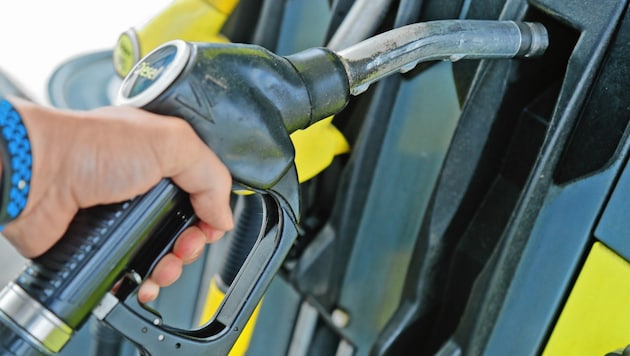

Will diesel really go up by 95 cents because Austria is enforcing climate laws? Criticism is mounting over a study by Economica commissioned by the Chamber of Commerce. Instead, one company claims that the price per liter of diesel could actually drop by 12 cents. The Chamber agrees with this calculation—with one caveat.
 Kronen Zeitung als bevorzugte Google-Quelle hinzufügen
By 2035, two-thirds of fuel in Austria must come from renewable sources—this is set to be stipulated in the Renewable Energy Act for Transportation, which will undergo review this fall. In doing so, the federal government is implementing EU requirements and setting the path toward climate neutrality by 2040—ten years ahead of the EU.
Business and industry voiced strong criticism earlier this week. A study by Christian Helmenstein (Economica) commissioned by the Austrian Federal Economic Chamber (WKO) found that the price of a liter of diesel could rise by up to 95 cents, and gasoline by up to 86 cents. On Thursday, WKÖ President Martha Schultz even called for a reduction in the mineral oil tax and a suspension of CO₂ pricing. Viktoria Auer, climate spokesperson for the environmental organization WWF, countered: “The Chamber of Commerce’s demands would prolong our costly dependence on oil and gas and make Austria even more vulnerable to crises.”
Climate change costs billions annually
Also not included in the study are the costs of climate change, which are exacerbated by inaction. The consequences already cost 3.7 billion euros per year, as calculated by economist Birgit Bednar-Friedl of the Wegener Center at the University of Graz. That amounts to 402 euros per person. This figure includes, for example, damage to infrastructure caused by extreme weather events and crop failures.

We should instead be thinking about how to achieve an economic advantage for Austria as we work toward these goals.

Münzer-Sprecher Harald Sigl
Bild: Münzer Bioindustrie GmbH
This sparked discussions not only on the krone.at forum. Criticism also came from the Ministry of Transport, which is responsible for the matter: The study’s figures appear “massively inflated.” Now, biodiesel market leader Münzer has joined in as well. “The war in Iran costs more than the climate targets,” says spokesperson Harald Sigl. “We should instead be thinking about how to achieve an economic advantage for Austria while working toward these goals. Anything else is destructive.” Münzer, based in Sinabelkirchen, collects used cooking oil and processes it into biodiesel. This fuel is then blended with 7 percent fossil diesel—resulting in what’s known as B7, which all cars can use.
The more biodiesel, the lower the taxes
Sigl is now calling for a tiered mineral oil tax. “Currently, it makes no difference from a tax perspective whether you fill up with B7, B20, B30, or B99,” he says. The higher the biodiesel content, the lower the CO₂ emissions. The cost savings would be immediately noticeable at the pump, says the Münzer spokesperson. “B10 could be sold at Austrian gas stations for about 1.5 cents per liter less than B7, and B30 for nearly 12 cents per liter less.”
Not all cars are currently approved for it, though trucks and buses generally are. Sigl also calls for on-site inspections of imported fuels such as HVO. “It’s unacceptable that raw materials from China are treated more favorably than biofuel from Austria.”
The Chamber Responds
The Chamber’s response is mixed. “We support tax relief for renewable fuels. This does not contradict our criticism of additional national obligations that go beyond EU requirements,” the Chamber stated in response to an inquiry. They stand by the European climate targets. However, climate protection must remain affordable and must not put our companies at a disadvantage compared to their European competitors. “Our goal is an affordable and economically viable mobility transition,” they emphasize.
This article has been automatically translated,
read the original article here.










Willkommen in unserer Community! Eingehende Beiträge werden geprüft und anschließend veröffentlicht. Bitte achten Sie auf Einhaltung unserer Netiquette und AGB. Für ausführliche Diskussionen steht Ihnen ebenso das krone.at-Forum zur Verfügung. Hier können Sie das Community-Team via unserer Melde- und Abhilfestelle kontaktieren.
Hinweis in eigener Sache: Das krone.at-Forum präsentiert sich ab sofort in neuem Design! Wir freuen uns über konstruktives Feedback. Damit die Diskussionen in den Kommentarbereichen beim jeweiligen Thema bleiben, können Sie uns Rückmeldungen hier hinterlassen.
User-Beiträge geben nicht notwendigerweise die Meinung des Betreibers/der Redaktion bzw. von Krone Multimedia (KMM) wieder. In diesem Sinne distanziert sich die Redaktion/der Betreiber von den Inhalten in diesem Diskussionsforum. KMM behält sich insbesondere vor, gegen geltendes Recht verstoßende, den guten Sitten oder der Netiquette widersprechende bzw. dem Ansehen von KMM zuwiderlaufende Beiträge zu löschen, diesbezüglichen Schadenersatz gegenüber dem betreffenden User geltend zu machen, die Nutzer-Daten zu Zwecken der Rechtsverfolgung zu verwenden und strafrechtlich relevante Beiträge zur Anzeige zu bringen (siehe auch AGB). Hier können Sie das Community-Team via unserer Melde- und Abhilfestelle kontaktieren.