4.2 percent instead of 2.1 percent?
Battle Over Chamber Salaries Heads to the Supreme Court
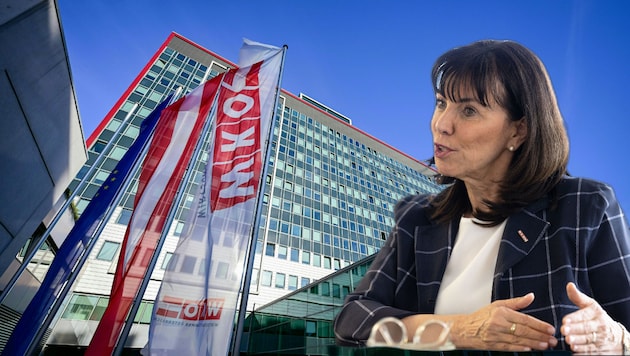

Now things are getting serious: The works council and the employer side of the Austrian Chamber of Commerce (WKÖ) are taking the controversial pay raise to the Supreme Court. The court is to determine whether the workforce is, after all, entitled to the full 4.2 percent for 2026. This is the next round in a case that has already cost one Chamber president his position.
 Kronen Zeitung als bevorzugte Google-Quelle hinzufügen
 Let’s recall November of last year: It was revealed then that the salaries of the WKÖ’s 5,800 employees at the time were set to rise by a whopping 4.2 percent in 2026—calculated according to a formula adopted by all political factions in 2024. At a time when metalworkers were fobbed off with 1.41 percent and civil servants also had to settle for significantly less, this caused an outcry.
The then-WKÖ President Harald Mahrer responded by announcing that he would intervene in the process: Instead of 4.2 percent, salaries would rise by only 2.1 percent “on a pro-rata basis”—with the full increase taking effect only as of July 1, 2026. But this halving quickly turned out to be a sham: Structurally, the model meant that salaries would still increase by 4.2 percent—just six months later. Future pay raises would then be based on these increased salaries. Critics summed it up this way: “The concession applies to six months, nothing else.”
Mahrer Resigns, Schultz Takes Over
The scandal ultimately cost Mahrer his position. On November 12, 2025, he announced his resignation as WKO president via video message. “I currently see no way to make responsible contributions toward a positive future,” Mahrer said. He had previously resigned as president of the National Bank.
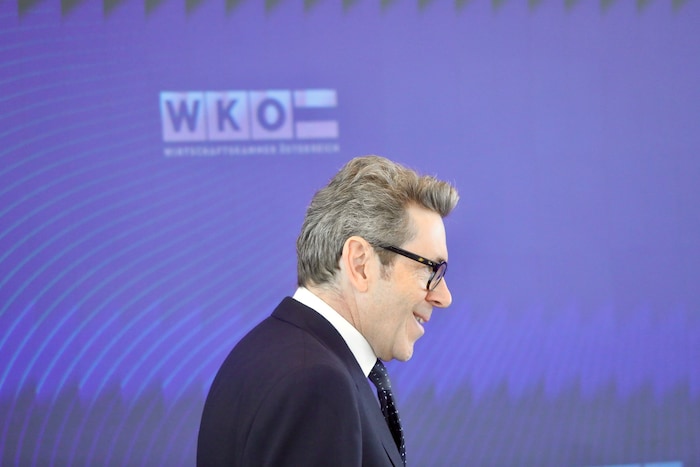
Vice President Martha Schultz took over on an interim basis. In January 2026, she was officially sworn in as the first female president of the WKÖ and promised to regain the trust that had been lost.
Now the Supreme Court will decide
However, the legal issues surrounding the 2026 factor increase remain unresolved to this day. The WKÖ and the Central Works Council have differing views on the legal implications of the previous calculation based on the factor formula, its publication, and the decision of the Extended Presidium on November 26, 2025.

At the time, the Extended Presidium had decided on a 2.1 percent increase in wages and salaries. However, a calculation based on the previously applied factor formula would have resulted in a 4.2 percent increase for 2026. The Central Works Council apparently argues that employees have a legal right to the higher increase—or that the unilateral amendment by the Executive Board was not legally permissible.
The motion for a declaratory judgment filed with the Supreme Court is now intended to provide clarity for both sides. A decision is expected within the coming months. It is intended to establish a clear legal basis for how the 2026 factor-based increase will be handled going forward.
Why this matters
The outcome of the proceedings has implications far beyond the Chamber of Commerce. Should the Supreme Court rule in favor of the Central Works Council, the WKÖ would face a massive problem: Not only would it have to back-pay the higher salaries, but it would also have to explain why employees had to go without money for months that they were legally entitled to. Furthermore, the decision of the Enlarged Presidium—after all, the Chamber’s highest governing body—would be retroactively called into question.
For Martha Schultz, who is already in the process of reforming the Chamber and regaining trust, such a ruling would be a setback. And for the member companies that pay the Chamber’s dues, the question is whether their representative body is handling its own financial affairs more carefully than it has in the past.
The next round in the WKO salary saga has thus begun—this time before the country’s highest judges.
This article has been automatically translated,
read the original article here.











Willkommen in unserer Community! Eingehende Beiträge werden geprüft und anschließend veröffentlicht. Bitte achten Sie auf Einhaltung unserer Netiquette und AGB. Für ausführliche Diskussionen steht Ihnen ebenso das krone.at-Forum zur Verfügung. Hier können Sie das Community-Team via unserer Melde- und Abhilfestelle kontaktieren.
User-Beiträge geben nicht notwendigerweise die Meinung des Betreibers/der Redaktion bzw. von Krone Multimedia (KMM) wieder. In diesem Sinne distanziert sich die Redaktion/der Betreiber von den Inhalten in diesem Diskussionsforum. KMM behält sich insbesondere vor, gegen geltendes Recht verstoßende, den guten Sitten oder der Netiquette widersprechende bzw. dem Ansehen von KMM zuwiderlaufende Beiträge zu löschen, diesbezüglichen Schadenersatz gegenüber dem betreffenden User geltend zu machen, die Nutzer-Daten zu Zwecken der Rechtsverfolgung zu verwenden und strafrechtlich relevante Beiträge zur Anzeige zu bringen (siehe auch AGB). Hier können Sie das Community-Team via unserer Melde- und Abhilfestelle kontaktieren.