Decision Reached
Gas Price Cap Extended Again
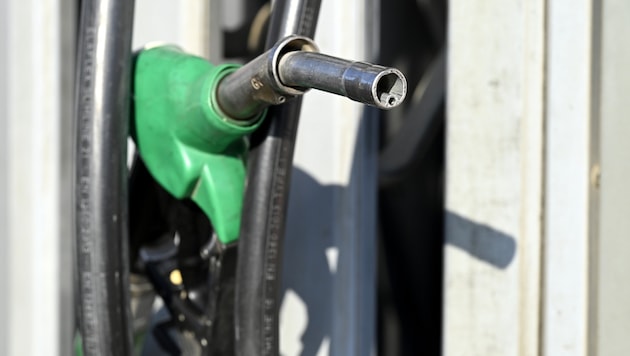

The fuel price cap will be extended again through the end of September, as the Ministry of Economic Affairs announced on Monday. The reduction in the mineral oil tax by 1.9 cents per liter will thus remain in effect. Nevertheless, Minister Wolfgang Hattmannsdorfer (ÖVP) emphasized that the government does not intend to intervene in the market on a permanent basis.
 Kronen Zeitung als bevorzugte Google-Quelle hinzufügen
“From the very beginning, the fuel price cap was a targeted, temporary, and responsible measure. We will continue on this path until the end of September,” Hattmannsdorfer explained in a press release. Nevertheless, he made it clear: “We must continue to ensure security of supply in the future, and permanent interventions in the market are the wrong approach.”
Still No Intervention in Margins
Therefore, there will still be no intervention in the oil companies’ margins; rather, the focus is on “targeted relief”: “A European comparison confirms this course: Austria’s fuel prices are below the EU average.” With the so-called “Price-Down Guarantee,” the government is also ensuring that falling international wholesale prices are passed on at the gas pumps.
SPÖ State Secretary Michaela Schmidt saw this as “an important tool for combating inflation”: “Together with the rent cap, the tax cut on basic foodstuffs, and cost-cutting reforms in the energy sector, it helps make daily life affordable for Austrians.”
Recently, the situation in the Middle East had escalated again, with the U.S. and Iran intensifying their attacks once more. NEOS State Secretary Sepp Schellhorn commented that this shows how quickly the international situation can change: “In times like these, it’s right to have a safety net. But this makes it all the more important for us to work even harder at home to strengthen our economic immune system: with more domestic energy, more competition, faster procedures, and less bureaucracy. After all, we can’t always just prescribe new government remedies for every international crisis.”
Gas Prices Have Fallen Slightly Recently
Gas prices in Austria have recently fallen slightly. According to the gas price calculator from the state-run E-Control, a liter of premium gas cost 1.741 euros, down from 1.763 euros on Saturday. The price of diesel stood at 1.943 euros per liter on Sunday, down from 1.973 euros the day before.
However, the ÖAMTC points out that August was the most expensive month for diesel on a monthly average since October 2022. On average, the price of diesel in August was over 2 euros per liter, while gasoline averaged 1.80 euros per liter. The ÖAMTC therefore continues to call for a European windfall tax on the profits of the petroleum industry, as well as a reduction in CO2 pricing. In addition, the motorists’ club wants international price quotations for diesel and premium gasoline to be more strictly regulated.
Criticism of the Lack of Margin Limits
The ÖAMTC views the reduction in the motor fuel tax as positive in itself, but says it does not provide sufficient relief for people who rely on their cars. The Independent Trade Union Faction within the ÖGB also criticizes the fact that the fuel price cap is not targeted enough. The continued suspension of the margin cap is also causing discontent among the ARBÖ. The club argues that the lower motor fuel tax is insufficient and is calling for inflation compensation for drivers. The FPÖ even sees this as a “mockery of drivers” and a “failure to provide assistance.”
The Greens would also have liked to see the margin cap reinstated in order to hold the oil companies more accountable. “While the oil companies continue to profit from high fuel prices and rake in huge profits, taxpayers are footing the bill for whatever’s left over from the fuel price cap,” said Green Party budget spokesperson Jakob Schwarz. The WWF is also critical of the fuel price cap, viewing it as “the wrong signal for climate policy” because it does nothing to address dependence on oil or the reasons for high energy prices.
Marterbauer Targets Oil Companies’ Profits
SPÖ Finance Minister Markus Marterbauer had also recently expressed skepticism about extending the fuel price cap. The finance minister expects much more from a coordinated effort against the crisis-driven profits of oil companies, as he said last week on Ö1’s “Morgenjournal.”
In a joint letter dated August 21, 2026, to Irish Tánaiste and Finance Minister Simon Harris —whose country currently holds the EU Council Presidency—Marterbauer and five counterparts call for a swift discussion of an EU-wide framework for taxing so-called “windfall profits.”
This article has been automatically translated,
read the original article here.










Liebe Leserin, lieber Leser,
die Kommentarfunktion steht Ihnen ab 6 Uhr wieder wie gewohnt zur Verfügung.
Mit freundlichen Grüßen
das krone.at-Team
Hinweis in eigener Sache: Das krone.at-Forum präsentiert sich ab sofort in neuem Design! Wir freuen uns über konstruktives Feedback. Damit die Diskussionen in den Kommentarbereichen beim jeweiligen Thema bleiben, können Sie uns Rückmeldungen hier hinterlassen.
User-Beiträge geben nicht notwendigerweise die Meinung des Betreibers/der Redaktion bzw. von Krone Multimedia (KMM) wieder. In diesem Sinne distanziert sich die Redaktion/der Betreiber von den Inhalten in diesem Diskussionsforum. KMM behält sich insbesondere vor, gegen geltendes Recht verstoßende, den guten Sitten oder der Netiquette widersprechende bzw. dem Ansehen von KMM zuwiderlaufende Beiträge zu löschen, diesbezüglichen Schadenersatz gegenüber dem betreffenden User geltend zu machen, die Nutzer-Daten zu Zwecken der Rechtsverfolgung zu verwenden und strafrechtlich relevante Beiträge zur Anzeige zu bringen (siehe auch AGB). Hier können Sie das Community-Team via unserer Melde- und Abhilfestelle kontaktieren.