Spaniards are up in arms
Will the Ceuta chaos now have consequences for the 2030 World Cup?
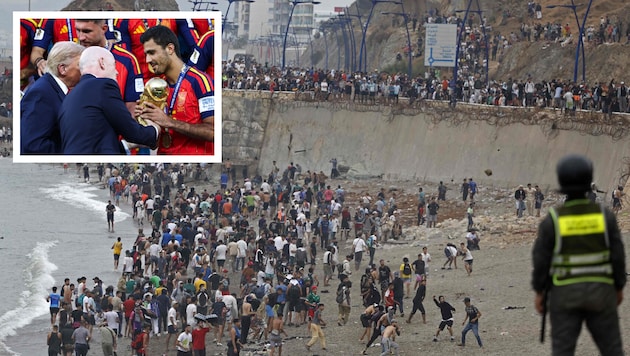

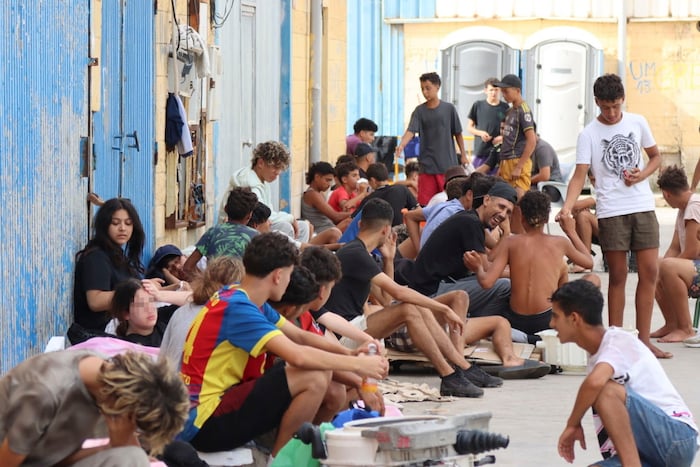
The controversy surrounding the recent influx of migrants into the Spanish North African exclave of Ceuta is now casting a shadow over plans for the 2030 World Cup, which is to be hosted by Spain, Portugal, and Morocco. On Thursday, Ceuta’s president, Juan Jesús Vivas, appeared before the European Parliament committee to explain, from his perspective, the reasons that led to up to 80,000 mainly Moroccan migrants crossing the EU’s external border a week ago: “Morocco is not a reliable partner.”
 Kronen Zeitung als bevorzugte Google-Quelle hinzufügen
 This impression, reinforced by TV footage showing Moroccan border guards standing completely idle, has now even led to a highly unusual situation in the Spanish Parliament: On Thursday, both the right-wing populist Vox party and the far-left Sumar party submitted motions calling on the Sports Committee to urge FIFA to exclude Morocco from hosting the 2030 World Cup. Normally, the two parties practically never agree on anything.
Spain’s fierce criticism of Morocco
In 2021, Spain brought Portugal on board for a joint Iberian bid to host the 2030 World Cup, and in 2023, it brought Morocco on board to boost its chances with the first European-African World Cup, which was indeed awarded by FIFA a year later. But how could one co-host a World Cup with a country that allowed an “attack on our national sovereignty,” asked Vox leader Santiago Abascal. “As long as serious doubts remain about the political exploitation of human lives,” Morocco should not be allowed to retain “the prestige, economic benefits, and international legitimacy of a World Cup,” Sumar said.
Pablo Fernández, spokesperson for the left-wing Podemos party, also made it clear: “Spain should not co-host the World Cup with a dictatorship like Morocco, which disregards human rights and is responsible for the deaths of over 140 people in an attack on Spain.”
Nerves Are on Edge
Spain’s ruling Socialists have not yet commented on the matter, likely to avoid further straining diplomatic relations with Rabat. But nerves in Spain are currently on edge—especially following the latest report in the British newspaper *The Times*, according to which the embattled FIFA President Gianni Infantino allegedly even promised Morocco the right to host the World Cup final in exchange for the country’s support for his reelection in March 2027.
FIFA vehemently denied this. A spokesperson for the organization clarified: “It is false and misleading to claim that the FIFA president made any commitments regarding the hosting of the 2030 World Cup final. FIFA will make a decision in due course.” Nevertheless, Spain’s Minister of Sports, Milagros Tolón, has now also spoken out. Diplomatically, but clearly: “We will continue to work toward this, because we want—and it must be so—that the World Cup final takes place in Spain,” Tolón told the radio station Cadena Ser on Thursday.
As the reigning men’s and women’s soccer world champions, her country carries significant sporting clout. In addition, Spain has extensive experience organizing major sporting events and offers modern infrastructure and a safe environment. The final could take place at Real Madrid’s Bernabéu Stadium or FC Barcelona’s Camp Nou.
Close Ties Between FIFA and Morocco
Yet Morocco has been working for years toward hosting the 2030 World Cup final in particular. To that end, King Mohammed VI is currently having the world’s largest soccer stadium—named after his father, Hassan II—built in Casablanca, with a capacity of 115,000 seats. It was in Rabat, Morocco, that FIFA held its crisis meeting on Thursday after Infantino came under pressure due to his FIFA investor plans and an open power struggle with UEFA broke out. The result: unity and support for the president.
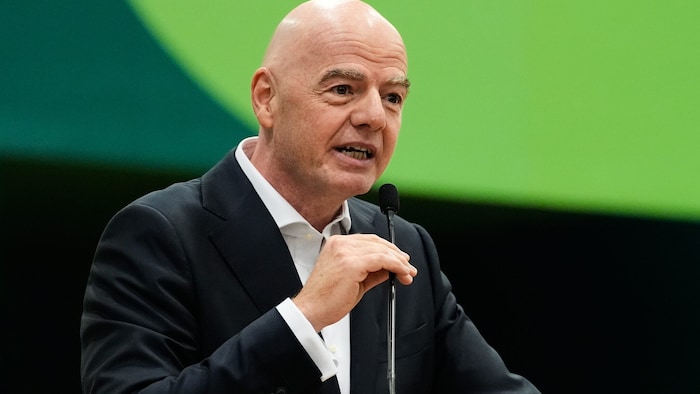
It may not be a coincidence that the meeting took place in Rabat. Infantino has one of his biggest and most strategically important supporters in Morocco. While the Europeans are turning their backs on the Swiss official, the 54 African soccer associations stand behind him. The influential president of the Moroccan Soccer Association, Fouzi Lekjaa, plays a particularly key role in this regard. He has been a close friend of Infantino’s for years.
Lekjaa is considered one of the most powerful officials in African soccer. He serves on the FIFA Council, is vice president of the Confederation of African Football (CAF), and chairs the CAF Finance Committee. In addition, as Morocco’s Minister of Finance, he has direct access to the government and the royal family. He is at the table when crucial decisions are made regarding tournaments, finances, and strategic matters in African soccer. For Infantino, he is therefore a key figure in his reelection campaign next March.
This article has been automatically translated,
read the original article here.











Willkommen in unserer Community! Eingehende Beiträge werden geprüft und anschließend veröffentlicht. Bitte achten Sie auf Einhaltung unserer Netiquette und AGB. Für ausführliche Diskussionen steht Ihnen ebenso das krone.at-Forum zur Verfügung. Hier können Sie das Community-Team via unserer Melde- und Abhilfestelle kontaktieren.
User-Beiträge geben nicht notwendigerweise die Meinung des Betreibers/der Redaktion bzw. von Krone Multimedia (KMM) wieder. In diesem Sinne distanziert sich die Redaktion/der Betreiber von den Inhalten in diesem Diskussionsforum. KMM behält sich insbesondere vor, gegen geltendes Recht verstoßende, den guten Sitten oder der Netiquette widersprechende bzw. dem Ansehen von KMM zuwiderlaufende Beiträge zu löschen, diesbezüglichen Schadenersatz gegenüber dem betreffenden User geltend zu machen, die Nutzer-Daten zu Zwecken der Rechtsverfolgung zu verwenden und strafrechtlich relevante Beiträge zur Anzeige zu bringen (siehe auch AGB). Hier können Sie das Community-Team via unserer Melde- und Abhilfestelle kontaktieren.