"It was all a lie"
They were gone! That’s why the migrants quickly turned back
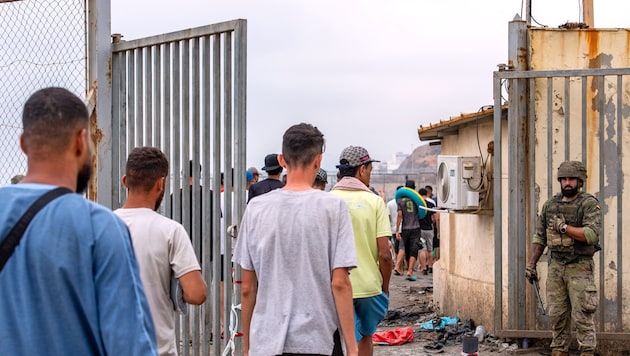

The rush on the Spanish exclave of Ceuta sent shockwaves through Europe. Memories of 2015 were reawakened, and political reactions were at times fierce. But on the ground, it quickly became clear: There’s no way forward here!
 Kronen Zeitung als bevorzugte Google-Quelle hinzufügen
 Why tens of thousands—primarily young Moroccan men—suddenly set out for Ceuta has not yet been conclusively explained. It was likely a mix of misinformation, political polarization, and a new loophole in the law (more on this in the info box below).
This explosive cocktail is said to have contributed to the historic rush on the Spanish exclave in North Africa. The images of collapsing security lines, helpless police forces, and a veritable human wave sparked unease throughout Europe. Political solidarity was quickly cast aside. There was talk of a “new 2015.”
Migrants were “welcomed” by gangs of thugs
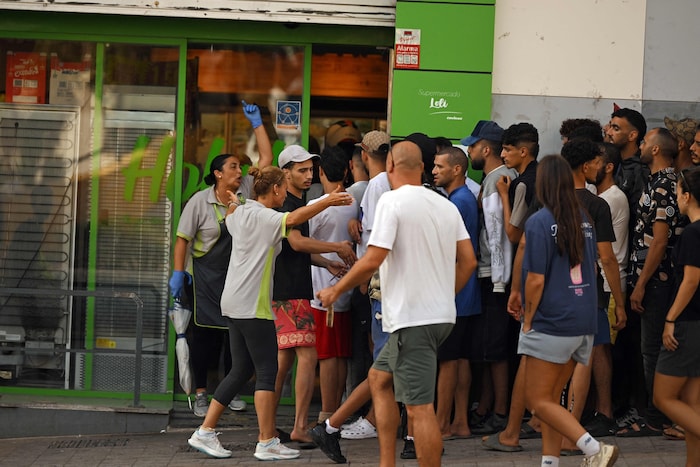
On the ground, however, reality quickly set in. There was no sign of a “Refugees Welcome” culture. As Spanish media on the scene vividly documented, the local population barricaded themselves in. Supermarkets and gas stations were closed.
Mehrere Migranten in Ceuta gaben an, sie seien durch Social-Media-Beiträge, in denen behauptet wurde, die spanische Grenze sei offen, zur Einreise motiviert worden. Daraufhin entlud sich eine „Explosion“.
Am Weg zur Grenze und auch am Übergang selbst wurden die Männer offenbar von den marokkanischen Behörden durchgewunken. Dafür gibt es mehrere Zeugenberichte. Es kursieren zudem Videos. „Weiter, einfach weiter“, soll der Tenor gewesen sein. Eine politische Botschaft aus Rabat an Madrid ist also nicht ausgeschlossen.
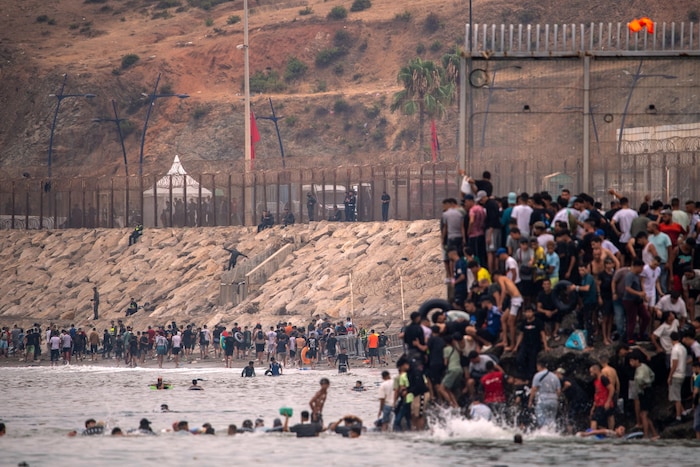
In Spanien hütete man sich vor voreiligen Schuldzuweisungen – und machte ein Urteil des Obersten Gerichtshofs vom 8. Juli mitverantwortlich. Es verbietet die sofortige Zurückweisung von Menschen ohne Verfahren, die schwimmend ankommen und dabei „keine physische Barriere“ überwinden. Das sei auch der Grund gewesen, warum die meisten ins Wasser sprangen, um den Wellenbrecher von El Tarajal zu umschwimmen. Dutzende schafften es nicht mehr aus dem Meer.
Zu allem Überfluss soll die spanische Regierung anfängliche Warnungen in den Wind geschossen haben, da der Fokus auf den Waldbränden am Festland gelegen hatte.
No food or water was provided for the new arrivals—nor was a place to sleep. Many migrants spent the night outdoors in parks and public parking lots.
The hope that a ferry would already be waiting there so they could begin their long-awaited life in Europe quickly vanished into thin air. According to the *New York Times*, small groups of thugs formed in downtown Ceuta, chanting “Long live Spain” as they herded migrants back toward Morocco.
Despair quickly set in
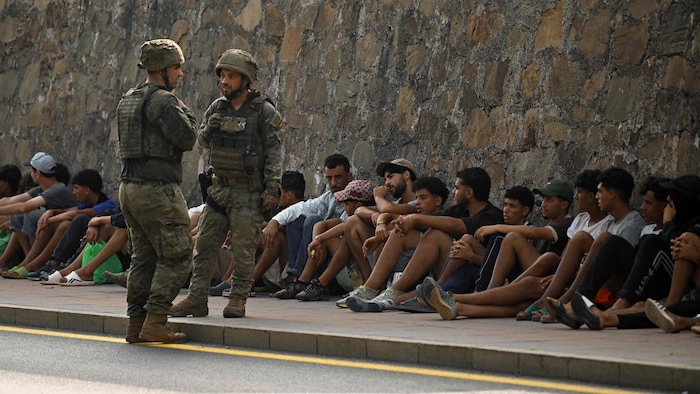
The military also took rigorous action against the men. The loud rumbling of their stomachs did the rest. “I’m very thirsty,” 19-year-old Adam Hams told reporters on the scene, while minors around him begged for food. They received none. Another man told Reuters he didn’t even know why he had come. He had simply gotten swept up in the moment (see tweet below).
According to the state-run television station RTVE, 48,300 people had already returned to Morocco by Friday evening. An unknown number are believed to still be in the exclave. Local residents also continued to report “harassment.” However, it is considered out of the question that the remaining new arrivals will be allowed onto the European mainland.
While there is normal Schengen internal travel from Ceuta by plane and ferry to the Spanish mainland—to Algeciras, Almería, Málaga, or Madrid—ID and document checks are routine, as the goal is to prevent migrants from entering the European mainland unchecked. With empty plastic bottles and false hopes, there’s nowhere to go from here.
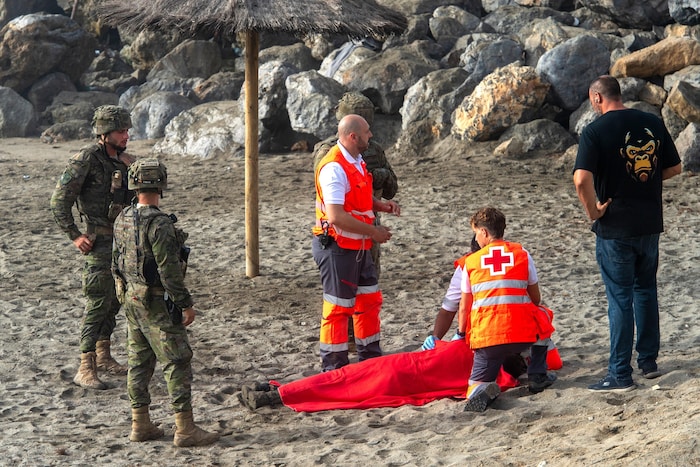
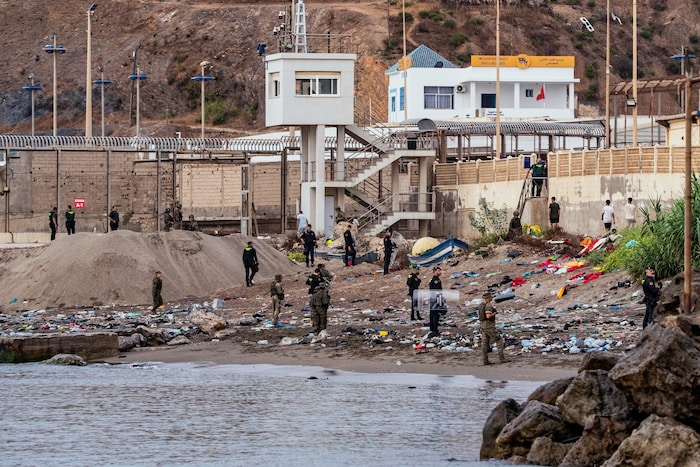
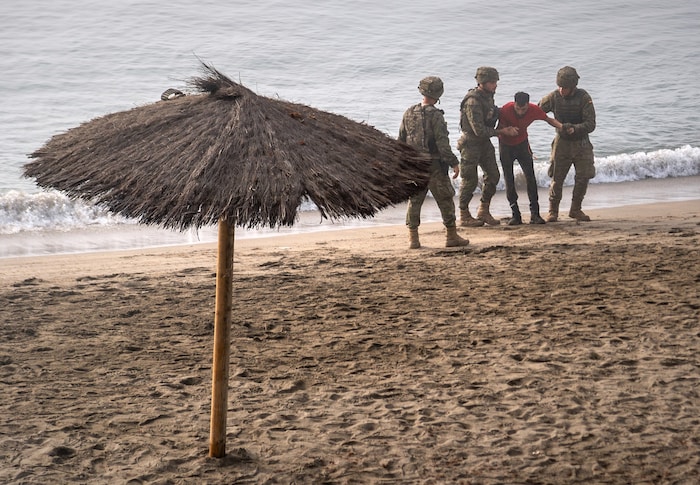
According to the Spanish government, these checks are being stepped up following the migrant surge of the past few days. Migrants who reach Ceuta do not, therefore, automatically gain access to the Spanish mainland or other Schengen countries. Migration Commissioner Magnus Brunner assured that “not a single person” had crossed the border into the EU mainland.
Moroccans Feel Deceived
While Europe breathes a sigh of relief, disappointment reigns among the young Moroccans: “No one in Spain helped us. We were told we’d get housing and a visa to continue our journey to Algeciras, but it was all a lie,” 18-year-old Mohamed told a reporter for the Spanish daily “El País.”
The dream of obtaining legal documents for the journey to the Iberian Peninsula and emigrating legally to Europe turned out to be a utopia and a lie. Spanish Prime Minister Pedro Sánchez called the border breach an “attack,” placing the main blame on human-trafficking gangs. The legal loophole created by the Supreme Court ruling likely played a role as well.
So what to do? Sánchez announced plans to install a floating barrier in the sea. The idea behind it is to erect a “physical barrier, at least visually,” to facilitate the return of migrants at the border. Work on this has already begun off the coast. The effectiveness of the plan is open to doubt.
It is likely only a matter of time before the next person—driven by false hopes—jumps into the water to swim toward a new life.
This article has been automatically translated,
read the original article here.











Willkommen in unserer Community! Eingehende Beiträge werden geprüft und anschließend veröffentlicht. Bitte achten Sie auf Einhaltung unserer Netiquette und AGB. Für ausführliche Diskussionen steht Ihnen ebenso das krone.at-Forum zur Verfügung. Hier können Sie das Community-Team via unserer Melde- und Abhilfestelle kontaktieren.
User-Beiträge geben nicht notwendigerweise die Meinung des Betreibers/der Redaktion bzw. von Krone Multimedia (KMM) wieder. In diesem Sinne distanziert sich die Redaktion/der Betreiber von den Inhalten in diesem Diskussionsforum. KMM behält sich insbesondere vor, gegen geltendes Recht verstoßende, den guten Sitten oder der Netiquette widersprechende bzw. dem Ansehen von KMM zuwiderlaufende Beiträge zu löschen, diesbezüglichen Schadenersatz gegenüber dem betreffenden User geltend zu machen, die Nutzer-Daten zu Zwecken der Rechtsverfolgung zu verwenden und strafrechtlich relevante Beiträge zur Anzeige zu bringen (siehe auch AGB). Hier können Sie das Community-Team via unserer Melde- und Abhilfestelle kontaktieren.