Alarming Statistics
We’ll be short 18,000 doctors over the next 10 years


Does Austria have enough doctors to sustain our healthcare system? Actually, yes, according to the Medical Association. After all, there have never been as many doctors in Austria as there are now. Nevertheless, the healthcare system faces a massive shortfall: Over the next ten years, approximately 18,000 doctors will reach retirement age. There is a particularly dangerous bottleneck in medical education—policymakers must take action.
 Kronen Zeitung als bevorzugte Google-Quelle hinzufügen
 At first glance, the numbers actually look good: 53,353 doctors are currently caring for the health of Austrians—a new record high. Since 2024, their number has risen by 2.4 percent. There was even a 6.6 percent increase in the number of resident physicians, a 1.8 percent increase in specialists, and a 1.5 percent increase in general practitioners.
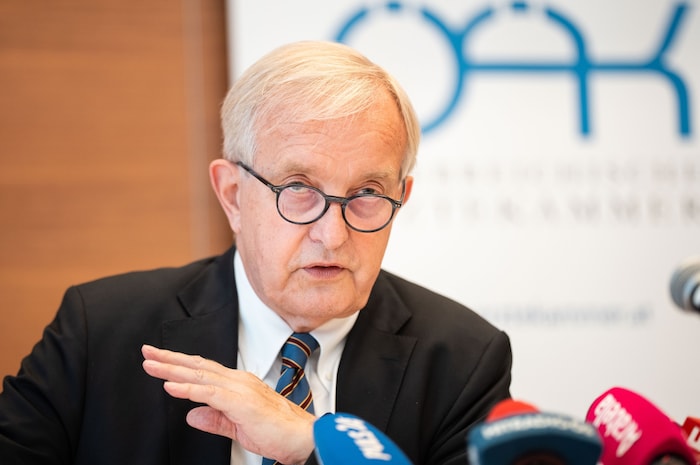
“We have enough doctors, but there’s a shortage in the public system,” says Johannes Steinhart, president of the Medical Association, summarizing the problem. Because while the number of doctors is rising, so is the demand. Austria’s population is growing and aging—which means more medical care is needed. At the same time, average working hours are decreasing, and part-time work is becoming increasingly popular even among young doctors.
The major problem: The medical workforce is aging faster than we can train new doctors. In ten years, around 18,000 doctors will be at or past retirement age. About 1,300 new doctors enter the workforce each year, but in 2025, the proportion of young doctors under 35 was only 21.2 percent. 46.1 percent were between 35 and 55 years old, and 32.7 percent were over 55.
So things are going to get tight over the next ten years. “Thanks to the adjustment of the standard retirement age for women, the situation has eased somewhat. Nevertheless, there is an annual need to replace 1,836 doctors just to maintain the status quo in terms of headcount,” warns Lukas Stärker, director of the Medical Association.
However, simply increasing the number of college spots will not solve the problem on its own. After graduation comes basic training in a hospital—and that is precisely where the next bottleneck already lies. There are no binding regulations governing how many positions hospital operators must offer. “Basic training in hospitals is becoming a bottleneck,” says Steinhart.
What the Medical Association Demands from Politicians
The Medical Association is calling for a guaranteed minimum number of basic training positions. Politicians must negotiate this with the hospital operators. However, it does not support coercive measures for young doctors: the next generation must be attracted to the public system through better conditions.
This also requires more modern models in health insurance-based practices: part-time work, job sharing, the hiring of doctors in private practices, and the option to work simultaneously in hospitals and private practice. The Medical Association rejects a blanket demonization of elective doctors.
And bureaucracy must also be urgently reduced. “Because doctors need more time again for what they’re actually there to do: care for their patients,” the president urges.
This article has been automatically translated,
read the original article here.











Willkommen in unserer Community! Eingehende Beiträge werden geprüft und anschließend veröffentlicht. Bitte achten Sie auf Einhaltung unserer Netiquette und AGB. Für ausführliche Diskussionen steht Ihnen ebenso das krone.at-Forum zur Verfügung. Hier können Sie das Community-Team via unserer Melde- und Abhilfestelle kontaktieren.
User-Beiträge geben nicht notwendigerweise die Meinung des Betreibers/der Redaktion bzw. von Krone Multimedia (KMM) wieder. In diesem Sinne distanziert sich die Redaktion/der Betreiber von den Inhalten in diesem Diskussionsforum. KMM behält sich insbesondere vor, gegen geltendes Recht verstoßende, den guten Sitten oder der Netiquette widersprechende bzw. dem Ansehen von KMM zuwiderlaufende Beiträge zu löschen, diesbezüglichen Schadenersatz gegenüber dem betreffenden User geltend zu machen, die Nutzer-Daten zu Zwecken der Rechtsverfolgung zu verwenden und strafrechtlich relevante Beiträge zur Anzeige zu bringen (siehe auch AGB). Hier können Sie das Community-Team via unserer Melde- und Abhilfestelle kontaktieren.