Who Pays for It
750 million less in deficit: How the ÖGK is getting back on track
The health insurance fund has reported astonishing financial results. Instead of a deficit of 906 million, the deficit for 2025 was only 156.3 million euros. ÖGK Chairman Peter McDonald emphasizes that cuts were made in administrative costs. But others are shouldering the lion’s share of the burden...
 Kronen Zeitung als bevorzugte Google-Quelle hinzufügen
 Insiders suspect that part of the deficit reduction is due to a deficit that was “intentionally” overestimated. Nevertheless, the increase in health insurance premiums for retirees from 5.1 to 6.0 percent starting in the first full year (2026) alone will generate an additional
Administrative savings
“Since 2020, we have eliminated 300 positions and are reducing administrative space by ten percent,” McDonald said in an interview with the “Krone.” “Furthermore, we have negotiated salary agreements for social security employees that are noticeably below the inflation rate. We’re saving in our own department first.”
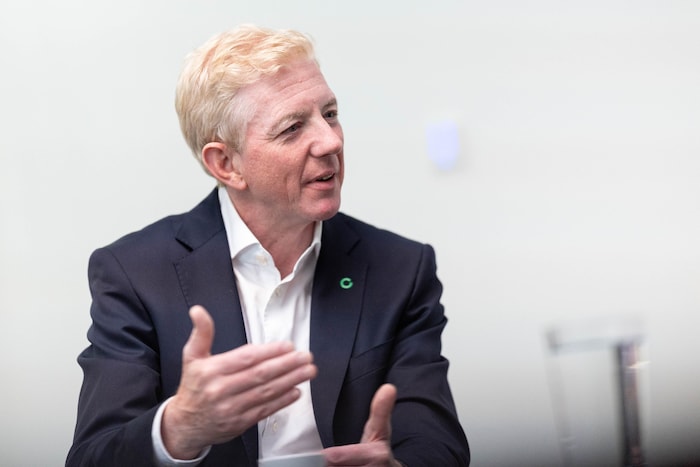
“98 percent of our expenditures go directly toward insurance benefits, where we negotiate prices at the bargaining table with the Medical Association, the pharmaceutical industry, orthotists, and many others. And in this area, we succeeded in containing costs last year.”
Number of People Over 65 Skyrocketing
Prioritization will continue to be necessary in the future, as the number of people over 65 is set to rise by 50 percent over the next 25 years. And people over 65 require twice as many medical services as younger people.
The current budget forecast for the next two years now projects a deficit of 217.8 million euros in 2026 and 398.8 million euros in 2027 (the February forecast had projected deficits of 431 million and 687 million euros, respectively). Nevertheless, McDonald saw cause for concern: Demographic pressure remains, compounded by the war in Iran, the energy crisis, high unemployment, and consumer reluctance.
Further efforts are needed to ensure that upcoming medical advances remain accessible in the coming years and to keep the ÖGK functioning effectively, for example by significantly expanding the number of primary care centers.
Too Many Prescriptions
The health insurance fund chairman’s next step is to examine the high number of medication prescriptions. He also wants to take a closer look at the frequency of doctor visits, where Austria leads Europe with 13 per insured person per year. The latter is part of the discussion within the reform partnership involving the federal government, the states, and the municipalities.
This article has been automatically translated,
read the original article here.








Liebe Leserin, lieber Leser,
die Kommentarfunktion steht Ihnen ab 6 Uhr wieder wie gewohnt zur Verfügung.
Mit freundlichen Grüßen
das krone.at-Team
User-Beiträge geben nicht notwendigerweise die Meinung des Betreibers/der Redaktion bzw. von Krone Multimedia (KMM) wieder. In diesem Sinne distanziert sich die Redaktion/der Betreiber von den Inhalten in diesem Diskussionsforum. KMM behält sich insbesondere vor, gegen geltendes Recht verstoßende, den guten Sitten oder der Netiquette widersprechende bzw. dem Ansehen von KMM zuwiderlaufende Beiträge zu löschen, diesbezüglichen Schadenersatz gegenüber dem betreffenden User geltend zu machen, die Nutzer-Daten zu Zwecken der Rechtsverfolgung zu verwenden und strafrechtlich relevante Beiträge zur Anzeige zu bringen (siehe auch AGB). Hier können Sie das Community-Team via unserer Melde- und Abhilfestelle kontaktieren.