IMF Loses Hope
The economy is reeling: All scenarios point to a downturn
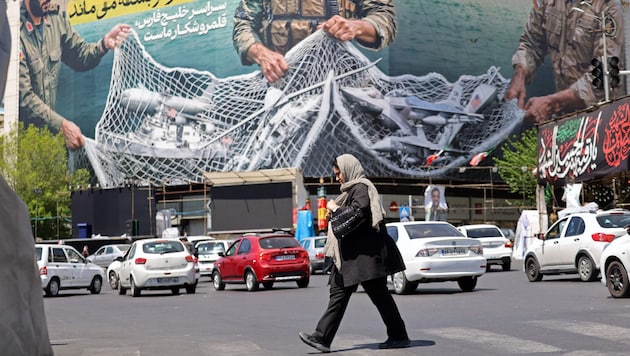

Just a few months ago, many economists foresaw a cautious stabilization of the global economy—driven by falling inflation, moderate interest rate policies, and new investments in technology. But this expectation has largely collapsed with the escalation of the war in Iran. Global growth prospects have darkened significantly, and risks are rising noticeably.
 Kronen Zeitung als bevorzugte Google-Quelle hinzufügen
 In its latest outlook, the International Monetary Fund (IMF) warns of an abrupt shift in sentiment in the global economy. The war has “interrupted” the recovery and could, in the worst-case scenario, trigger the “greatest energy crisis of modern times.” Even a global recession can no longer be ruled out.
Energy prices drag down the global economy
The trigger for this reassessment is the military escalation in the Middle East following the U.S. and Israel’s attacks on Iran. Since then, energy prices and economic indicators have been trending sharply downward. As reported by the British “Guardian,” the IMF sees the risk of rising inflation, weaker markets, and a global slowdown in growth—potentially reaching the threshold of recession.
Three Scenarios – All Worse Than Expected
In its latest “World Economic Outlook,” the IMF presents three scenarios. Even in the best-case scenario—a rapid de-escalation and easing of tensions in energy and supply chains—global growth will be weaker than expected at the start of the year.
In this scenario, the global economy is projected to grow by 3.1 percent this year. That is 0.3 percentage points less than previously forecast and corresponds to a decline in economic output of around 350 billion euros compared to earlier expectations.
Oil price as a key risk factor
The energy market is at the center of the uncertainty. As a result of the conflict, the oil price has at times risen above $100 (around €93) per 159-liter barrel again. The situation around the Strait of Hormuz, one of the most important global transport routes for oil and gas, remains particularly critical.
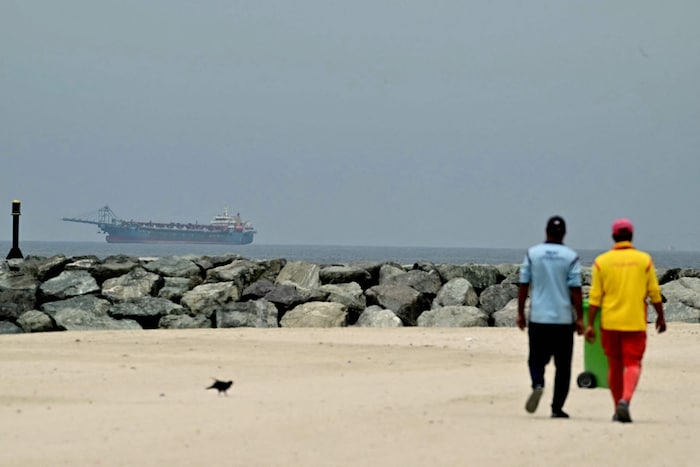
Depending on the scenario, the IMF anticipates significantly different outcomes: If oil prices remain high, global growth could drop to about 2.5 percent. In a particularly unfavorable scenario—with persistently high energy prices—growth could be as low as around two percent. According to the IMF’s definition, that would already constitute a global recession.
Escalation could drive inflation back up
According to the IMF, higher energy prices have a direct impact on inflation, particularly through transportation, production, and food costs. As a result, central banks could be forced to keep interest rates high for longer or raise them again—placing additional strain on the economy.
International media outlets such as the “New York Times” also emphasize that the economic consequences of the conflict extend far beyond the energy sector and are putting pressure on household purchasing power worldwide.
Regions particularly affected
According to the IMF, energy-importing countries as well as many emerging and developing economies are particularly hard hit. There, rising prices have an immediate impact on consumption and production. While industrialized nations remain more stable, they are also affected by lower growth rates and higher inflation.
How the crisis is affecting Austria
For Austria, the effects are primarily indirect, stemming from the course of the global economy. Forecasts from domestic economic research institutes reflect this global weakness and also anticipate only moderate growth and persistent price pressures. However, the focus remains on international developments—the situation in Austria is primarily a reflection of global economic trends.
IMF warns against misguided policy responses
Despite the tense situation, the IMF advises against broad-based interventions such as price caps or blanket subsidies. Measures should be targeted and time-limited.
IMF Managing Director Kristalina Georgieva urges caution: “At the moment, there is much to suggest that we should wait and see how the situation develops.” At the same time, she warns against unilateral national actions that could further exacerbate the situation: “Don’t pour oil on the fire.” Central banks also face a conflict of objectives: they are expected to combat inflation without further stifling the economy.
Outlook remains fragile
The global economy is thus once again facing a period of heightened uncertainty. Even in the best-case scenario, there will be lasting damage to growth. If things take a turn for the worse, there is a risk of a noticeable global slowdown—in the worst-case scenario, a recession that could engulf large parts of the global economy.
This article has been automatically translated,
read the original article here.











Willkommen in unserer Community! Eingehende Beiträge werden geprüft und anschließend veröffentlicht. Bitte achten Sie auf Einhaltung unserer Netiquette und AGB. Für ausführliche Diskussionen steht Ihnen ebenso das krone.at-Forum zur Verfügung. Hier können Sie das Community-Team via unserer Melde- und Abhilfestelle kontaktieren.
Hinweis in eigener Sache: Das krone.at-Forum präsentiert sich ab sofort in neuem Design! Wir freuen uns über konstruktives Feedback. Damit die Diskussionen in den Kommentarbereichen beim jeweiligen Thema bleiben, können Sie uns Rückmeldungen hier hinterlassen.
User-Beiträge geben nicht notwendigerweise die Meinung des Betreibers/der Redaktion bzw. von Krone Multimedia (KMM) wieder. In diesem Sinne distanziert sich die Redaktion/der Betreiber von den Inhalten in diesem Diskussionsforum. KMM behält sich insbesondere vor, gegen geltendes Recht verstoßende, den guten Sitten oder der Netiquette widersprechende bzw. dem Ansehen von KMM zuwiderlaufende Beiträge zu löschen, diesbezüglichen Schadenersatz gegenüber dem betreffenden User geltend zu machen, die Nutzer-Daten zu Zwecken der Rechtsverfolgung zu verwenden und strafrechtlich relevante Beiträge zur Anzeige zu bringen (siehe auch AGB). Hier können Sie das Community-Team via unserer Melde- und Abhilfestelle kontaktieren.