Final details clarified
Government: Fuel price cap takes effect April 2
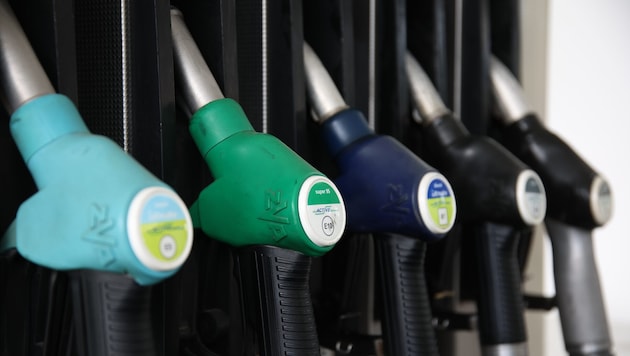

Last Friday, the Federal Council approved the fuel price cap. Now there is an agreement within the government. This means it is certain that the cap will take effect on April 2. The cap is intended to lower gasoline and diesel prices by ten cents per liter, though this will not take effect immediately everywhere.
 Kronen Zeitung als bevorzugte Google-Quelle hinzufügen
 The black-red-pink federal government has reached an agreement on the fuel price cap. This was preceded by several hours of negotiations on Tuesday. The regulations are set to take effect tomorrow, Wednesday, and the price reductions are scheduled to take effect on April 2 (Thursday) at 12 p.m., as the Ministry of Economy announced on Tuesday evening.
Reduction of the mineral oil tax by five cents per liter
One of the relevant regulations is intended to reduce the fuel tax on gasoline and diesel by five cents per liter. The goal is to return additional government revenue from sales tax resulting from higher prices directly to customers. Budget neutrality in this regard is to be ensured by the end of the year.
Margins for refineries and gas stations capped
The second regulation is intended to limit crisis-related margins for B7 diesel and Euro-Super E10 along the fuel value chain. Affected companies must reduce the net sales price by five cents starting April 2, 2026, the ministry announced.
E-Control monitors compliance
Further price increases after that should only occur within the scope of relevant product quotations. If product quotations fall, this reduction must also be passed on accordingly. At the same time, it remains ensured that companies do not have to sell below cost and without a reasonable profit, the statement continued. Compliance with the regulations will be monitored by E-Control. To this end, price and volume data will be used and compared with the relevant product quotations.
“Curbing Inflation”
“We will not be able to prevent fuel prices from continuing to rise internationally,” said Minister of Economy and Energy Wolfgang Hattmannsdorfer (ÖVP). “But we can prevent inflation from running rampant.” Lowering fuel prices by 10 cents per liter is expected to reduce inflation by about a quarter of a percentage point. “The temporary reduction of the mineral oil tax by 5 cents has a dampening effect on fuel prices and ensures that the additional sales tax revenue resulting from higher fuel prices benefits drivers once again,” said Finance Minister Markus Marterbauer (SPÖ).
NEOS: “Expand renewable energy in Europe”
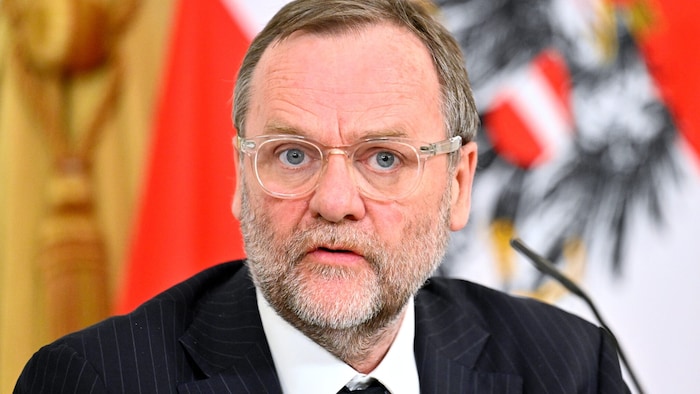
State Secretary Josef Schellhorn (NEOS), meanwhile, insisted on reducing dependencies: “We can only achieve lasting price stability through energy sovereignty and the rapid expansion of renewable energy in Europe.” General approval for the fuel price cap came in advance from the ÖVP, SPÖ, NEOS, and the Greens. The FPÖ voted against the measures and criticized them as “insufficient” and a “non-starter” on the part of the government.
Price reduction won’t take effect everywhere immediately
The cap is intended to lower gasoline and diesel prices by 10 cents per liter, though not immediately everywhere. This is because small independent gas stations are still allowed to sell their existing inventory without restriction. Gas stations belonging to an oil company with refinery or storage facilities, on the other hand, must pass the reduction on to customers immediately. Smaller gas station operators running no more than 30 stations are exempt from the fuel price cap. Highway gas stations are also exempt. According to the fuel price calculator from the regulatory authority E-Control, diesel cost an average of 2.248 euros per liter nationwide yesterday (Monday), while premium gasoline was 1.914 euros per liter. Currently, prices may only be raised three times a week (Monday, Wednesday, and Friday) at noon.
This article has been automatically translated,
read the original article here.











Willkommen in unserer Community! Eingehende Beiträge werden geprüft und anschließend veröffentlicht. Bitte achten Sie auf Einhaltung unserer Netiquette und AGB. Für ausführliche Diskussionen steht Ihnen ebenso das krone.at-Forum zur Verfügung. Hier können Sie das Community-Team via unserer Melde- und Abhilfestelle kontaktieren.
User-Beiträge geben nicht notwendigerweise die Meinung des Betreibers/der Redaktion bzw. von Krone Multimedia (KMM) wieder. In diesem Sinne distanziert sich die Redaktion/der Betreiber von den Inhalten in diesem Diskussionsforum. KMM behält sich insbesondere vor, gegen geltendes Recht verstoßende, den guten Sitten oder der Netiquette widersprechende bzw. dem Ansehen von KMM zuwiderlaufende Beiträge zu löschen, diesbezüglichen Schadenersatz gegenüber dem betreffenden User geltend zu machen, die Nutzer-Daten zu Zwecken der Rechtsverfolgung zu verwenden und strafrechtlich relevante Beiträge zur Anzeige zu bringen (siehe auch AGB). Hier können Sie das Community-Team via unserer Melde- und Abhilfestelle kontaktieren.