Biathlete Simon Eder
“This is the perfect time to retire”
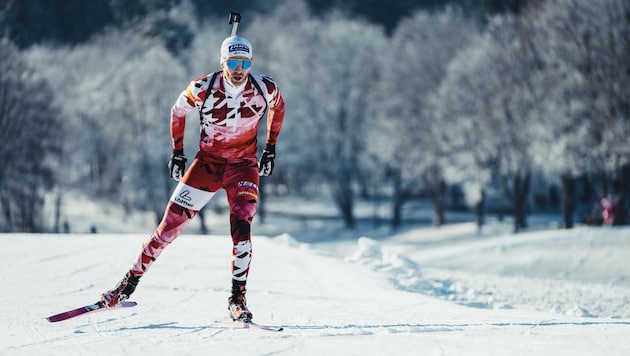

The wave of retirements in Austrian biathlon continues. Following Lisa Hauser and Julia Leitinger, veteran Simon Eder is also ending his career. The 43-year-old, who has been the ÖSV’s flagship athlete in the men’s division for years, will compete in his final events in Oslo. In an interview with “Krone,” he talks about his impressive career.
 Kronen Zeitung als bevorzugte Google-Quelle hinzufügen
 “Krone”: Simon, when did you decide to end your career?
Simon Eder: I left a little back door open for a long time. But the fact that I was quitting had been 90 percent certain for quite some time. The final decision was made in Oslo. I’ve milked it for as long as I could; Holmenkollen is the perfect setting to call it quits. A book with so many pages has to be closed at some point—now is the right time. It’s easier to close this chapter together with Lisa (Hauser, ed.).
How are you feeling about it?
I’m notfeelingtoo wistful yet. Ever since I was a child, I wanted to do this and become a biathlete. But I’ve had some time to prepare for this step. It took me a long time; it was an internal struggle, because I’d already been thinking about it after the Olympics in China four years ago. Those were, so to speak, four bonus rounds.
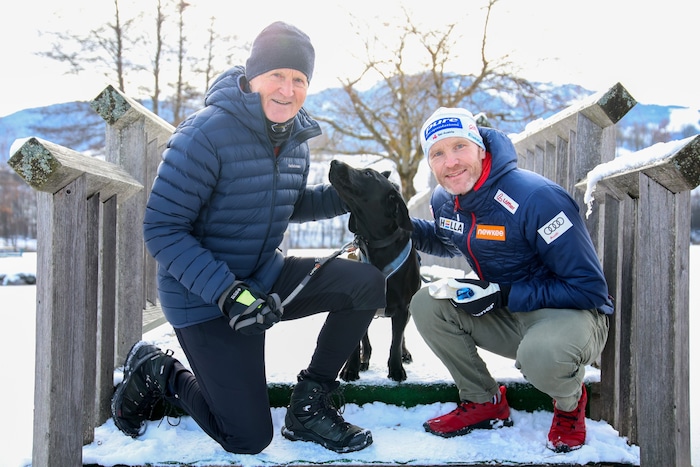
You’ve followed in your dad’s footsteps; he had a particularly big influence on you.
Hepaved the way for me when I was a kid. Thanks to him, I had more than just a head start.
At home, a lot revolved around biathlon. What role did your mom and your sister play for you?
My mom was a clear counterpoint and isn’t as biathlon-obsessed as my dad and I. We kind of dragged her into it. Without Dad, she probably wouldn’t know many biathletes (laughs). My sister has always played a very important role for me. She was my tutor until my fourth year of high school. After that, she went to Graz to study. That’s when I thought I probably wouldn’t be able to handle math much longer. It was a rite of passage for me when she was gone. That’s also when I realized how good our relationship is. Like my mom, Dani was a huge source of balance amid all the biathlon madness in our family, which wasn’t always healthy (laughs).
Speaking of unhealthy—right at the start of your career you were overtraining. Because you wanted to conquer everything?
A certain amount of megalomania probably comes with the territory. Those were important learning years. It started in 2004; it wasn’t until late fall 2006 that my body felt normal again. I couldn’t finish races anymore because my body just wouldn’t cooperate. When you break your foot, you know you’ll be fit again in three or five months. With me, nobody knew.
So how did it feel when, after that time, you fought your way back to the world’s elite step by step?
That was crazy! I went into the season with only 400 or 500 hours of training and then scored my first World Cup points in Hochfilzen because my body was finally working again. That was amazing! Kati (my wife, ed.) was there too. Afterward, my uncle Georg treated us to a shot of schnapps. That’s when we knew we could keep going! Just one season later, I was already 18th in the overall World Cup standings. We had some real rockets under our feet back then.
It was the beginning of a successful era in which Austria ranked among the top nations for years. How did you handle the increasing attention?
That was easy for me. We also had Landi (Dominik Landertinger, note), who became world champion earlyon. A lot of attention was on him, which was totally fine with me. That way, I could prepare in peace and had great races. It worked out well. I never felt the big pressure from the outside. It was always intense enough during the shooting rounds anyway.
As a top shooter, were you able to handle that very well?
Yes, maybe. But I’m sure I could have gotten even moreout of itif I’d found someone I could work with on a mental level over the long term. In my best season, I had twelve or thirteen clean rounds. In others, just one or two. So it was always a big challenge.
You’ve won a total of seven medals at major events, but had to wait until you were 33 years old for your first individual medal. What does the individual bronze from Oslo 2016 mean to you?
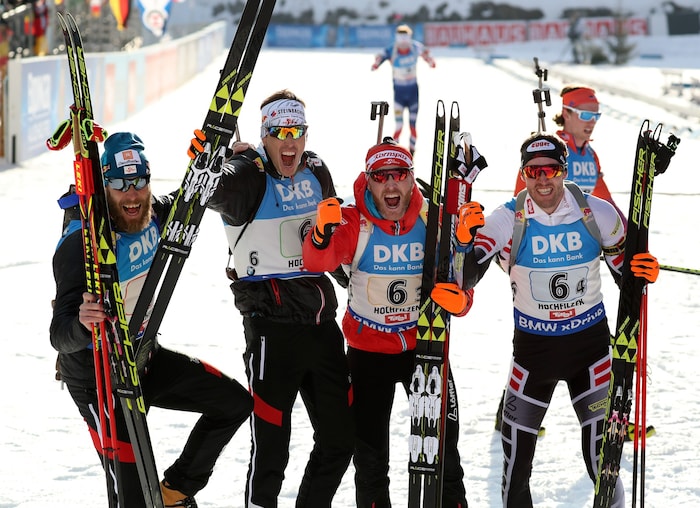
The problem was that I’d often come close before, especially at the Olympic Games. That didn’t make it any easier. In Oslo, it was a special situation. Landi was just ahead of me, and I kept hearing that he had a clean run. I knew that was his race; he’d be sitting in his room that evening with a medal. That’s when I told myself, I want one too. In the end, we both made it—it was one of my best days.
A year later came the home World Championships, which you had already written off in your mind.
I caught the flu in Oberhof a few weeks before. My results were generally modest, but they were enough for the World Championship nomination. However, like Landi, I lacked confidence at the shooting range. We pulled it off in the relay, and that sparked something. In the mass start, I managed to win bronze again. After that, I was in better shape than ever before. We also had insanely good skis, so you knew you were up there with the leaders.
What very few people know: You’ve had recurring heart problems?
Fortunately, according to the doctors, it was never anything serious. But when your heart rate shoots up to 200 for the first time, it’s really scary. I had to get those arrhythmias checked out. I owe a debt of gratitude to the team doctors, who always took great care of me. I first had these problems in 2004, and over the years they kept coming back, most recently two years ago. Many athletes have had to undergo ablation, but I haven’t had to yet.
The birth of your daughter has also changed a lot—she seems to have given you a boost.
At first, you don’t know what that means for you. What will it be like? How much sleep will you get? But I have to say that after that, things only went uphill for me in sports—it was amazing! Thanks to Kati, I was able to focus on what really matters. I met her back when I was in a sports slump. Even then, she played a huge part in helping me get out of that crisis.

At first, you don’t know what that means. What will it be like? How much sleep will you get? But I have to say that after that, things only went uphill for me in sports—it was amazing!
Simon Eder über das Leben als Papa
You made your World Cup debut in 2003 and were the youngster. That role has changed dramatically; in recent years, you’ve become the team veteran. How much have you changed in the process?
It’s been quite a wild ride. At first, I was still young myself, and lately, I’ve been the experienced teammate. I remember that at my first World Championships in 2007, I was wide-eyed with wonder. It was always important to me to stay authentic. I never wanted to act like a big shot, but over the years I’ve grown into the role of the team’s “dad.” I hope I’ve managed to pull that off halfway decently.
Did tinkering also set you apart?
Yes, I always enjoyed that. Whether it was a rifle or skis—I always liked it. Sometimes that really helps you get ahead. In skiing, Hermann Maier was always tinkering with his boots after his accident. That was always important to me, even if I sometimes got bogged down in it. The important thing is to keep it simple and take small steps.
What were the most special moments of your career?
As a young man, I was programmed to win. I quickly realized that wasn’t going to work out (laughs). Things went well until I won the Junior World Championship title, then came the overtraining. But I worked my way up step by step. My first World Cup points were a very important step. Raphael Poiree, who was the top athlete alongside Ole Einar Björndalen at the time, started right behind me but didn’t catch up to me. That was the race where I knew I had a lot more in me. That’s when I sensed my potential.
What are you particularly grateful for?
That I’ve always had an absolutely amazing support system. Athletes from other countries don’t have it so easy—we have to be honest about that. In Hochfilzen, we have a fantastic training facility thanks to the Austrian Armed Forces and the Ski Association. We shouldn’t look at everything through rose-colored glasses, but basically everything you need is there. That makes it all the more painful that we’re no longer at the very front of the pack. Hopefully that will change soon.
What is your wish for Austrian biathlon?
That we get back to where we used to be. That we become one of the top nations again. We had our worst season in the Men’s World Cup this year, but I was also there when we won. Working our way to the top was an incredible achievement. I want to help ensure that the current generation can experience that too.
That sounds like you want to follow in your dad’s footsteps not just as an athlete, but also as a coach?
He’s already paved a path that I’m following. I’m very grateful to him for that. He was in Hochfilzen for a long time; I can well imagine that things will go similarly for me. But: one thing at a time. I’ll complete my coaching training and talk to the Austrian Armed Forces because I want to stay involved.
How important will it be to take a step back in the coming months?
Very important! When you’ve been in the game this long and swimming in the same pond for so long, it’s necessary. Even if I’d like to get back in the pond at some point (laughs). I have to learn how to be a coach, even though I already have the best people around me in Dad and Sandra (Flunger, his cousin, ed.). I have enough time for the training to tackle this in detail. There’s a lot to prepare, and that will take time.
So, it’s important to you to learn the coaching job from the ground up and not jump right into the World Cup fray?
Absolutely! I don’t have the necessary training for the top level yet. I need to work my way up. The best place to do that is certainly in Hochfilzen, where you’re always working with athletes. Maybe I can help out there. There are many areas where I can assist and contribute.
Are you proud of what you’ve achieved?
Pride is a tricky thing. I’m glad that even after some bad years, I believed in myself. That’s what counts, because every now and then you’re sitting there alone and have to decide whether to keep going. Quite clearly: Right now I’m in a situation where I’d need the best skis in the entire field. The top skiers can make a difference even with good skis. For me, the air is getting thinner. But I’m happy with what I’ve achieved. I’m glad that I’ve had some good races here and there. That gives me a great feeling.
What will you miss?
It was always a blast with my teammates. Kati always said it was like summer camp when I left. That sums it up pretty well. We’re well-positioned in Austria in terms of the system, but we need to catch up in certain areas.
Does your career play back like a movie during this final week of racing?
A little bit, yes. I don’t want to dwell too much on old races, but I do like to look back on them. In general, I enjoy looking at old results from the past—not just my own. I’m a bit of a nerd when it comes to that, so it’s really exciting. At Holmenkollen I was fast; I’ve won here before.
What are your goals in Oslo?
What sets me apart is that I fight until the very last meter. Things can swing one way or the other before the final lap, but I’m going to give it my all here, too.
This article has been automatically translated,
read the original article here.










Willkommen in unserer Community! Eingehende Beiträge werden geprüft und anschließend veröffentlicht. Bitte achten Sie auf Einhaltung unserer Netiquette und AGB. Für ausführliche Diskussionen steht Ihnen ebenso das krone.at-Forum zur Verfügung. Hier können Sie das Community-Team via unserer Melde- und Abhilfestelle kontaktieren.
User-Beiträge geben nicht notwendigerweise die Meinung des Betreibers/der Redaktion bzw. von Krone Multimedia (KMM) wieder. In diesem Sinne distanziert sich die Redaktion/der Betreiber von den Inhalten in diesem Diskussionsforum. KMM behält sich insbesondere vor, gegen geltendes Recht verstoßende, den guten Sitten oder der Netiquette widersprechende bzw. dem Ansehen von KMM zuwiderlaufende Beiträge zu löschen, diesbezüglichen Schadenersatz gegenüber dem betreffenden User geltend zu machen, die Nutzer-Daten zu Zwecken der Rechtsverfolgung zu verwenden und strafrechtlich relevante Beiträge zur Anzeige zu bringen (siehe auch AGB). Hier können Sie das Community-Team via unserer Melde- und Abhilfestelle kontaktieren.