Setback for Musk
Starship rocket explodes again during test flight
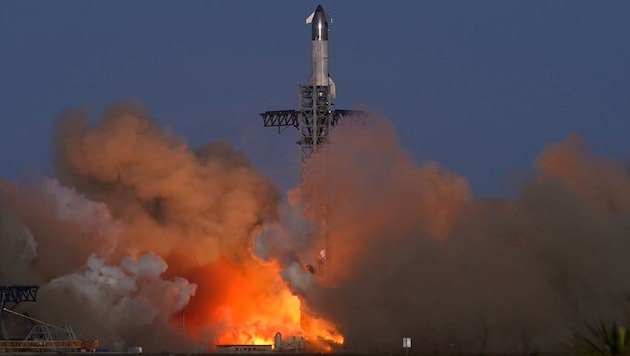

Another setback for Elon Musk's "Starship": the largest rocket system ever built was also unable to complete an eighth test flight on Friday night as planned. The rocket suffered a "disassembly", the company announced. Falling rocket parts spotted over Florida and the Caribbean.
 Kronen Zeitung als bevorzugte Google-Quelle hinzufügen
 "During the ascent ignition of 'Starship', the vehicle suffered a rapid, unplanned disassembly and contact was lost," the aerospace company SpaceX announced. This "unfortunately happened last time," said a spokesperson.
"We will analyze the data from today's flight to better understand the cause. As always, success in a test like this is in what we learn, and today's flight will help us improve the reliability of Starship," the statement said. This means that a planned satellite deployment has failed again. It was the company's second failure with Starship this year.
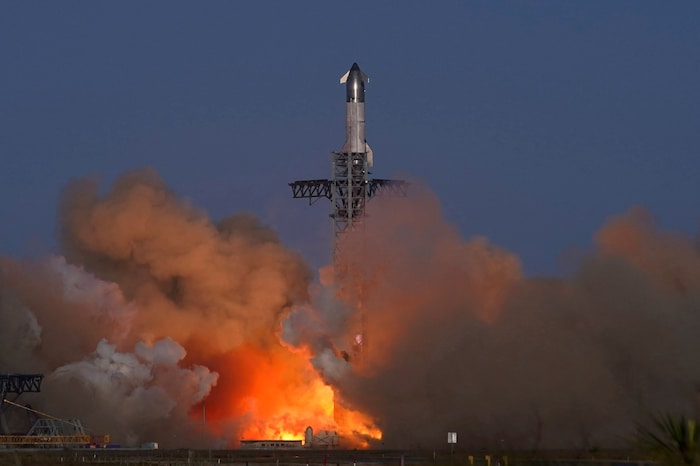
Falling rocket parts over Florida and the Caribbean
According to reports, falling rocket parts were spotted over the US state of Florida and the Caribbean after dismantling. The US Federal Aviation Administration (FAA) temporarily halted take-offs and landings at several airports in Florida. The previous test flight of the "Starship" had already ended similarly, with reports of falling rocket parts on the Caribbean island group of Turks and Caicos.
Nevertheless, the lower rocket stage on the launch tower was successfully caught again with grappling arms during this test flight, now for the third time. Previously, the test flight had been postponed once in the past few days and once canceled at short notice. The rocket system was tested for the first time in April 2023 - and exploded completely after just a few minutes. In further tests, however, the upper stage had already reached space and made a controlled landing in the Indian Ocean.
Rocket to take humans to Mars one day
The "Starship" consists of two parts that separate after launch: The approximately 70-meter-long "Super Heavy" booster and the upper stage, also called "Starship", which measures around 50 meters. Overall, the system is larger than the Statue of Liberty. Both parts, the booster and the spaceship, are designed so that they can be reused after returning to Earth. The US space agency NASA wants to use the "Starship" to send astronauts to the moon, while SpaceX is pursuing the goal of one day reaching Mars.
This article has been automatically translated,
read the original article here.











Da dieser Artikel älter als 18 Monate ist, ist zum jetzigen Zeitpunkt kein Kommentieren mehr möglich.
Wir laden Sie ein, bei einer aktuelleren themenrelevanten Story mitzudiskutieren: Themenübersicht.
Bei Fragen können Sie sich gern an das Community-Team per Mail an forum@krone.at wenden.