Names Are Being Erased
Taliban Work Toward the Eradication of Female Identity
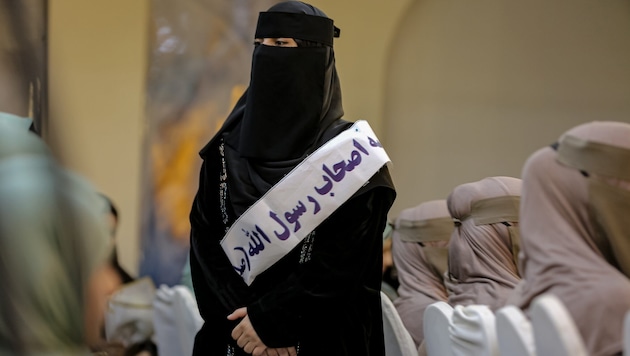

In northern Afghanistan, the Taliban have taken another step toward the complete eradication of female identity. In the northern province of Balkh, the government has removed women’s first names from all official documents—from ID cards to medical records.
 Kronen Zeitung als bevorzugte Google-Quelle hinzufügen
What seems unimaginable here is now a reality for countless women in Afghanistan: They no longer exist—on paper. From now on, Fatima or Noor will simply be “Bibi,” as international media outlets unanimously report.
Specifically, government officials and hospital staff will be required to omit women’s real names from prescriptions, medical records, and forms. Such absurd, localized acts of harassment under the Taliban regime are often merely a harbinger of imminent, nationwide bans.
Activists are sounding the alarm
The practice is rooted in ancient tribal customs: for a long time, saying a woman’s name in public was considered disrespectful toward her husband and children.
Although “Bibi” (literally meaning “grandmother” or “older woman”) is traditionally considered a sign of respect in Afghanistan, Afghan female activists are desperately sounding the alarm. They say the widespread forced renaming is a deliberate act of dehumanization that strips away all individuality. Even more shocking: According to witness accounts, some Afghan women are even branded with derogatory animal names such as “goat” or “cattle” by the authorities. This is no longer a conservative custom, but the systematic degradation of women to mere objects.
144 Decrees Against Women
The decree is the Taliban’s latest attempt to erase women from public life. Since 2021, an avalanche of 144 decrees has rained down on them. Girls over the age of twelve are not allowed to attend school; women cannot leave the house without a husband, cannot speak in public, may only be examined by female doctors—and are now also forbidden from using their own names. “The fundamentalists are extremely creative when it comes to stripping away rights,” explains activist Laleh Osmany.
“For now, the measure applies locally, but it’s a test,” the activist, who now lives in Germany, warns in an interview with the newspaper “El País.” Without an international outcry, the law could soon apply nationwide.
The consequences are serious: “Imagine a hospital where dozens of prescriptions are all named ‘Bibi,’” Osmany warned. Mistakes in diagnoses and medications become highly likely—which is particularly concerning, since women are not allowed to be examined by male doctors anyway, and girls cannot train for healthcare professions due to education bans. The risk: Afghan women will lose all access to medical care.
This article has been automatically translated,
read the original article here.









Willkommen in unserer Community! Eingehende Beiträge werden geprüft und anschließend veröffentlicht. Bitte achten Sie auf Einhaltung unserer Netiquette und AGB. Für ausführliche Diskussionen steht Ihnen ebenso das krone.at-Forum zur Verfügung. Hier können Sie das Community-Team via unserer Melde- und Abhilfestelle kontaktieren.
Hinweis in eigener Sache: Das krone.at-Forum präsentiert sich ab sofort in neuem Design! Wir freuen uns über konstruktives Feedback. Damit die Diskussionen in den Kommentarbereichen beim jeweiligen Thema bleiben, können Sie uns Rückmeldungen hier hinterlassen.
User-Beiträge geben nicht notwendigerweise die Meinung des Betreibers/der Redaktion bzw. von Krone Multimedia (KMM) wieder. In diesem Sinne distanziert sich die Redaktion/der Betreiber von den Inhalten in diesem Diskussionsforum. KMM behält sich insbesondere vor, gegen geltendes Recht verstoßende, den guten Sitten oder der Netiquette widersprechende bzw. dem Ansehen von KMM zuwiderlaufende Beiträge zu löschen, diesbezüglichen Schadenersatz gegenüber dem betreffenden User geltend zu machen, die Nutzer-Daten zu Zwecken der Rechtsverfolgung zu verwenden und strafrechtlich relevante Beiträge zur Anzeige zu bringen (siehe auch AGB). Hier können Sie das Community-Team via unserer Melde- und Abhilfestelle kontaktieren.