Gasoline by 86 cents
New law could raise diesel prices by 95 cents
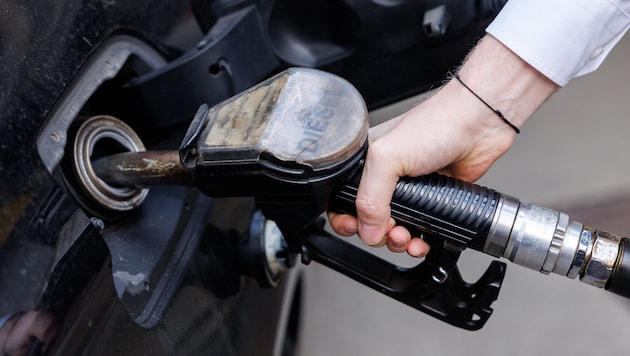

Weeks ago, the Chamber of Commerce warned against the implementation of the Renewable Energy Sources Act for Transportation, or EEG-V for short. Now, a study by Economica has been presented that is intended to further support these claims: By 2035, the price of a liter of diesel could rise by 95 cents, and the price of a liter of gasoline by up to 86 cents.
 Kronen Zeitung als bevorzugte Google-Quelle hinzufügen
How much will climate neutrality by 2040 cost Austria? The Chamber of Commerce is once again warning against the implementation of the so-called Renewable Energy Act for Transportation, or EEG-V for short. It stipulates what percentage of fuel sold must come from renewable sources. The target path: 18 percent in 2027, 35 percent in 2030, and 65 percent in 2035. By 2035 at the latest, roughly two-thirds of the energy in the tank would have to be “green.” Biodiesel counts toward this target, as does electric mobility.
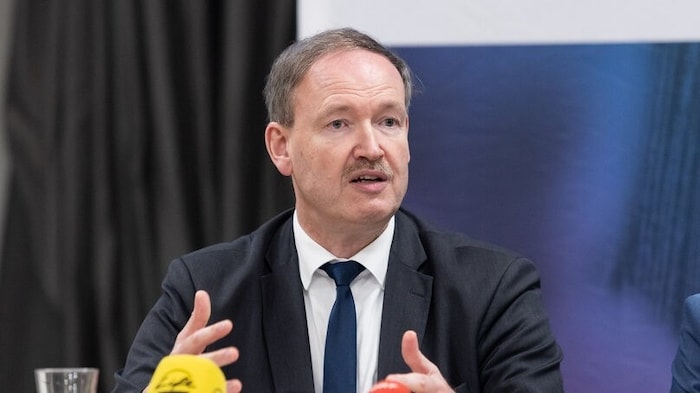
Weeks ago, the WKÖ had already criticized “gold-plating”—that is, exceeding EU directives. Austria aims to be climate-neutral by 2040, while the EU has given itself ten more years. Now economist Christian Helmenstein is presenting a study that shows the economic consequences of the EEG-V. “We’re seeing a multiplication of additional costs,” says Helmenstein, who is also chief economist of the Federation of Austrian Industries.
Diesel could cost three euros per liter
More specifically, Helmenstein calculates a price increase of up to 95 cents per liter of diesel and 86 cents per liter of gasoline—which would raise the price of diesel to around three euros. Consumption would decline by 0.72 percent, and real wages by 0.56 percent. The impact on gross domestic product (GDP) would be a decline of 0.3 percent. “Lower-income segments of the population would bear four times the burden,” says Helmenstein. The faster the implementation, the greater the social impact.

In light of the massive rise in fuel prices, our companies urgently need relief rather than additional burdens.

Jochen Danninger, Generalsekretär WKÖ
Bild: Eva Manhart
The study assumes a conservative scenario regarding electric cars—25 percent are electric, and three-quarters run on internal combustion engines. What the calculation does not account for is the costly damage caused by climate change in Austria—ranging from droughts and natural disasters to fines if climate targets are not met.
Helmenstein instead points to “openness to technology”: “Cars are durable consumer goods,” he says, adding that we must consider alternative fuels. He also criticizes the government’s fuel price cap, which he says is slowing the transition to e-mobility: “There is no justification for a fuel price discount. It’s ecologically counterproductive.”
“This weakens our business environment”
“These additional costs don’t just affect drivers. Goods and services are becoming more expensive. That weakens our business environment and is unacceptable to us,” says WKÖ Secretary General Jochen Danninger. “We can’t discuss the fuel price cap while simultaneously approving new price drivers.”
This article has been automatically translated,
read the original article here.










Willkommen in unserer Community! Eingehende Beiträge werden geprüft und anschließend veröffentlicht. Bitte achten Sie auf Einhaltung unserer Netiquette und AGB. Für ausführliche Diskussionen steht Ihnen ebenso das krone.at-Forum zur Verfügung. Hier können Sie das Community-Team via unserer Melde- und Abhilfestelle kontaktieren.
Hinweis in eigener Sache: Das krone.at-Forum präsentiert sich ab sofort in neuem Design! Wir freuen uns über konstruktives Feedback. Damit die Diskussionen in den Kommentarbereichen beim jeweiligen Thema bleiben, können Sie uns Rückmeldungen hier hinterlassen.
User-Beiträge geben nicht notwendigerweise die Meinung des Betreibers/der Redaktion bzw. von Krone Multimedia (KMM) wieder. In diesem Sinne distanziert sich die Redaktion/der Betreiber von den Inhalten in diesem Diskussionsforum. KMM behält sich insbesondere vor, gegen geltendes Recht verstoßende, den guten Sitten oder der Netiquette widersprechende bzw. dem Ansehen von KMM zuwiderlaufende Beiträge zu löschen, diesbezüglichen Schadenersatz gegenüber dem betreffenden User geltend zu machen, die Nutzer-Daten zu Zwecken der Rechtsverfolgung zu verwenden und strafrechtlich relevante Beiträge zur Anzeige zu bringen (siehe auch AGB). Hier können Sie das Community-Team via unserer Melde- und Abhilfestelle kontaktieren.