Political expert Hajek
“I don’t see a ‘Sebastian Kurz effect’ with Zeiler”
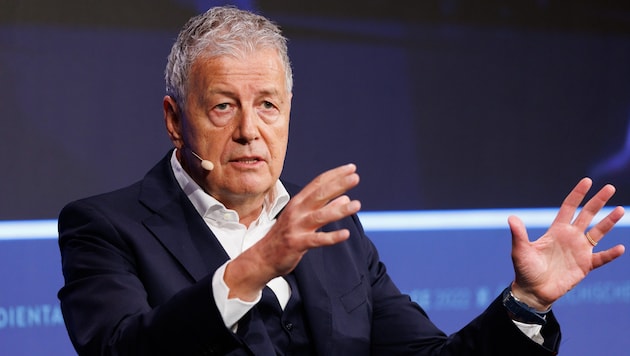

Media executive Gehard Zeiler wants to replace Andreas Babler as SPÖ leader. Pollster Peter Hajek sees potential, but adds: “The longer the process takes, the better it is for Babler.” Where Zeiler’s potential lies, whether he can defeat the FPÖ, and what his problem is.
 Kronen Zeitung als bevorzugte Google-Quelle hinzufügen
 Peter Hajek holds a Ph.D. in political science, is a certified market and opinion pollster, and serves as a TV expert. He closely followed Gerhard Zeiler’s interview in the “Kronen Zeitung” and the media executive’s appearance on ZiB 2, and drew his own conclusions. What risk does the current situation pose for the SPÖ? The interview:
“Krone: From a pollster’s perspective, where does Gerhard Zeiler have potential, and where are his weaknesses?
Peter Hajek: I don’t have any current figures, but let me compare him to Andreas Babler. Zeiler has an impressive resume and an international background. He held leadership positions in the media industry, so he naturally has business expertise as well. He comes across as a manager and a doer. And that’s exactly what Andreas Babler lacks—and what people keep throwing in his face.
Is Zeiler living up to his potential?
In that regard, he has at least once clearly distanced himself from Babler by saying, “I am not a Marxist.” He has positioned himself as a classic social democrat, and in that respect he’s on the same wavelength as Bruno Kreisky and Hannes Androsch, and the slogan “Achievement, Advancement, Security.”
What’s missing?
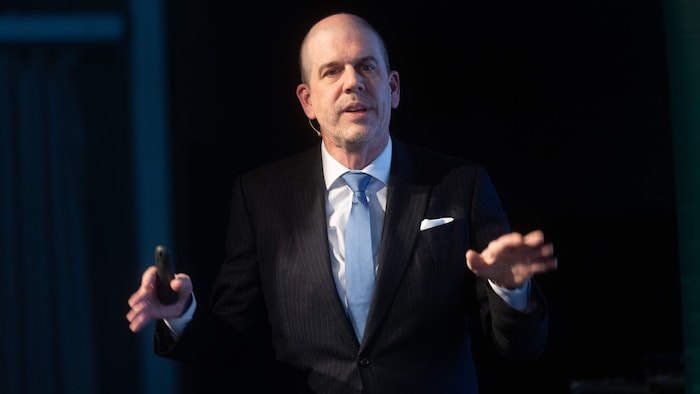
Given his age, it’s understandable that he views politics from an old-school perspective. That is, you discuss things thoroughly, present your arguments, and then try to put them into practice. This has a bit of the charm of the Vranitzky era, which was, however, a much slower-paced one.
Is that a disadvantage?
No, but it raises a question should he ever assume a leadership role: How well can Gerhard Zeiler adapt to today’s understanding of politics? If you look at his appearance on ZiB 2, it had that aura of the 2000s. It was more of the classic form of political communication. But the world has moved on.
So is it a disadvantage after all?
It doesn’t have to be one per se, but it is certainly noticeable.
Is his age a major obstacle?
I don’t think so, and I don’t need to point to Konrad Adenauer —who was elected the first Chancellor of the Federal Republic of Germany at the age of 73—to prove it. Even today, there are still plenty of older politicians, such as Donald Trump. The only question is whether I have the energy to pull it off.
What does that mean?
First of all, you have to keep up with the pace of today’s world.
He doesn’t even have a social media account…
My goodness, communication. I mean, you don’t handle that yourself—you outsource it. I can certainly put together a team to handle that for me. What I mean is that politics has simply become much faster. You have to act much more quickly. And of course, these days I have to use social media to reach young people, too. It just came across as an outdated form of communication.
It also seemed like he didn’t have a plan, didn’t it?
Maybe he’s not telling us everything yet. He has already said a few things that make sense. He’s placed a very, very strong emphasis on the economy, saying that’s where we need to take action. I assume he already has a few ideas, but I didn’t expect him to present a master plan.
What’s his starting point?
All the poll numbers for Andreas Babler are, of course, “very critical.” That means, unless Zeiler handles things really clumsily, he should actually get better feedback. The question is, though, how far will that go? How high can his numbers go in the polls?
And, how far?
The question is which voter segments he can appeal to. We know from all the polls we’ve conducted in recent years that 45 percent consider the SPÖ fundamentally a viable option. That’s the maximum potential. Of course, you never fully tap into that—the Freedom Party is currently the most successful at doing so.
What does that mean for Zeiler?
According to our data, Babler currently stands at 17 percent. We conducted a poll for ATV this summer and asked the “Sunday question” with Markus Martabauer—that is, how many people would vote for the SPÖ if he were the lead candidate. He scored 25 percent. That’s the potential that can be quickly tapped into right now.
But?
The interesting thing about this poll was that the Freedom Party wasn’t affected by it. So Martabauer didn’t take any votes away from them; he simply drew support from the left of center—from the Greens, a little from NEOS, and from the Communist Party of Austria (KPÖ) and non-voters.
Can’t he go any higher?
Anything beyond that can only come from a longer process. With Sebastian Kurz, the ÖVP shot up immediately after he took over. I’d be skeptical about that happening with Gerhard Zeiler.
Why should it be any different?
Kurz had been laying the groundwork for years. He was State Secretary for Integration and Foreign Minister. He planned everything strategically and organized his allies. I don’t currently expect Zeiler to have the same impact as Sebastian Kurz. Nor do I expect him to knock the Freedom Party off the top spot in one fell swoop.
What’s the risk with Zeiler?
One thing is clear: The longer the process takes, the better it is for Babler. Because at some point, the public will say about Zeiler: He can’t even assert himself within the SPÖ, and yet he wants to help govern the country as vice chancellor?
Could that be a tactic of the current leadership?
That danger is indeed real for Zeiler—that they’ll let him starve on an empty hand.
What does all this mean for Babler?
In this case, he’s the second victim. No one in the party has stood up for him and said: “Babler absolutely must stay.” I consider this development to be the biggest problem of all.
Why?
I consider what the remaining party leaders are doing to be negligent. Either I stand behind the current party leader or behind the challenger. But doing nothing, failing to take a stand—that, in my view, is a huge problem.
What’s the consequence?
If they don’t react quickly, this will drag on for weeks or months. Then the SPÖ will slide even further. Let’s look at Mecklenburg-Western Pomerania. Who would have thought a few years ago that the CDU could be kicked out of the state parliament? I’m not saying that the SPÖ won’t make it into the National Council in the next election, but in this regard, nothing is impossible anymore because we’re living through a period of historic change.
This article has been automatically translated,
read the original article here.









Willkommen in unserer Community! Eingehende Beiträge werden geprüft und anschließend veröffentlicht. Bitte achten Sie auf Einhaltung unserer Netiquette und AGB. Für ausführliche Diskussionen steht Ihnen ebenso das krone.at-Forum zur Verfügung. Hier können Sie das Community-Team via unserer Melde- und Abhilfestelle kontaktieren.
User-Beiträge geben nicht notwendigerweise die Meinung des Betreibers/der Redaktion bzw. von Krone Multimedia (KMM) wieder. In diesem Sinne distanziert sich die Redaktion/der Betreiber von den Inhalten in diesem Diskussionsforum. KMM behält sich insbesondere vor, gegen geltendes Recht verstoßende, den guten Sitten oder der Netiquette widersprechende bzw. dem Ansehen von KMM zuwiderlaufende Beiträge zu löschen, diesbezüglichen Schadenersatz gegenüber dem betreffenden User geltend zu machen, die Nutzer-Daten zu Zwecken der Rechtsverfolgung zu verwenden und strafrechtlich relevante Beiträge zur Anzeige zu bringen (siehe auch AGB). Hier können Sie das Community-Team via unserer Melde- und Abhilfestelle kontaktieren.