"No More Answers"
CDU Crisis: Merz Announces Radical Course Correction
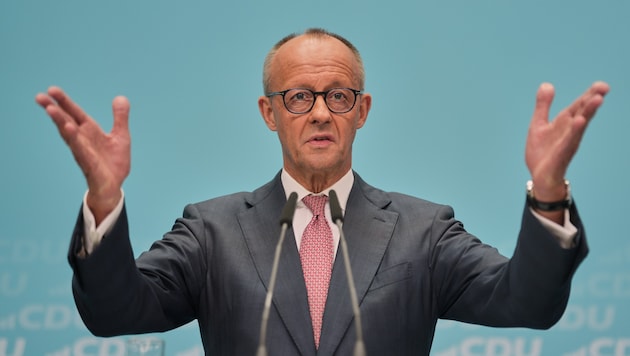

The CDU suffered a historic disaster in Mecklenburg-Western Pomerania and a crushing defeat against the Left Party in Berlin. Party leader Friedrich Merz announced a new course on Monday. “We’re no longer reaching the public; the CDU no longer has satisfactory answers to many questions,” the chancellor admitted contritely.
 Kronen Zeitung als bevorzugte Google-Quelle hinzufügen
 “Federal politics has played a major role, as have my own actions. But the reasons for these results go far beyond me personally,” Merz emphasized after his party’s executive committee meetings, pointing to a “profound change in the party system” in Germany and around the world. He spoke about the rise of radical forces.
Black-Red Coalition to Continue Working at the Federal Level
On Monday,Merzsought to ease the pressure on himself. He said the party would now discuss with its coalition partner, the SPD, what changes it wanted to make to the government’s course. He did not want to give any details. According to Merz, “a very great effort” now lies ahead for his Black-Red government. We must and will come together again at the federal and state levels. “It is the historic task of this coalition to make this country fit for the future,” the chancellor emphasized.
A historic nightmare for Merz: A recap of the election day of extremes.
Healthcare as a Key Issue
In his view, the issue of pensions did not play a major role for people during the election campaign. The situation was quite different when it came to the issue of health care. “If the impression takes hold among the public that those with private health insurance receive every benefit immediately, while those with public health insurance have to wait weeks or months for them, then that is precisely the kind of fairness issue we’re talking about,” he said. This must now be addressed.
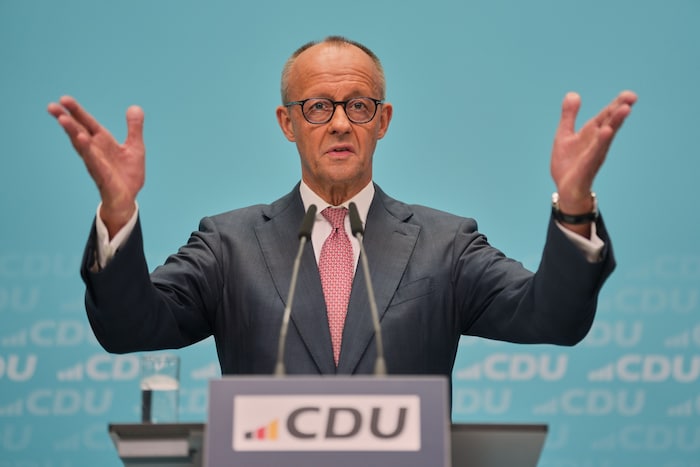
Merz Announces a New Course for the CDU
“Stability and a clear course” are very important, Merz said. But that is not enough. “The CDU faces fundamental and long-term questions.” The party now intends to discuss these issues in depth. Merz announced a new course for the CDU: “We’re no longer reaching the public. We can’t stay where we are right now. We no longer have satisfactory answers to too many questions.”

We no longer have satisfactory answers to too many questions.
Deutschlands Bundeskanzler FRiedrich Merz (CDU)
“A people’s party is a people’s party when …”
According to Merz himself, he has the support of his party, and there is no internal debate surrounding him personally. Is his party still a people’s party? Merz: “A people’s party is a people’s party when it reaches all groups in society—and does so throughout the entire country.” The chancellor added: “We still are, to some extent. But we’re only that to some extent.” There will now be intensive discussions on “how we can once again become what we once were.” And that applies to the entire country.
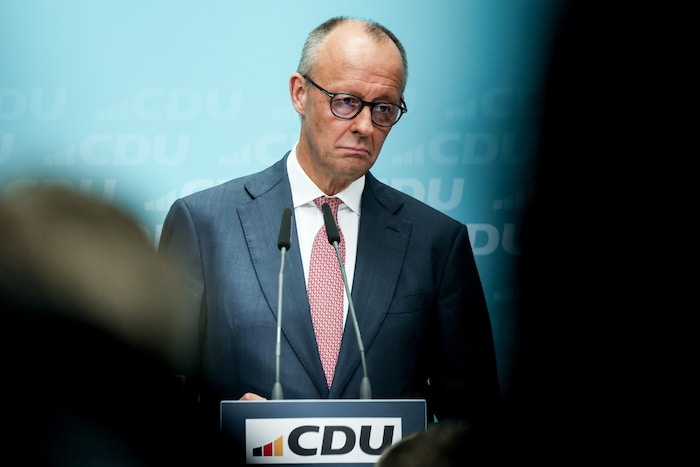
Merz laments growing anti-Semitism in Germany
At the end of his press conference, the chancellor turned to the topic of Berlin, the federal capital. Merz: “What concerns me most of all is that in Berlin—not only in Berlin, but especially in Berlin—we are witnessing radical anti-Semitism, which is sometimes met with applause. This disturbs me deeply. It also disturbs me that this goes unchallenged in parts of society.” The fact that Jews are no longer safe in Germany is the heaviest burden of all, he said. What is happening on the streets is a “disgrace for Germany,” Merz stated clearly.
The Deepest Humiliation in the History of the CDU
Sunday marked a historic turning point for the CDU and one of the deepest humiliations in its 81-year history. In Mecklenburg-Western Pomerania, the once-proud party was ousted from a state parliament for the first time. On top of that, in Berlin, it was displaced from first place by, of all parties, the Left Party. This was the second—albeit somewhat less painful—humiliation of the evening.
International media sharply criticize Merz
International media see the election defeats as a sign of a profound upheaval in the German political landscape. The United Kingdom speaks of a “grim symbolism” and notes that the “extremely unpopular Merz is fighting for his political survival.” The left-liberal Parisian newspaper “Libération” runs the headline: “Merz is reeling.”
No one believes he can hold on until the end of his term.
Die linksliberale Pariser Zeitung „Libération“ über Deutschlands Kanzler Friedrich Merz (CDU).
And it predicts the end of the “firewall”: “The sacred rule of the ‘firewall’ among democratic parties, which prohibits any alliance with the AfD, could quickly be called into question.” Merz, however, wants to continue pushing through his reforms, which are “just as unpopular” as he is. “Yet no one believes he can hold on until the end of his term. Being Germany’s chancellor is currently tantamount to a suicide mission.”
How much longer will the party keep the wall up against Merz?
Meanwhile, CDU Deputy Chairman Karl-Josef Laumann wants nothing to do with a debate about Merz. “The party leadership stands behind the chancellor,” said the North Rhine-Westphalian Minister of Labor on Monday morning. A spokesperson for the federal government, however, said that the cabinet in Berlin remains capable of acting despite the CDU’s poor election results.
The first internal call for resignation has already emerged
Nevertheless, pressure on Merz from the grassroots remains high. Following the election disaster, there has already been a first call for his resignation from within the party. It comes from Christian Gräff, chairman of the Small Business and Economic Union (MIT) in Berlin. “Merz has to go. He’s not a leader, and he can’t communicate,” the former CDU member of the state parliament posted on X.
Merz Must Now Deliver Within the Coalition
The fact is: Merz must regain trust and, above all, push through the reform package already agreed upon by his black-red coalition despite resistance from within the SPD. His party will judge him by this. Should that go awry, the question of leadership would be raised again—and then possibly answered differently. Another factor currently working in Merz’s favor within the CDU is the lack of a successor candidate whom everyone could immediately rally behind. The state premiers of North Rhine-Westphalia and Bavaria, Hendrik Wüst (CDU) and Markus Söder (CSU), are being mentioned; however, they do not get along particularly well with one another. They would first have to reach an agreement.
Election Respite Until April 2027
Another factor in Merz’s favor: He has a breathing space of a good half a year to push through his reforms. But then come extremely important state elections: In April of next year, new state parliaments will be elected in Saarland and in the large states of Schleswig-Holstein and North Rhine-Westphalia. Bremen follows in May, and Lower Saxony in September.
This article has been automatically translated,
read the original article here.











Willkommen in unserer Community! Eingehende Beiträge werden geprüft und anschließend veröffentlicht. Bitte achten Sie auf Einhaltung unserer Netiquette und AGB. Für ausführliche Diskussionen steht Ihnen ebenso das krone.at-Forum zur Verfügung. Hier können Sie das Community-Team via unserer Melde- und Abhilfestelle kontaktieren.
User-Beiträge geben nicht notwendigerweise die Meinung des Betreibers/der Redaktion bzw. von Krone Multimedia (KMM) wieder. In diesem Sinne distanziert sich die Redaktion/der Betreiber von den Inhalten in diesem Diskussionsforum. KMM behält sich insbesondere vor, gegen geltendes Recht verstoßende, den guten Sitten oder der Netiquette widersprechende bzw. dem Ansehen von KMM zuwiderlaufende Beiträge zu löschen, diesbezüglichen Schadenersatz gegenüber dem betreffenden User geltend zu machen, die Nutzer-Daten zu Zwecken der Rechtsverfolgung zu verwenden und strafrechtlich relevante Beiträge zur Anzeige zu bringen (siehe auch AGB). Hier können Sie das Community-Team via unserer Melde- und Abhilfestelle kontaktieren.