Austria “sizzled”
The Devastating Impact of the Summer of 2026, with Temperatures Reaching 41.2 Degrees
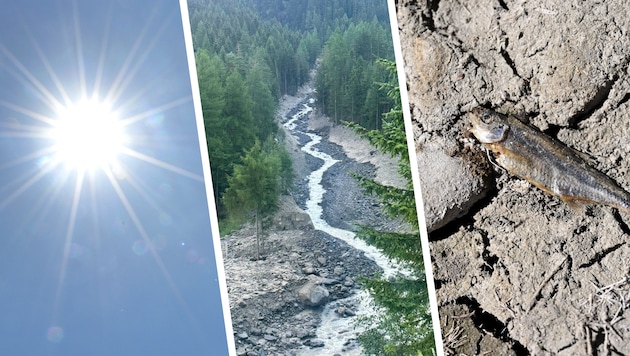

Austria is groaning under the heat: The summer of 2026 will go down in history as a true record-breaking summer. 41.2 degrees, endless days of heat, tropical nights, and dramatic drought—it’s never been this extreme in this country before.
 Kronen Zeitung als bevorzugte Google-Quelle hinzufügen
 This summer was a real doozy—and how! Temperatures repeatedly soared to dizzying heights, and the 40-degree mark was broken in all three summer months. And in many places, the rain stayed away. The bottom line is a summer that shattered every record. As meteorologist Roland Reiter explained on Sunday in his summer summary, the Austria-wide average temperature was 2.6 degrees warmer than the climate average. This made the summer of 2026 the hottest since records began.
Absolute peak on August 5
The Rhine Valley was hit particularly hard: In Feldkirch, the summer was an incredible 3.7 degrees warmer than average, and in Bregenz, it was 3.3 degrees warmer. The picture becomes even more striking when looking at individual weather stations: Of the 246 stations analyzed, 185 reported the warmest summer on record. Another 55 recorded the second-warmest.
And then came the absolute peak. On August 5, the sun beat down from the sky with particular intensity: An incredible 41.2 degrees was measured in Bad Deutsch-Altenburg—a new Austrian heat record!
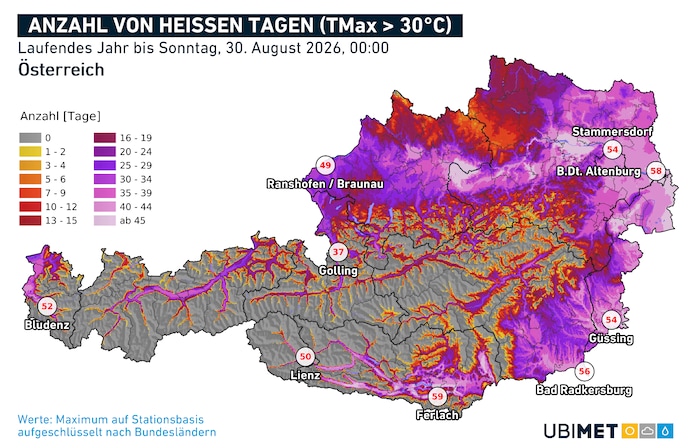
It wasn’t just the peak temperatures that were extreme. Above all, the sheer duration of the heat made this summer exceptional. In Vienna at the Hohe Warte and in Klagenfurt, 45 heat days with temperatures of at least 30 degrees were recorded. Graz, Innsbruck, St. Pölten, and Eisenstadt each had 43.
Particularly curious: In Bregenz, which is normally much cooler, 43 hot days were also recorded. By comparison, the long-term average there is just eight.
Ferlach in Carinthia took the cake: So far this year, it has had an incredible 59 days of heat, 53 of them in the summer alone. The previous Austrian record stood at 57 days—set as recently as 2024 in Bad Deutsch-Altenburg.
The heat lingered into the night
Anyone who had hoped to at least catch their breath at night was also disappointed. Especially in the cities, the heat lingered like in an oven. In downtown Vienna, 44 tropical nights were recorded—the second-highest figure in recorded history.
The night of August 5 was particularly extreme: In Hornstein, the temperature didn’t even drop below 28.5 degrees. That was the highest nighttime low ever recorded at an Austrian weather station.
One-third Less Rain
The record-breaking heat was accompanied by a dramatic phenomenon: drought. Across Austria, summer rainfall was about 31 percent below average. The situation was particularly severe in parts of Upper and Lower Austria, in Burgenland, and regionally in Vorarlberg as well. In Weyer, Upper Austria, rainfall was even 59 percent below the usual amount.
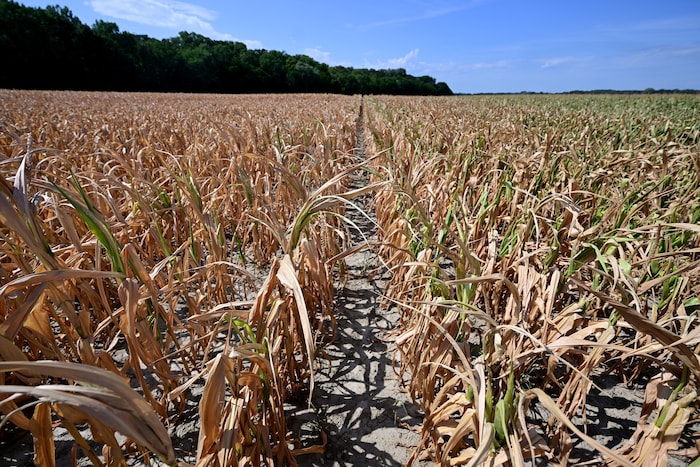
This placed an enormous strain on the soil, agriculture, and nature. In many places, the soil was already dry before the summer even began. Weeks-long periods without precipitation and the extreme heat further exacerbated the water deficit. And here, too, records were broken: At 49 weather stations, the summer was the driest since records began.
Drought and Severe Weather—No Contradiction
As paradoxical as it sounds: Despite the severe drought, violent storms occurred repeatedly in some regions. Especially in the central mountainous regions and the southwest, thunderstorms caused heavy rain, flooding, mudslides, and localized flash floods.
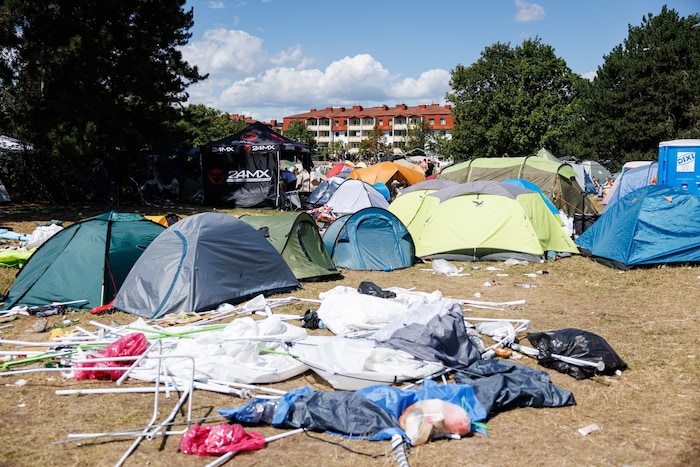
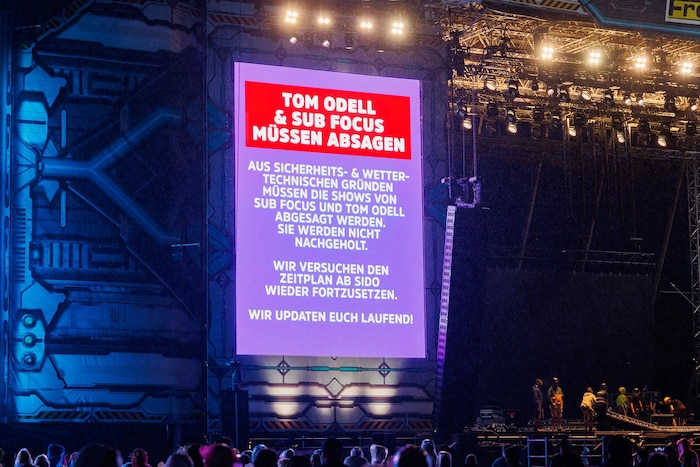
This is not a contradiction. On the contrary: After weeks of drought, the soil often cannot absorb massive amounts of rain quickly enough. If an extreme amount of water then falls within a few hours, it runs off the surface—while the deeper soil continues to suffer from months of water deficit.
41.2 degrees, 59 days of heat, tropical nights, and nearly a third less rain: The summer of 2026 wasn’t just hot. It was a summer of extremes...
This article has been automatically translated,
read the original article here.











Willkommen in unserer Community! Eingehende Beiträge werden geprüft und anschließend veröffentlicht. Bitte achten Sie auf Einhaltung unserer Netiquette und AGB. Für ausführliche Diskussionen steht Ihnen ebenso das krone.at-Forum zur Verfügung. Hier können Sie das Community-Team via unserer Melde- und Abhilfestelle kontaktieren.
Hinweis in eigener Sache: Das krone.at-Forum präsentiert sich ab sofort in neuem Design! Wir freuen uns über konstruktives Feedback. Damit die Diskussionen in den Kommentarbereichen beim jeweiligen Thema bleiben, können Sie uns Rückmeldungen hier hinterlassen.
User-Beiträge geben nicht notwendigerweise die Meinung des Betreibers/der Redaktion bzw. von Krone Multimedia (KMM) wieder. In diesem Sinne distanziert sich die Redaktion/der Betreiber von den Inhalten in diesem Diskussionsforum. KMM behält sich insbesondere vor, gegen geltendes Recht verstoßende, den guten Sitten oder der Netiquette widersprechende bzw. dem Ansehen von KMM zuwiderlaufende Beiträge zu löschen, diesbezüglichen Schadenersatz gegenüber dem betreffenden User geltend zu machen, die Nutzer-Daten zu Zwecken der Rechtsverfolgung zu verwenden und strafrechtlich relevante Beiträge zur Anzeige zu bringen (siehe auch AGB). Hier können Sie das Community-Team via unserer Melde- und Abhilfestelle kontaktieren.