Three Scenarios for Iran
These crises loom if the talks fail
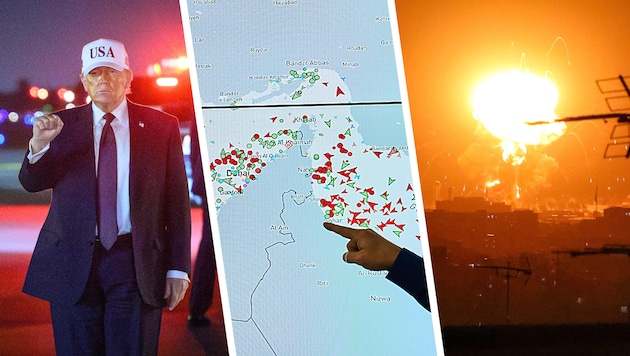

Does Donald Trump have a master plan that we simply don’t know about? A ceasefire declared by the U.S. expires in two days. Now three possible scenarios are on the table: a peace agreement, a continuing stalemate, or new attacks.
 Kronen Zeitung als bevorzugte Google-Quelle hinzufügen
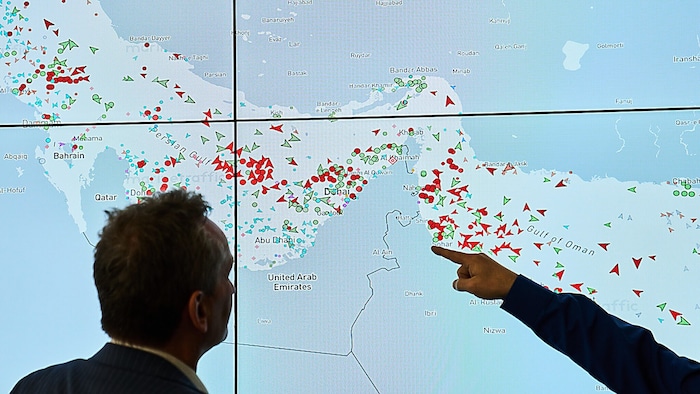
 New negotiations between the U.S. and Iran are intended to provide a way out of the conflict, which is placing an enormous strain on the global economy in particular. The blockade of the Strait of Hormuz, in particular, is causing energy prices to skyrocket. Fuel is already being rationed in parts of Asia, and gas stations in Europe are also at risk of running dry.
However, confusion reigns regarding new rounds of talks between the two parties to the conflict. According to its Foreign Ministry, Iran has “not yet made a decision” on participating in talks with the U.S. in Pakistan.
Talks are therefore not expected to begin until Wednesday at the earliest. That, at least, is the latest update.
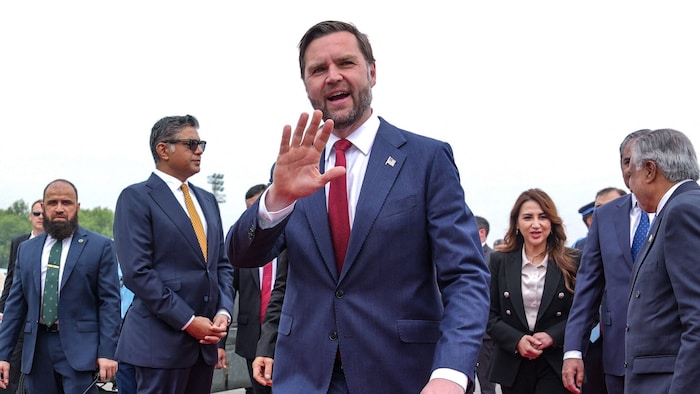
A U.S. delegation led by Vice President JD Vance is expected in Islamabad. White House spokesperson Karoline Leavitt told Fox News she was confident that the U.S. would reach a “really good deal.” Washington and Tehran are reportedly close to an agreement. And if not? More than 10,000 police officers are on standby in Islamabad to secure an event that may not even take place. Here are the three scenarios:
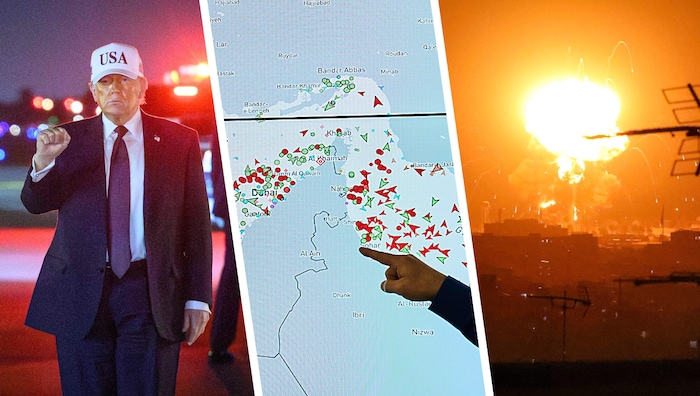
The best-case scenario would be a diplomatic breakthrough. An initial round of negotiations had previously failed due to mutual mistrust. A central issue is Iran’s nuclear program. The U.S. is demanding the handover of approximately 440 kilograms of highly enriched uranium—enough to build about ten nuclear bombs. Tehran, however, treats the ability to enrich uranium as a matter of sovereignty and thus as a red line.
In addition, Iran is expected to keep the Strait of Hormuz permanently open. In return, the strict economic sanctions against the country could be lifted. Here, too, Tehran and Washington are far apart. Iran has apparently taken a liking to levying illegal fees on transit through the vital trade route.
It is also possible that the dangerous stalemate will simply continue. That would be an almost unbearable roller coaster ride, especially for the global economy. Just how turbulent this state of limbo can be was impressively demonstrated last weekend.
Tehran first declared the Strait of Hormuz open on Friday, then closed it again shortly thereafter after Trump refused to lift his own blockade.
The fact that the U.S. president repeatedly threatens Iran—almost as an afterthought—with “total annihilation” certainly does little to help. The country would then be “blown to smithereens,” he told Fox News, should an agreement fail. Specifically, the Republican mentioned attacks on bridges and power plants.
Every incident provides the other side with arguments against making concessions. Although Trump has been boasting of a victory for weeks, he still fears being perceived as weak. For his “deal,” he therefore insists on maximum concessions. Shortly before the ceasefire expires, this results in a stalemate that is nearly impossible to resolve.
Before the outbreak of war on February 28, the Strait of Hormuz accounted for nearly 20 percent of global demand for oil and liquefied natural gas. While fuel can still be transported out of the country via pipelines from Saudi Arabia and the United Arab Emirates, this does not even begin to cover global demand.
What’s more: other integral components of the global supply chain, such as agricultural products, cannot simply be shipped out. They’re stuck!
“It’s not just about oil, but about many petrochemical products like pesticides and everything used in agriculture. And many other things used in various industrial sectors. So all these industries are facing massive bottlenecks,” Mahdi Ghodsi, an economist at the Vienna Institute for International Economic Studies (wiiw), told the “Krone.”
There is a “severe shortage” in these areas: “If this situation continues, there is enormous potential for even higher inflation in many countries.”
Should the talks fail, the war could flare up again. Both sides are using the ceasefire to rearm. The U.S. is reportedly loading warships with bombs, while Iran, according to analysts, is preparing hidden missile and drone arsenals—and even speaks of “new trump cards.”
The consequences of a new escalation are almost impossible to estimate for the global economy—but they are likely to be severe. And the very people Trump actually wanted to “liberate” will probably suffer the most. People in Tehran have already reported to Ghodsi that prices have jumped by up to 300 percent since the war began.
The regime in Tehran is also likely to gradually run out of money. According to Ghodsi, the U.S. is currently blocking about 80 percent of Iran’s trade capacity (imports and exports). President Masoud Pezeshkian has already warned that the state will no longer be able to pay salaries “within weeks” if the war continues.
The mullah regime seems to know only one remedy for this crisis: violence! “If people take to the streets again, the government will shoot them,” says Ghodsi, who was born in Iran. The mullahs are “economically less resilient, of course,” than the U.S., but all the more brutal for it.
The economist fears a “failed state” like Syria and, consequently, new waves of refugees that would primarily affect Europe...
This article has been automatically translated,
read the original article here.











Willkommen in unserer Community! Eingehende Beiträge werden geprüft und anschließend veröffentlicht. Bitte achten Sie auf Einhaltung unserer Netiquette und AGB. Für ausführliche Diskussionen steht Ihnen ebenso das krone.at-Forum zur Verfügung. Hier können Sie das Community-Team via unserer Melde- und Abhilfestelle kontaktieren.
Hinweis in eigener Sache: Das krone.at-Forum präsentiert sich ab sofort in neuem Design! Wir freuen uns über konstruktives Feedback. Damit die Diskussionen in den Kommentarbereichen beim jeweiligen Thema bleiben, können Sie uns Rückmeldungen hier hinterlassen.
User-Beiträge geben nicht notwendigerweise die Meinung des Betreibers/der Redaktion bzw. von Krone Multimedia (KMM) wieder. In diesem Sinne distanziert sich die Redaktion/der Betreiber von den Inhalten in diesem Diskussionsforum. KMM behält sich insbesondere vor, gegen geltendes Recht verstoßende, den guten Sitten oder der Netiquette widersprechende bzw. dem Ansehen von KMM zuwiderlaufende Beiträge zu löschen, diesbezüglichen Schadenersatz gegenüber dem betreffenden User geltend zu machen, die Nutzer-Daten zu Zwecken der Rechtsverfolgung zu verwenden und strafrechtlich relevante Beiträge zur Anzeige zu bringen (siehe auch AGB). Hier können Sie das Community-Team via unserer Melde- und Abhilfestelle kontaktieren.