Due to the U.S. blockade
Iran Reopens the Strait of Hormuz
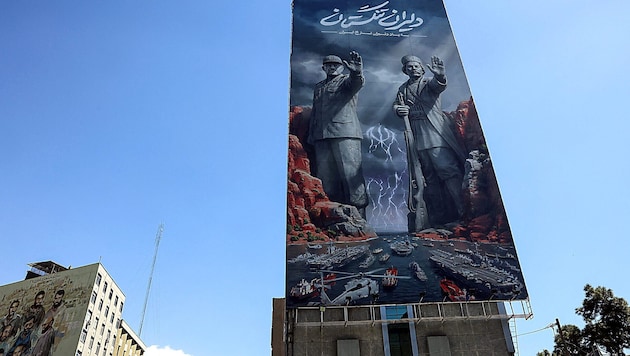

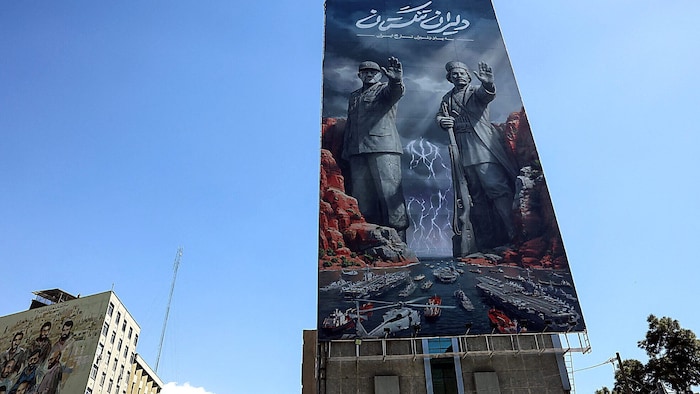
The Iranian Foreign Ministry recently announced that the Strait of Hormuz has been reopened to all commercial vessels “in accordance with the ceasefire in Lebanon.” U.S. President Donald Trump remains unimpressed and is maintaining his blockade of Iranian ports—much to the annoyance of the mullah regime, which is now threatening another closure just a few hours later!
 Kronen Zeitung als bevorzugte Google-Quelle hinzufügen
 Should the U.S. naval blockade continue, Iran will view this as a violation of the ceasefire and close the Strait of Hormuz, reported the Iranian news agency FARS, citing a government official. Foreign Minister Abbas Araghchi had previously stated on the short-message platform X: “In accordance with the ceasefire in Lebanon, the Strait of Hormuz will be open to all commercial vessels for the duration of the ceasefire.” According to the Iranian minister, the exact shipping routes are the responsibility of the country’s maritime authority and the respective ports.
U.S. “Prohibits” Israel from Bombing Lebanon
U.S. President Trump boasted on his Truth Social platform that the U.S. blockade of Iranian ports should remain in place until negotiations with Tehran are “100 percent” complete. Addressing Israel, Trump said: “Israel will no longer bomb Lebanon. The U.S. forbids them to do so. Enough is enough!”
Ten-day ceasefire agreed
After more than six weeks of war,a ten-day ceasefire between Israel and Hezbollah went into effect at midnight. More than a million people were displaced by the recent escalation. Shortly after the ceasefire took effect, the Israeli army urged residents in Lebanon not to venture south of the Litani River—about 30 kilometers from the Israeli border. A large portion of the internally displaced persons come from the affected area.
The fighters of the Iran-backed Hezbollah in Lebanon say they will keep “their fingers on the trigger.” In a statement, the Shiite organization said it would remain vigilant against “the treachery and deceit of the enemy.”
Paris: Consultations on International Hormuz Mission
On Friday, around 50 predominantly European heads of state and government met in Paris to discuss an international mission to secure the strait. At the conference, participants called for the immediate, unconditional, and complete reopening of the strait by all parties involved in the Iran conflict. “We demand the restoration of the pre-war conditions for free passage and full respect for the law of the sea,” said French President Emmanuel Macron after the meeting. “We reject any restriction, any agreement that would amount to a de facto attempt to privatize the strait—and, of course, any toll system.”
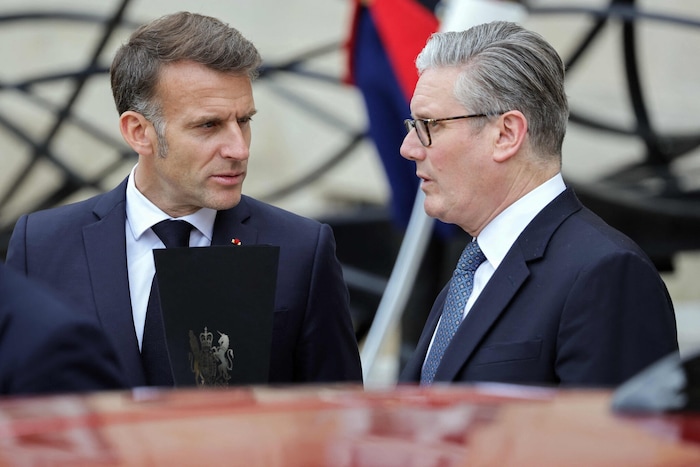
France intends to organize a neutral naval mission with the UK, clearly distinct from the warring parties, to escort and secure merchant ships transiting the Gulf along the Iranian coast. A planning meeting on this matter is scheduled to take place in London as early as next week, to be accompanied by close coordination with the Americans and Israel.
The Strait of Hormuz was recently affected by a double blockade: Since the start of the U.S.-Israeli attacks, Iran has effectively blocked the strait—a route vital for international shipping—by attacking ships, threatening attacks, or demanding fees. For its part, the U.S. is using military ships to block vessels attempting to enter Iranian ports.
An international mission is only possible if there is a corresponding agreement with Iran. Even if Iran were to agree to an international mission, the problem of sea mines—which, according to Iranian reports, are located in the strait—remains. It is also unclear which nations would participate and with what resources. Against the backdrop of the Iran conflict, France has, according to Macron, a total of eight frigates, two helicopter carriers, and the aircraft carrier Charles de Gaulle deployed—though so far, they remain far from the Strait of Hormuz.
German Navy Warns of Overburdening
After much back-and-forth, Germany now intends to participate in such a mission after all. Federal Chancellor Friedrich Merz announced this on Thursday. However, this announcement is setting off alarm bells within the German Navy. “We have the smallest navy ever, but a mountain of tasks,” warned Navy Inspector Jan Christian Kaack in “WirtschaftsWoche,” cautioning against overburdening. In light of the threat from Russia, the focus must not be narrowed. “The world may be looking toward the Middle East right now, but we are also seeing an increase in activities on the northern and eastern flanks that we must address,” Kaack explained. He cited an increase in submarine operations, airspace violations, and acts of sabotage against pipelines and undersea cables.
This article has been automatically translated,
read the original article here.











Liebe Leserin, lieber Leser,
die Kommentarfunktion steht Ihnen ab 6 Uhr wieder wie gewohnt zur Verfügung.
Mit freundlichen Grüßen
das krone.at-Team
Hinweis in eigener Sache: Das krone.at-Forum präsentiert sich ab sofort in neuem Design! Wir freuen uns über konstruktives Feedback. Damit die Diskussionen in den Kommentarbereichen beim jeweiligen Thema bleiben, können Sie uns Rückmeldungen hier hinterlassen.
User-Beiträge geben nicht notwendigerweise die Meinung des Betreibers/der Redaktion bzw. von Krone Multimedia (KMM) wieder. In diesem Sinne distanziert sich die Redaktion/der Betreiber von den Inhalten in diesem Diskussionsforum. KMM behält sich insbesondere vor, gegen geltendes Recht verstoßende, den guten Sitten oder der Netiquette widersprechende bzw. dem Ansehen von KMM zuwiderlaufende Beiträge zu löschen, diesbezüglichen Schadenersatz gegenüber dem betreffenden User geltend zu machen, die Nutzer-Daten zu Zwecken der Rechtsverfolgung zu verwenden und strafrechtlich relevante Beiträge zur Anzeige zu bringen (siehe auch AGB). Hier können Sie das Community-Team via unserer Melde- und Abhilfestelle kontaktieren.