“Provisional Application”
Government Reverses Firm Rejection of Mercosur Agreement
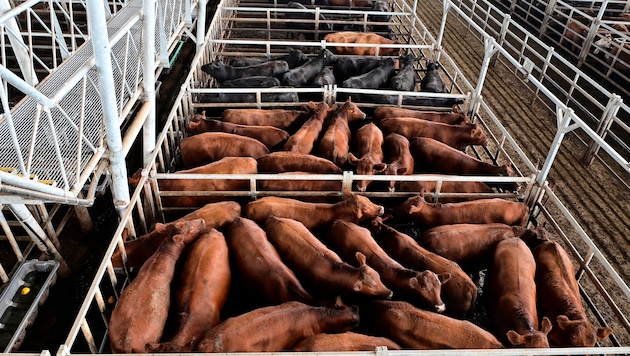


Quietly and discreetly, the Austrian federal government has decided to provisionally apply the EU-Mercosur trade pact—even though the National Council had voted overwhelmingly and unanimously against the controversial agreement with Brazil. Environmental organizations are outraged.
 Kronen Zeitung als bevorzugte Google-Quelle hinzufügen
 The government confirmed the decision to the “Krone” and is attempting to justify the 180-degree turnaround on legal grounds. Parliamentary resolutions would only bind Austria regarding decisions made in the EU Council. Austria therefore took a clear position of opposition within EU bodies and voted accordingly. However, Article 4 of the EU Treaty obliges member states, in accordance with the principle of loyalty under European law, to support EU decisions—including, in this case, through Austria’s signing of the entire EU-Mercosur Partnership Agreement.
Critical Part Will Enter into Force Anyway
The critically debated part of the agreement, to which the agricultural sector’s concerns have referred, would be implemented anyway upon provisional entry into force, according to the government. Those parts of the agreement requiring the signature (and subsequent ratification) of EU member states primarily cover the areas of foreign policy, international security, and international cooperation.
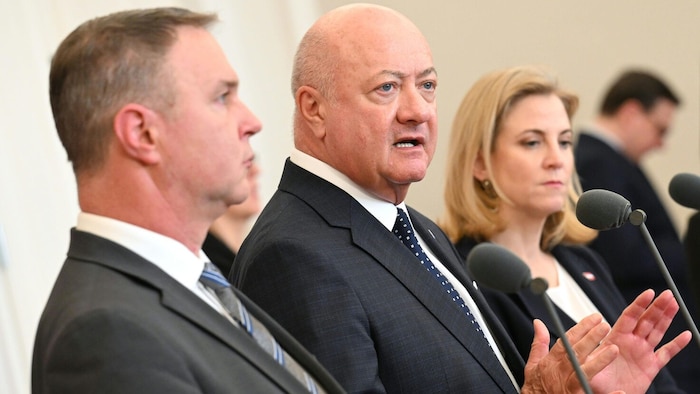
Sebastian Theissing-Matei, an agriculture expert at Greenpeace Austria, is appalled: “One of the most controversial trade pacts in history is set to be rushed through before a single elected EU parliamentarian has even voted on it. This is an unprecedented scandal for democracy.” Greenpeace warns of the pact’s consequences: The agreement would not only accelerate the deforestation of valuable rainforests in South America but also massively increase the pressure on local farmers.
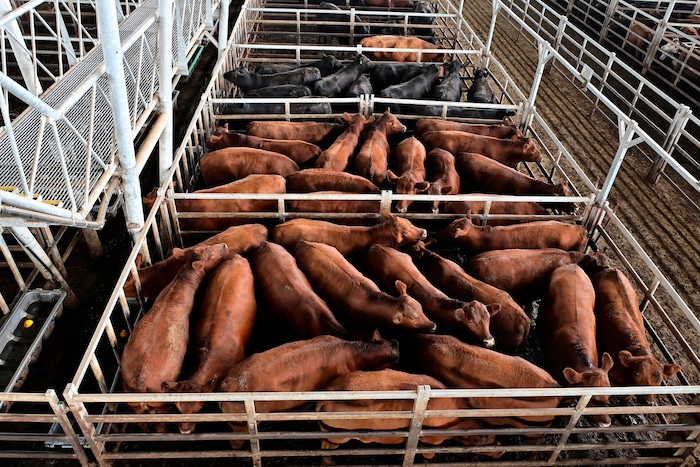
Criticism is directed primarily at the manner in which the government approved the deal: via a so-called circular resolution, quietly and without public debate. Yet the Mercosur deal is by no means uncontroversial: proceedings are still ongoing at the European Court of Justice, and the European Parliament has not even voted on the “shady deal” yet. For environmental organizations like Greenpeace, it is clear: This approach sends a disastrous signal—both for forest protection and for democratic legitimacy within the EU.
This article has been automatically translated,
read the original article here.











Willkommen in unserer Community! Eingehende Beiträge werden geprüft und anschließend veröffentlicht. Bitte achten Sie auf Einhaltung unserer Netiquette und AGB. Für ausführliche Diskussionen steht Ihnen ebenso das krone.at-Forum zur Verfügung. Hier können Sie das Community-Team via unserer Melde- und Abhilfestelle kontaktieren.
User-Beiträge geben nicht notwendigerweise die Meinung des Betreibers/der Redaktion bzw. von Krone Multimedia (KMM) wieder. In diesem Sinne distanziert sich die Redaktion/der Betreiber von den Inhalten in diesem Diskussionsforum. KMM behält sich insbesondere vor, gegen geltendes Recht verstoßende, den guten Sitten oder der Netiquette widersprechende bzw. dem Ansehen von KMM zuwiderlaufende Beiträge zu löschen, diesbezüglichen Schadenersatz gegenüber dem betreffenden User geltend zu machen, die Nutzer-Daten zu Zwecken der Rechtsverfolgung zu verwenden und strafrechtlich relevante Beiträge zur Anzeige zu bringen (siehe auch AGB). Hier können Sie das Community-Team via unserer Melde- und Abhilfestelle kontaktieren.