Topics instead of parties
How children would vote: Environment and family top
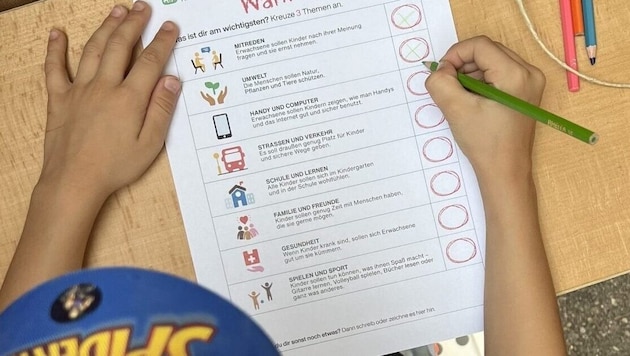

For one month, SOS Children's Villages conducted a children's vote poll. What is important to the youngsters? The kids were able to choose from eight topics. The results show clear trends. But one important category is missing. It was not surveyed at all.
 Kronen Zeitung als bevorzugte Google-Quelle hinzufügen
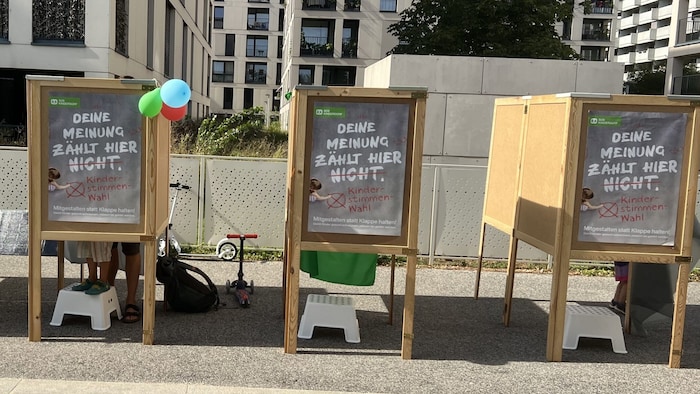
 SOS Children's Villages set up voting booths in parks and public places. At the seven dates from Vienna to Tyrol, 914 children and young people took part. All under the age of 16. This means that they are still too young to express their opinion in the National Council elections. Anyone under the age limit was allowed to take part.
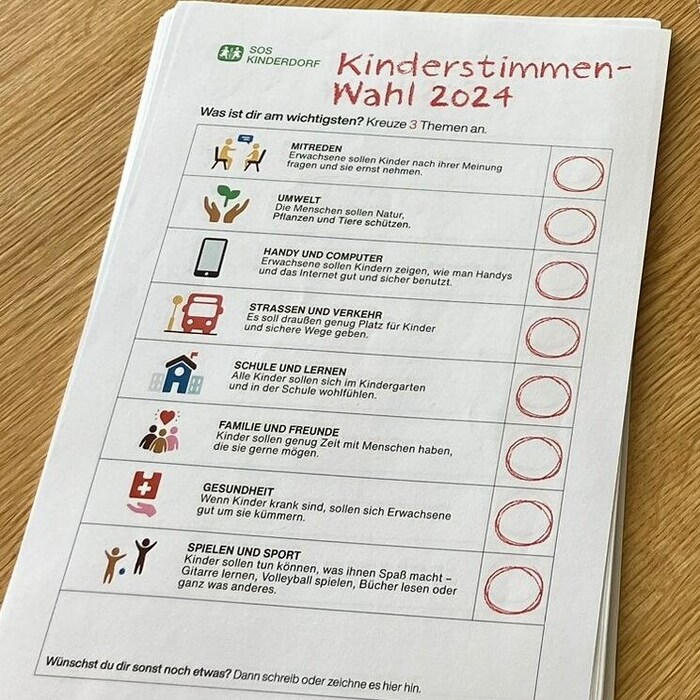
On the child-friendly ballot papers, the kids could mark three out of eight topics (multiple choices). A third of all votes came from Vienna.
The result of the "ballot": the most important issue for young people is the "environment" (531 votes), followed by "family & friends" (470), "health" (391), "play & sport" (372) and "having a say" (337). This is followed by "School and learning" (319), "Mobile phones & computers" (242) and finally "Roads & traffic" (221).
It should be noted that most of the voting took place before the storms and flooding (start at the end of August). This means that nature, the earth on which we live, is a major concern for young people. Stories about climate change are frequently featured in the media.

We want to show children this: Your opinion counts. Far too often, decisions are simply made over their heads.
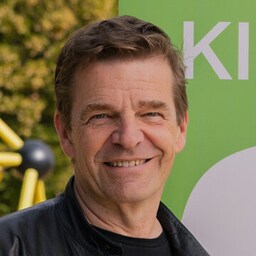
Christian Moser, SOS-Kinderdorf
Bild: SOS Kinderdorf Alexander Fuchs
Migration is missing
However, one important category is missing: "migration". Migration is a particularly hot topic among young voters (aged 16 to 25), says political expert Thomas Hofer. The FPÖ has the strongest presence of all political parties in (a)social media. In addition, young people, for example in school classes, often feel the effects more directly than some older citizens.
When asked by Krone, it remained unclear why the children's village left the topic out. The vote is intended to encourage politicians to pay more attention to the needs of children.
"We want to show children: Your opinion counts. Far too often, decisions are simply made over their heads. But young people want to be taken seriously and involved in decisions just like adults," says SOS Children's Villages CEO Christian Moser.
Is the vote representative? In most cases, opinion and election researchers do not survey more than 1000 Austrians. Sometimes significantly fewer. The same applies to non-political surveys and studies.
The SOS election can therefore be described as thoroughly representative in terms of the number of participants. The results will be handed over to the new government.
This article has been automatically translated,
read the original article here.











Da dieser Artikel älter als 18 Monate ist, ist zum jetzigen Zeitpunkt kein Kommentieren mehr möglich.
Wir laden Sie ein, bei einer aktuelleren themenrelevanten Story mitzudiskutieren: Themenübersicht.
Bei Fragen können Sie sich gern an das Community-Team per Mail an forum@krone.at wenden.