Film in Art House Theaters
Escape from Poland: “The Days Yet Unknown”
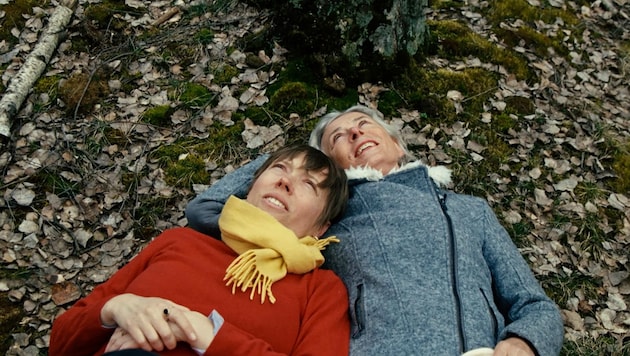

Director Jola Wieczorek explores her family’s escape from Poland against the backdrop of early-stage dementia; she has created a moving historical document that weaves together a search for clues, the journey of escape, and family history. “The Days Yet Unknown” is showing in select art house theaters.
 Kronen Zeitung als bevorzugte Google-Quelle hinzufügen
 Capturing a person’s memories before they fade away—something that loved ones of people with dementia often wish for but don’t always manage to do. In the film “The Days Yet Unknown,” which will soon be shown in art house theaters, director Jola Wieczorek explores her family’s escape from Poland in the 1980s. She did so just in time, before her mother began to forget so much.
Jola was a small child at the time. After spending some time in the Traiskirchen refugee camp, the family ended up in Bad Goisern
The film is not only a story of migration but also a deeply personal story between mother and daughter, and a compelling historical document about fleeing from the former communist “Eastern Bloc” to the West.
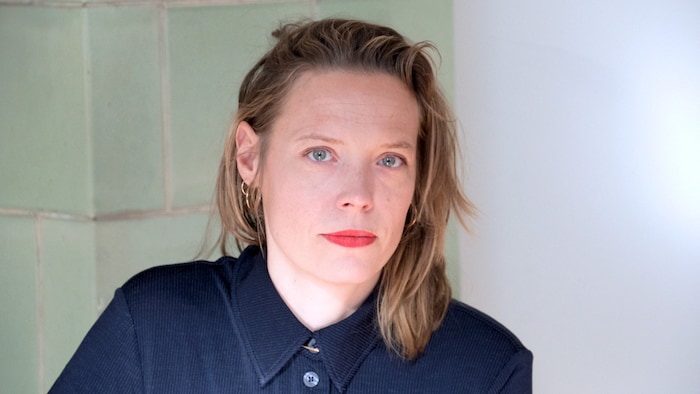
The film begins with her mother’s dementia and her own pregnancy. What was the main impetus for this film?
It was really the realization that I hadn’t asked her everything yet and that I had to do it quickly, before the most important eyewitness could no longer answer. I felt the need to learn more about our journey and the decisions we made to flee back then, so that I could better tell our story to my child later on. To some extent, of course, it was also my own search for answers.
You were six years old when your family left Poland. Can you share your strongest memory with us?
I sensed that something important was happening, but I was still too young to fully understand where we were going or what my parents intended to do. But my parents’ nervousness was, of course, palpable to us children. I remember it as if in a dream.
What were your first few days in Austria like?
In Austria—apart from the refugee camp—everything was more colorful and orderly. We were fascinated by the well-stocked store shelves, the exotic fruits, the many kinds of juice, and, of course, the toys. Later, in the Salzkammergut, it was the mountains and the lush meadows. That was quite a culture shock in many ways!
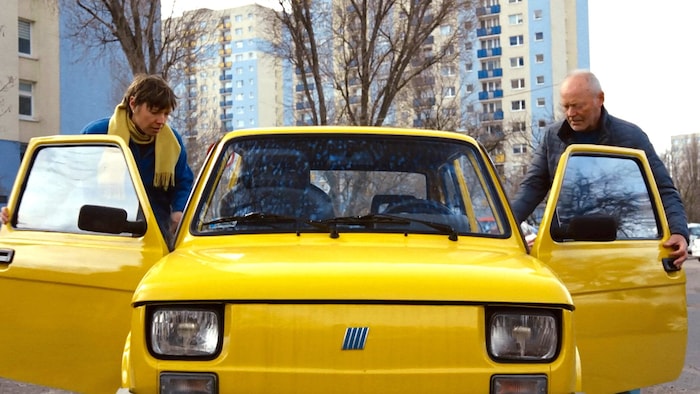
Is there a scene in the film that’s particularly important to you?
We reenacted my own memories. It was very surreal—suddenly seeing the images from my mind right in front of me: the arrival in Traiskirchen, the car seats, the scenes in the dormitories with all the children. It still moves me because these images come from so deep within me.
You also reconstructed a lot of events—what was difficult in terms of sources? 1989 was the Velvet Revolution; from then on, the “East” began to disappear.
From the Austrian side, the border situation in particular was very well documented by the ORF. Because entry regulations were constantly changing, journalists were often on the scene. On the Polish side, the economic situation was already being described with a great deal of irony and sarcasm—especially in the newsreels. If you removed the voiceover commentary, you were left with a very authentic portrait of Poland at that time.
But yes, Poland began to change. The first Round Table talks took place in February 1989, and in June the first elections were held, which Solidarność won. But democracy didn’t happen overnight. The 1990s were marked by corruption and the mafia and were a very difficult time for many people.
What did you learn about dementia during this trip with your mother?
On this cinematic journey, I came to understand how much our memories define who we are. When those memories fade, our personality changes too—though, interestingly, not necessarily our emotions. They remain; they seem to be anchored somewhere else. Through those feelings, I always find my way back to my mom.
The 20th century is full of stories of flight and expulsion from East to West. Has this been insufficiently addressed so far?
Every story of flight and displacement is unique, and yet there is this shared experience: leaving one’s old homeland and arriving in a new one. This is common to all. I don’t believe that everything has already been told. Humanity is in constant motion. Understanding that is important. And looking back helps us better support the people who are forced to flee today.
What does “home” mean to you personally?
For me, “home” isn’t a geographical place, but rather moments when I feel safe and secure—moments that are deeply connected to memories and the senses. Whether it’s food, smells, sometimes even places like the Polish forest, but also my friends and family, who give me a space where I don’t have to justify why I’m where I am.
It’s interesting how many “homes” find a place within me. And that it can also be beautiful to swim between the shores and have multiple beaches in life.
Film premieres: September 28 at the Programmkino Wels and Moviemento Linz; the film will also be shown starting September 25 at the Stadtkino in Vienna, with additional screenings at the Admiralkino in Vienna.
This article has been automatically translated,
read the original article here.











Willkommen in unserer Community! Eingehende Beiträge werden geprüft und anschließend veröffentlicht. Bitte achten Sie auf Einhaltung unserer Netiquette und AGB. Für ausführliche Diskussionen steht Ihnen ebenso das krone.at-Forum zur Verfügung. Hier können Sie das Community-Team via unserer Melde- und Abhilfestelle kontaktieren.
User-Beiträge geben nicht notwendigerweise die Meinung des Betreibers/der Redaktion bzw. von Krone Multimedia (KMM) wieder. In diesem Sinne distanziert sich die Redaktion/der Betreiber von den Inhalten in diesem Diskussionsforum. KMM behält sich insbesondere vor, gegen geltendes Recht verstoßende, den guten Sitten oder der Netiquette widersprechende bzw. dem Ansehen von KMM zuwiderlaufende Beiträge zu löschen, diesbezüglichen Schadenersatz gegenüber dem betreffenden User geltend zu machen, die Nutzer-Daten zu Zwecken der Rechtsverfolgung zu verwenden und strafrechtlich relevante Beiträge zur Anzeige zu bringen (siehe auch AGB). Hier können Sie das Community-Team via unserer Melde- und Abhilfestelle kontaktieren.