Controversial Plans for ORF
New Board of Trustees, New Mission, No More License Fee
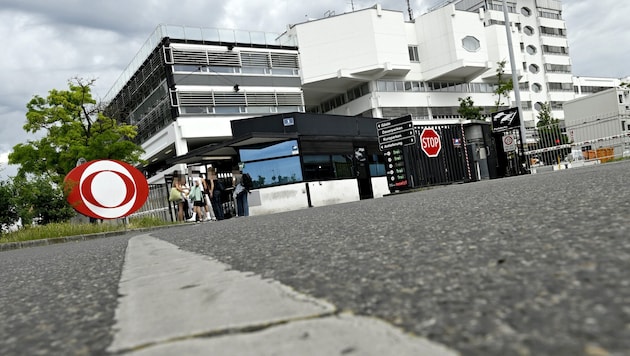

Eliminate the broadcasting fee, abolish the Foundation Board—at least in its current form—and redefine the public service mandate: The ÖVP, the chancellor’s party, is now going on the offensive regarding the ORF. Ahead of the so-called “ORF Future Forum” convened for this week by SPÖ Vice Chancellor Andreas Babler, the People’s Party is presenting a clearly defined position paper. It’s a package with serious implications.
 Kronen Zeitung als bevorzugte Google-Quelle hinzufügen
 This reform paper—drafted under the leadership of the party’s new Secretary-General and media spokesperson, Markus Gstöttner—calls nearly everything into question. Above all, the financing of the public broadcaster: it must be more cost-effective, the party states unequivocally. And to achieve this, the party can envision the elimination of the budget levy—“in favor of a stable, long-term, and appropriate budget-funded solution that complies with constitutional and EU law, but with the amount adjusted accordingly,” as the document states. The alternative to this type of future ORF funding would be, at the very least, a reduced broadcasting fee.
Less Money, More “Public Value”
In any case, the ORF would have to make do with less money, because the ÖVP also advocates for a more narrowly defined public service mandate. The ORF needs a “precise, concise, and up-to-date definition of its public service mandate” and a clear distinction between the services the ORF is expected to provide as a public broadcaster and those covered by the free media market. This means that, going forward, the focus should be on programming that offers a special “public value”—specifically “information, education, culture, sports, regional content, Austrian identity, objectivity, diversity of opinion, and universal accessibility.”
No Mandate for Entertainment Television
The test is this: There will no longer be a “public service mandate” for U.S. series replayed 1,000 times, trash content of all kinds, and other nonsense—and thus, there will be no more funding for them.
Reduce or Dissolve the Foundation Board
The reform proposals regarding the organization of the ORF’s supervisory and management bodies are also far-reaching. The Foundation Board in its current form will be reduced or dismantled. A significantly smaller body will, in the future, “ensure the ORF’s democratic and societal accountability,” as the proposal states. It is emphasized, however, that this “new Foundation Board”—unlike the current 35-member board—must not interfere in the day-to-day management of the organization.
This new council would not, as has been the case until now, appoint ORF leadership from the Director General down, but would merely be responsible for appointing the members of a new supervisory board—“based on clear quality and incompatibility criteria.” The new supervisory board, consisting of eight to twelve members—“selected according to transparent professional criteria”—would be responsible for corporate oversight as well as for appointing, advising, and monitoring the executive board.
No More “General”
The ÖVP’s proposals also go far in terms of the ORF’s direct operational management. Rather than a Director General serving as the sole head—as has been the case until now and who was just recently appointed by the old Foundation Board—a three-member Executive Board with clearly defined areas of responsibility would govern the Küniglberg. This would, as has rightly been noted, “spread the burden of decision-making across several shoulders.”
Cooperation with Other Media
Another interesting point in the ÖVP’s proposal: In the future, the ORF is to significantly expand its collaboration with other Austrian media outlets. Here, too, specific measures are outlined for how this is to be achieved.

We want a structure that meets international standards, lower costs for the public, and reliable, objective reporting.
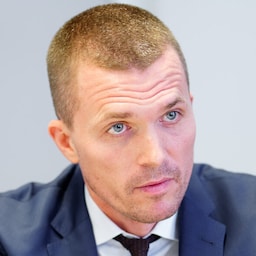
ÖVP-Mediensprecher Markus Gstöttner
Bild: Eva Manhart
“We want an ORF that is modern, efficient, and rooted in the regions,” says ÖVP media spokesperson Markus Gstöttner, explaining the rationale behind the comprehensive position paper. He adds: “This includes a corporate structure that meets international standards, lower costs for the public, and reliable, objective reporting from Austria and around the world.”
How are the coalition partners reacting?
What is particularly important to the new secretary-general and media spokesperson: “The ORF should be a partner to the private media landscape—because in the face of international competition, we must work together to protect the fourth estate in Austria.” He’ll certainly earn some applause for that. It will be interesting to see how the ÖVP’s coalition partners react.
This article has been automatically translated,
read the original article here.











Liebe Leserin, lieber Leser,
die Kommentarfunktion steht Ihnen ab 6 Uhr wieder wie gewohnt zur Verfügung.
Mit freundlichen Grüßen
das krone.at-Team
Hinweis in eigener Sache: Das krone.at-Forum präsentiert sich ab sofort in neuem Design! Wir freuen uns über konstruktives Feedback. Damit die Diskussionen in den Kommentarbereichen beim jeweiligen Thema bleiben, können Sie uns Rückmeldungen hier hinterlassen.
User-Beiträge geben nicht notwendigerweise die Meinung des Betreibers/der Redaktion bzw. von Krone Multimedia (KMM) wieder. In diesem Sinne distanziert sich die Redaktion/der Betreiber von den Inhalten in diesem Diskussionsforum. KMM behält sich insbesondere vor, gegen geltendes Recht verstoßende, den guten Sitten oder der Netiquette widersprechende bzw. dem Ansehen von KMM zuwiderlaufende Beiträge zu löschen, diesbezüglichen Schadenersatz gegenüber dem betreffenden User geltend zu machen, die Nutzer-Daten zu Zwecken der Rechtsverfolgung zu verwenden und strafrechtlich relevante Beiträge zur Anzeige zu bringen (siehe auch AGB). Hier können Sie das Community-Team via unserer Melde- und Abhilfestelle kontaktieren.