The New Climate Act
How Austria Plans to Become Climate-Neutral by 2040
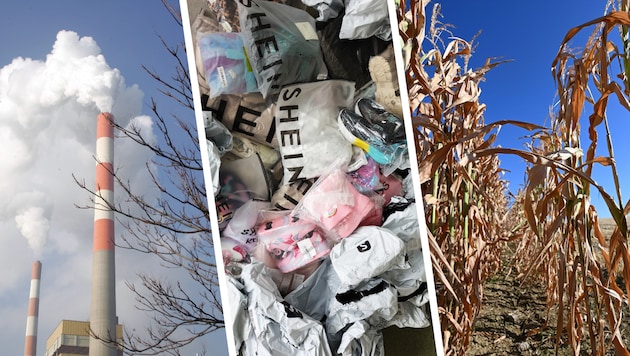

The government is hailing its climate deal as a major success. The powerful ÖVP business community, however, sees things differently—and is already gearing up for resistance, as we reported. But what does the new Climate Protection Act entail? The “Krone” has the first details.
 Kronen Zeitung als bevorzugte Google-Quelle hinzufügen
 The major climate deal was supposed to end the ongoing dispute within the three-party coalition—instead, it immediately sparked the next upheaval within its own ranks. The business community is up in arms over the government’s climate plans.
And yet, after a long struggle, the law has already been significantly watered down. For example, the energy and industrial sectors will not have to be climate-neutral by 2040, as the EU mandates, but only by 2050. It’s possible that the transportation sector will also be included here. The EU requires a 90 percent reduction in emissions by 2040. If Austria fails to meet the European targets, it faces fines in the billions. While the government has set a more ambitious goal of achieving climate neutrality by 2040, no sanctions are tied to that target.
Rather, this is a so-called self-binding law: it primarily places an obligation on the government itself. It must implement measures to ensure that the climate goal remains achievable. The plan includes, for example, binding “annual caps on Austria’s total emissions”—though only in accordance with the EU requirements that are already in place.
Emergency program after three months
A dedicated climate roadmap will establish reduction pathways and greenhouse gas budgets for each sector in the future. It must also list the measures planned by the federal government and the states. Progress will be tracked through more frequent monitoring. In addition, an interministerial steering group and a scientific advisory board will be established. States, municipalities, social partners, and civil society are also to be involved.
If Austria is at risk of exceeding its annual emissions limits—or has already done so—a mandatory correction mechanism will be triggered. The steering group must then develop an emergency program with additional measures within three months. However, budget-related proposals may not exceed the applicable federal budget limits.
Before Austria purchases expensive emission allowances abroad to meet its obligations, domestic measures should be implemented. The rationale: this keeps value creation and investments within the country.
An “Emergency Exit” for the Business Climate
A separate provision is also intended to prevent the law from creating new legal grounds for climate lawsuits, such as those that repeatedly cause a stir in Germany—this, too, is said to have been negotiated into the law by the business lobby. At the urging of the business community, a “location clause” was also included. It allows for deviations from the planned climate pathway in the event of extraordinary circumstances—such as a pandemic or a global crisis.

The Climate Protection Act has been fully negotiated and will undergo review in the coming days, making a National Council resolution possible in November.
NEOS-Klimasprecher Michael Bernhard
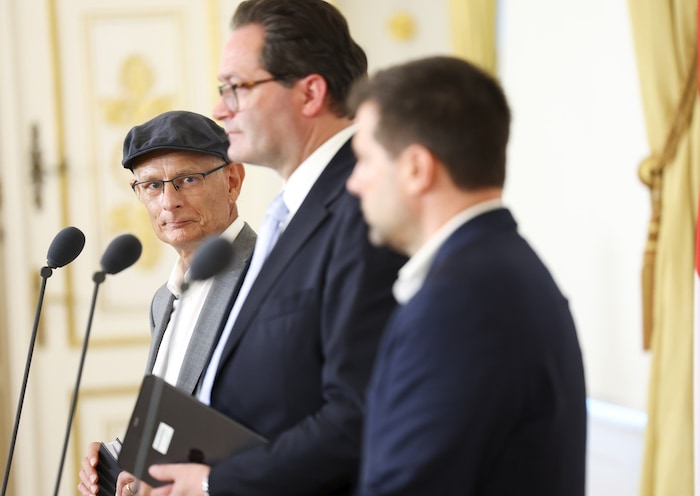
Business representatives are apparently not satisfied with this. Behind closed doors, sources told the “Krone” that trading drought aid for the Climate Protection Act is “disproportionate.” At the same time, however, they do not want to be seen as the culprits should farmers—who have been severely affected by the drought—ultimately be left without support. As soon as the competitiveness of the country is at stake, though, they are “ready to fight.” For the government, in any case, the matter is settled. “The Climate Protection Act has been fully negotiated and will undergo review in the coming days, so that a National Council resolution is possible in November,” explains NEOS climate spokesperson Michael Bernhard.
This article has been automatically translated,
read the original article here.











Willkommen in unserer Community! Eingehende Beiträge werden geprüft und anschließend veröffentlicht. Bitte achten Sie auf Einhaltung unserer Netiquette und AGB. Für ausführliche Diskussionen steht Ihnen ebenso das krone.at-Forum zur Verfügung. Hier können Sie das Community-Team via unserer Melde- und Abhilfestelle kontaktieren.
Hinweis in eigener Sache: Schon bald erwartet Sie auf krone.at ein rundum erneuerter Forenbereich mit vielen neuen Features! Mehr Informationen finden Sie hier.
User-Beiträge geben nicht notwendigerweise die Meinung des Betreibers/der Redaktion bzw. von Krone Multimedia (KMM) wieder. In diesem Sinne distanziert sich die Redaktion/der Betreiber von den Inhalten in diesem Diskussionsforum. KMM behält sich insbesondere vor, gegen geltendes Recht verstoßende, den guten Sitten oder der Netiquette widersprechende bzw. dem Ansehen von KMM zuwiderlaufende Beiträge zu löschen, diesbezüglichen Schadenersatz gegenüber dem betreffenden User geltend zu machen, die Nutzer-Daten zu Zwecken der Rechtsverfolgung zu verwenden und strafrechtlich relevante Beiträge zur Anzeige zu bringen (siehe auch AGB). Hier können Sie das Community-Team via unserer Melde- und Abhilfestelle kontaktieren.