Patient has died
Hantavirus: Three passengers sought after Vienna flight
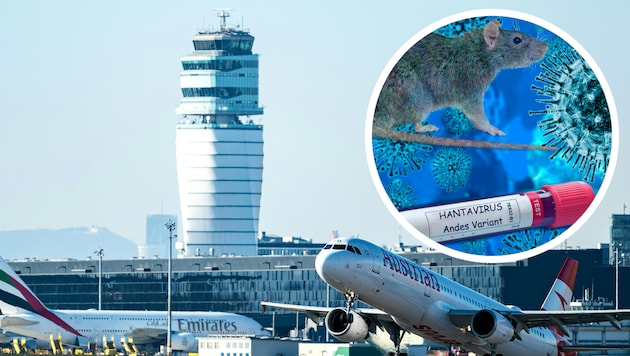

It’s like hunting for a phantom! Following a flight from Johannesburg to Vienna, health authorities had to take action regarding three passengers who may have come into contact with a hantavirus patient who later died.
 Kronen Zeitung als bevorzugte Google-Quelle hinzufügen
 First things first: The risk that these three “Austrian patients” will contract the pathogen—which is transmitted by small rodents—is negligible. Nevertheless, our health authorities have set out to track down two men and one woman who were on the same KLM flight on April 25 as a passenger from the cruise ship MV Hondius—on which, as is well known, a hantavirus outbreak had occurred—who had briefly checked in at Johannesburg, South Africa.
As the woman’s health deteriorated so rapidly, she disembarked quickly but unfortunately passed away. She is one of three people who have died so far; a total of eleven additional cases of infection have been reported to date.
Meticulous detective work in the search
Via Amsterdam (Netherlands), the plane eventually landed in Vienna as well. On board: three contacts with ties to Austria. The authorities had to act; the search for the passengers can be imagined as a hunt for a phantom.
Six weeks of self-monitoring
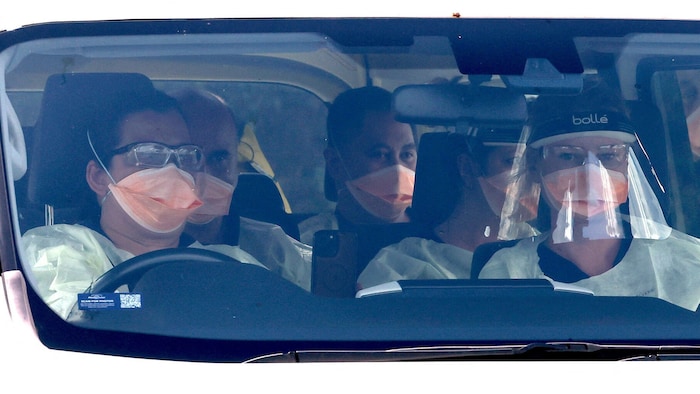
While “Patient 1” was quickly tracked down through meticulous detective work—as reported by a Viennese resident—a Slovakian working here has since been identified as well. He, too, is subject to self-monitoring. This means he must observe himself for possible symptoms for six weeks.
The third case involves a woman. Her name is known, but apparently she is already in her home country of Poland, where the local authorities have been alerted. According to the World Health Organization (WHO), all individuals are low-risk contacts because they were not seated in the same row or within two rows in front of or behind the patient.
Minister: “No Cause for Concern”
Health Minister Korinna Schumann also reassures the public: “As things stand, there is no cause for concern for the population in Austria. There are currently no confirmed cases domestically, and international health authorities continue to assess the risk to the general population as very low.”
Schumann highlights that the rapid identification of the second low-risk contact also demonstrates how quickly and closely the health authorities are working together with international partners: “Austria is well prepared.”
This article has been automatically translated,
read the original article here.











Willkommen in unserer Community! Eingehende Beiträge werden geprüft und anschließend veröffentlicht. Bitte achten Sie auf Einhaltung unserer Netiquette und AGB. Für ausführliche Diskussionen steht Ihnen ebenso das krone.at-Forum zur Verfügung. Hier können Sie das Community-Team via unserer Melde- und Abhilfestelle kontaktieren.
User-Beiträge geben nicht notwendigerweise die Meinung des Betreibers/der Redaktion bzw. von Krone Multimedia (KMM) wieder. In diesem Sinne distanziert sich die Redaktion/der Betreiber von den Inhalten in diesem Diskussionsforum. KMM behält sich insbesondere vor, gegen geltendes Recht verstoßende, den guten Sitten oder der Netiquette widersprechende bzw. dem Ansehen von KMM zuwiderlaufende Beiträge zu löschen, diesbezüglichen Schadenersatz gegenüber dem betreffenden User geltend zu machen, die Nutzer-Daten zu Zwecken der Rechtsverfolgung zu verwenden und strafrechtlich relevante Beiträge zur Anzeige zu bringen (siehe auch AGB). Hier können Sie das Community-Team via unserer Melde- und Abhilfestelle kontaktieren.